
After a challenging workout, muscle soreness and stiffness can make simple movements uncomfortable. Many athletes and recreational exercisers turn to massage hoping it will speed recovery, reduce discomfort, and help them get back to training sooner. But does massage help muscle recovery, or is it simply a relaxing experience?
Current research suggests that massage can be a valuable part of a recovery routine. It may reduce delayed onset muscle soreness (DOMS), improve flexibility, decrease muscle stiffness, and promote relaxation after exercise. However, the available evidence does not show that massage significantly accelerates the biological repair of damaged muscle tissue. Instead, its greatest benefit appears to help you feel and move better while your body recovers naturally.
Massage is only one part of an effective recovery plan. Sleep, hydration, and nutrition also play important roles. For example, understanding how much protein you need after a workout for muscle recovery. can help support your body’s natural repair process.
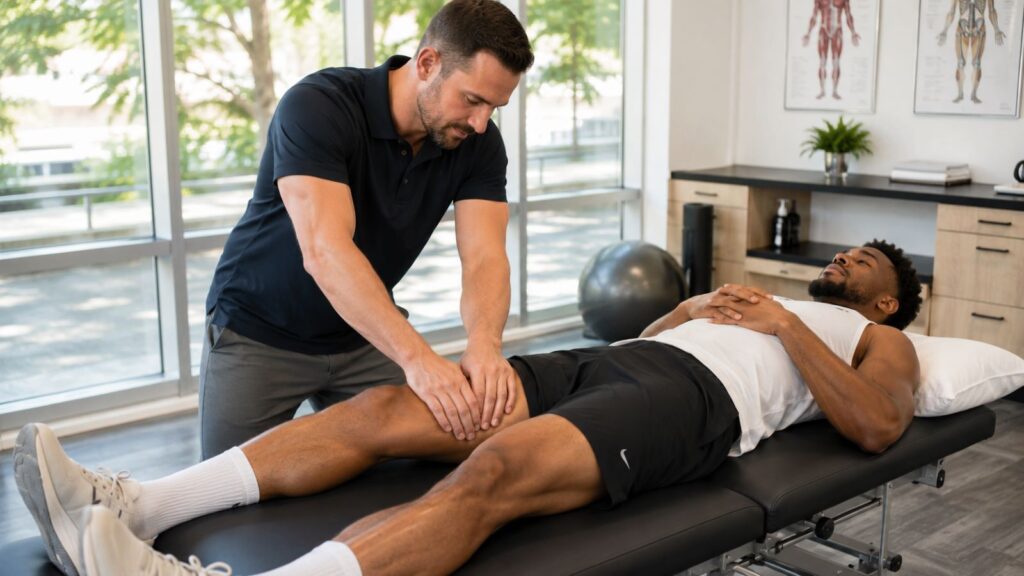
Quick Answer
Does massage help muscle recovery? Yes. Massage can support muscle recovery by reducing delayed onset muscle soreness (DOMS), improving flexibility, decreasing muscle stiffness, and promoting relaxation after exercise. While it may help you feel recovered sooner, current research suggests it does not significantly speed the actual healing of muscle tissue. Massage works best when combined with quality sleep, proper nutrition, hydration, and appropriate rest.
Table of Contents
What Is Sports Massage?
Sports massage is a specialized form of manual therapy that uses various techniques to manipulate muscles, tendons, and other soft tissues. It is commonly used before or after exercise to support recovery, improve mobility, and relieve muscle tension.
Unlike a relaxation massage performed at a spa, sports massage focuses on muscles that have been stressed through physical activity. Depending on the goal, techniques may include the following:
- Effleurage (long gliding strokes)
- Petrissage (kneading)
- Compression
- Friction
- Trigger point therapy
Sports massage can be performed by a trained therapist or adapted into self-massage techniques using massage balls or other recovery tools.
Does Massage Help Muscle Recovery?
Research suggests that massage can support recovery after exercise, particularly by reducing muscle soreness and improving perceived recovery.
Several systematic reviews have found that people receiving massages after strenuous exercise often report less soreness during the following 24 to 72 hours. Massage may also temporarily improve flexibility and reduce muscle stiffness, making everyday movement and subsequent workouts feel more comfortable.
However, it’s important to distinguish between feeling better and healing faster. Although massage can improve comfort and mobility, there is limited evidence that it directly speeds the repair of damaged muscle fibers.
What Research Says About, Does Massage Helps Muscle Recovery
If you’re comparing recovery techniques, you may also want to read Does Foam Rolling Help Muscle Recovery? to understand how another commonly used method compares with massage. Current evidence supports several benefits of massage after exercise:
Reduced delayed onset muscle soreness (DOMS)
Improved perceived recovery
Increased flexibility
Reduced muscle stiffness
Improved relaxation
Current evidence is less convincing for:
Faster muscle tissue repair
Faster strength recovery
Improved athletic performance
Significant acceleration of biological healing
| Claim | Current Evidence |
| Reduces muscle soreness | ✅ Strong |
| Improves perceived recovery | ✅ Strong |
| Improves flexibility | ✅ Moderate |
| Reduces muscle stiffness | ✅ Moderate |
| Speeds muscle tissue healing | ❌ Limited evidence |
| Improve athletic performance | ❌ Limited evidence |
Rather than repairing muscles faster, massage appears to help reduce discomfort and improve movement during the body’s normal recovery process. This distinction is important because many people expect massage to shorten recovery time when its primary benefit is making recovery feel more comfortable.
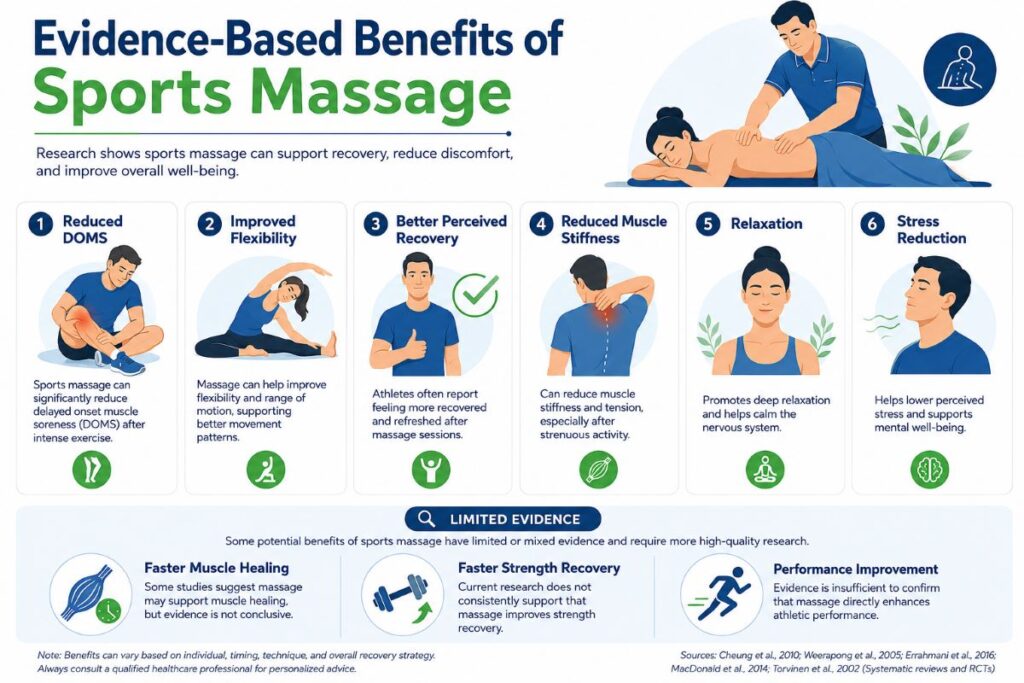
Benefits of Massage After Exercise
Massage is most effective at improving how your body feels after exercise rather than dramatically changing how quickly muscles heal. When combined with other evidence-based recovery habits, it can help make recovery more comfortable and support a consistent training routine.
May Reduce Delayed Onset Muscle Soreness (DOMS)
Delayed onset muscle soreness (DOMS) is the muscle discomfort that usually develops 12 to 24 hours after unfamiliar or intense exercise and peaks between 24 and 72 hours. Research consistently shows that massage can reduce the intensity of DOMS. Although it may not eliminate soreness entirely, many people experience less discomfort during daily activities and future workouts after receiving a massage.
One proposed explanation is that massage influences the nervous system and pain perception, making sore muscles feel less tender while the body’s natural recovery continues. If you’re unsure whether soreness means you should skip your next workout, see Can You Work Out While Sore?
May Improve Flexibility and Range of Motion
Massage may temporarily improve flexibility and joint range of motion by reducing muscle tension and helping soft tissues move more freely. Better mobility can make movements such as squats, lunges, and overhead exercises feel smoother without negatively affecting muscle performance. This can be particularly helpful for people who train regularly or participate in sports requiring good mobility.
May Reduce Muscle Stiffness
After intense exercise, muscles often feel tight or stiff even when no injury is present. Massage may temporarily reduce this sensation by relaxing surrounding soft tissues and decreasing the perception of muscle tightness. Many people report feeling more comfortable walking, climbing stairs, or returning to training after a massage.
May Promote Relaxation and Reduce Stress
Exercise places stress on both the muscles and the nervous system. Massage may encourage relaxation by activating the parasympathetic nervous system, sometimes called the “rest and digest” system. This shift may help reduce stress, improve overall well-being, and create a more favorable environment for recovery.
Although relaxation alone does not repair muscles faster, it can contribute to feeling physically and mentally prepared for your next workout. Recovery also depends on staying hydrated. Learn more in Does Water Help Muscle Recovery?
May Help You Return to Training Feeling Better
Recovery isn’t only about repairing muscle tissue. It’s also about feeling capable of moving comfortably again. If massage reduces soreness, stiffness, and tension, it may help you return to training with greater confidence and less discomfort. This can support long-term exercise consistency, which is one of the most important factors for achieving fitness goals.
What Massage Cannot Do
Massage has clear benefits, but it’s not a cure-all for post-workout recovery. Current evidence does not support the idea that massage can:
Repair damaged muscle fibers significantly faster.
Completely eliminate muscle soreness.
Remove or flush lactic acid from muscles.
Replace adequate sleep or recovery nutrition.
Prevent every sports injury.
Correct poor exercise technique or overtraining.
Replace progressive training and proper recovery planning.
Massage should be viewed as one supportive recovery strategy rather than the primary driver of muscle recovery. Massage should complement, not replace, other evidence-based recovery strategies, including proper hydration. Learn whether electrolyte drinks are necessary in Do Electrolytes Help Muscle Recovery?
When Should You Get a Massage?
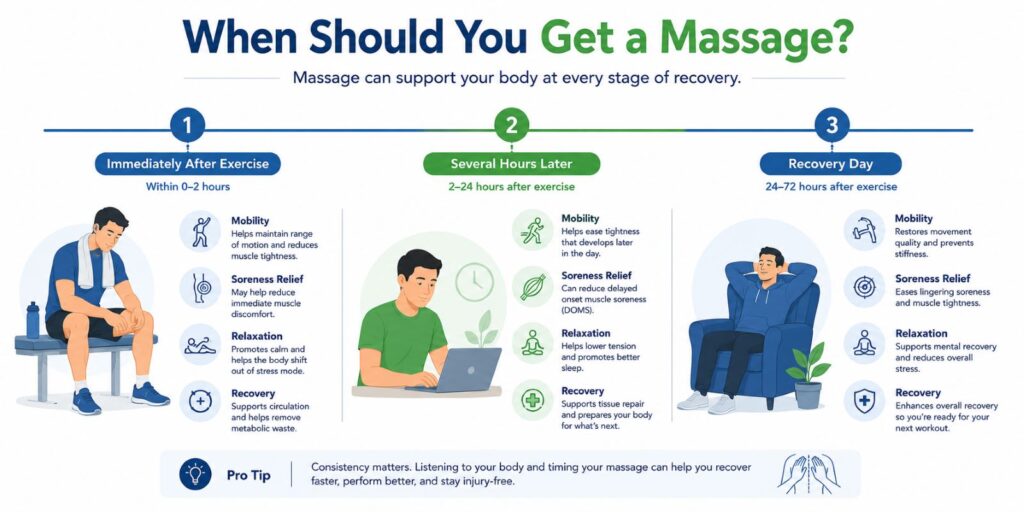
The ideal timing depends on your recovery goals. A gentle post-workout massage is generally preferred over a deep, aggressive massage immediately after strenuous exercise, as muscles may already be sensitive.
Immediately After Exercise
A short, gentle massage after cooling down may help reduce muscle tension and promote relaxation. Avoid excessive pressure immediately after very intense training sessions because muscles may still be highly sensitive.
Several Hours Later
Many people find that receiving a massage later the same day or the following day provides the greatest relief from developing soreness. This timing often aligns with the early stages of DOMS, when discomfort begins to increase.
Recovery Days
Massage can also be beneficial on rest or active recovery days. At this stage, muscles are less sensitive, allowing therapists to use techniques that improve flexibility and reduce lingering stiffness without interfering with training.
Best Time for Different Massage Goals
| Goal | Best Time |
| Relax after intense exercise | Within several hours after exercise |
| Reduce soreness | Within 24 hours after exercise |
| Maintain mobility | Recovery days |
| Preparing for competition | Light massage before activity |
| Recover after competition | Within the following 24 to 48 hours |
How Often Should You Get a Sports Massage?
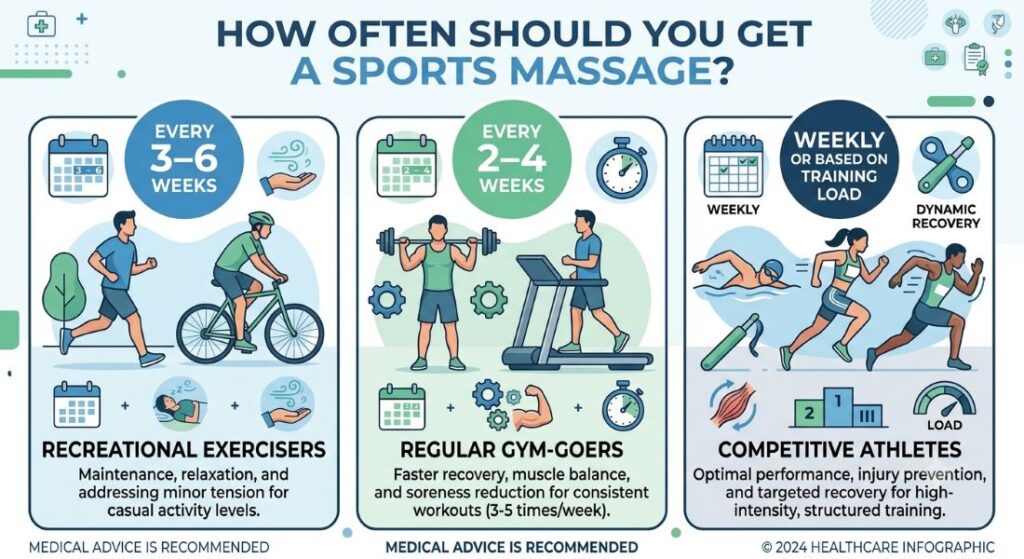
There is no universal schedule. The ideal frequency depends on your training volume, recovery needs, and budget.
Recreational Exercisers
For most people exercising a few times each week, a sports massage every 3 to 6 weeks is generally sufficient to support recovery and mobility.
Regular Gym-Goers
People performing strength training or high-intensity workouts several times per week may benefit from massage every 2 to 4 weeks, especially during demanding training periods.
Competitive Athletes
Athletes preparing for competitions or training at high volumes often receive massage weekly or according to their training schedule, usually under the guidance of coaches or sports medicine professionals. Massage frequency should complement your overall recovery plan rather than become a substitute for adequate sleep, nutrition, hydration, and appropriate training load.
Massage vs Foam Rolling
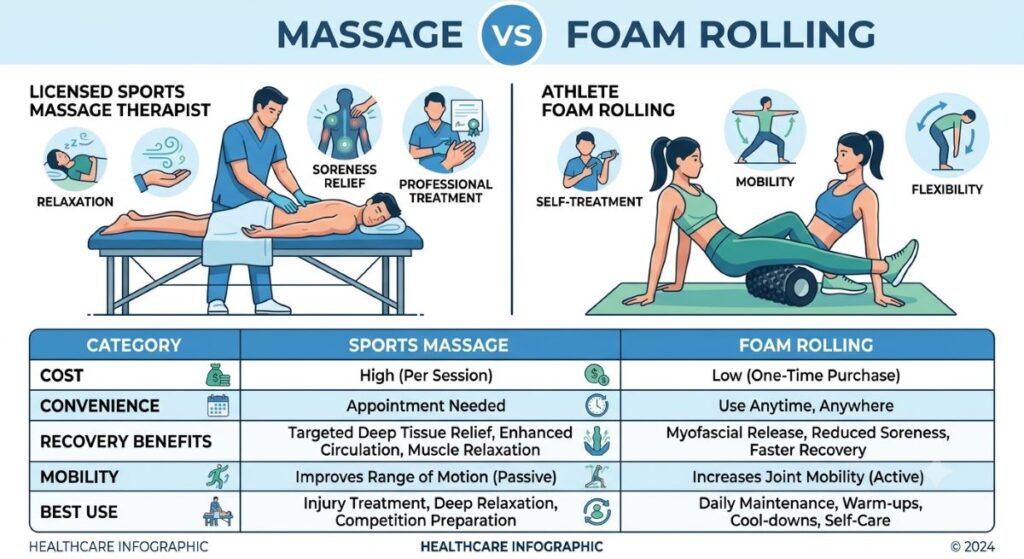
Massage and foam rolling are two of the most popular recovery techniques, and both can reduce post-workout discomfort. However, they work differently and offer unique advantages. Massage is performed by a trained therapist who can adjust pressure and target specific muscles based on your needs. Foam rolling is a self-myofascial release technique that allows you to apply pressure using your own body weight.
Neither method has been proven to dramatically speed the biological healing of muscle tissue. Instead, both appear to reduce soreness, improve mobility, and make recovery feel more comfortable. If you’re deciding between these two recovery methods, our guide Does Foam Rolling Help Muscle Recovery? explains the latest evidence and when each approach may be most useful.
| Feature | Massage | Foam Rolling |
| Performed by | Trained therapist | Self-administered |
| Cost | Higher | Low one-time cost |
| Convenience | Appointment required | Can be done anytime |
| Reduces DOMS | ✅ Strong evidence | ✅ Strong evidence |
| Improves range of motion | ✅ Moderate | ✅ Strong |
| Helps relaxation | ✅ Excellent | ✅ Moderate |
| Speeds muscle healing | ❌ Limited evidence | ❌ Limited evidence |
| Best for | Deep relaxation and targeted treatment | Daily recovery and mobility work |
For many people, these methods work well together rather than competing. Regular foam rolling can support day-to-day recovery, while occasional sports massage may provide additional relief after particularly demanding training periods.
Who Can Benefit Most from Massage?
Massage may be especially helpful for:
- People recover from intense strength training.
- Runners and endurance athletes.
- Individuals experiencing post-workout muscle soreness.
- Recreational exercisers returning after a break.
- People with temporary muscle tightness caused by exercise.
- Athletes train several times each week.
Massage may be less appropriate when muscle pain is caused by an acute injury, fracture, infection, deep vein thrombosis, or certain medical conditions. If pain is severe, persistent, or accompanied by swelling, numbness, or loss of function, seek medical evaluation instead of relying on massage alone.
Recovery Reminder
Massage can make recovery feel more comfortable, but it works best when combined with the habits that have the greatest impact on muscle repair.
Prioritize these recovery pillars:
- Get enough high-quality sleep each night.
- Eat enough protein and total calories to support recovery.
- Stay properly hydrated throughout the day.
- Allow adequate recovery between intense workouts.
- Progress your training gradually instead of increasing intensity too quickly.
Massage should complement these habits, not replace them. Recovery is most effective when massage is combined with good nutrition. Learn more in How Much Protein Do You Need After a Workout for Muscle Recovery?
Self-Reflection
After your next workout, ask yourself:
Am I experiencing normal post-workout soreness or pain that feels unusual?
Does massage genuinely help me move more comfortably afterward?
Am I relying on recovery treatments while neglecting sleep or nutrition?
Would a consistent recovery routine provide greater long-term benefits than occasional massage sessions?
Answering these questions can help you choose recovery strategies that match your actual needs rather than following trends.
Frequently Asked Questions
Does massage help muscle recovery?
Yes. Research suggests massage can reduce muscle soreness, improve flexibility, decrease stiffness, and improve perceived recovery after exercise. However, it has limited evidence for speeding actual muscle tissue repair.
Is massage better than foam rolling?
Neither is universally better. Massage provides professional, targeted treatment and greater relaxation, while foam rolling is convenient, inexpensive, and effective for regular self-care. Many people benefit from using both.
Should you get a massage before or after a workout?
A light massage before exercise may improve mobility, while a massage after exercise is generally better for reducing soreness and promoting relaxation.
How soon after exercise should you get a massage?
Many people benefit from receiving a massage within 24 hours after strenuous exercise, although gentle massage immediately after cooling down may also help some individuals.
Can massage speed heal muscle?
Current evidence does not show that massage significantly accelerates the biological repair of muscle tissue. Its primary benefits involve reducing soreness and improving comfort during recovery.
How often should you get a sports massage?
There is no single recommendation for everyone. Recreational exercisers may benefit every 3 to 6 weeks, while competitive athletes often receive massage more frequently depending on their training demands.
Does massage remove lactic acid?
No. Lactic acid is naturally cleared from the body within hours after exercise. Massage does not “flush out” lactic acid.
When should you avoid massage?
Avoid massage over acute injuries, open wounds, fractures, severe inflammation, infections, blood clots, or any area causing severe unexplained pain unless advised by a qualified healthcare professional.
Medical Disclaimer
This content is for educational purposes only and should not be considered medical advice. Consult a qualified healthcare professional if you experience chronic sleep problems, persistent fatigue, sleep apnea symptoms, or ongoing recovery issues.
When to Consult a Healthcare Professional
Seek professional guidance if you experience:
- Chronic insomnia
- Excessive daytime sleepiness
- Suspected sleep apnea
- Persistent fatigue despite adequate sleep
- Ongoing recovery problems
Conclusion
Does massage help muscle recovery? Yes, but perhaps not in the way many people expect. Current research suggests that massage can reduce delayed onset muscle soreness (DOMS), improve flexibility, decrease muscle stiffness, and promote relaxation after exercise. These benefits may help you feel more comfortable and return to your normal activities or training with less discomfort.
However, massage should not be viewed as a shortcut to faster muscle healing. The available evidence suggests it improves how recovery feels rather than significantly accelerating the biological repair of muscle tissue. When combined with quality sleep, balanced nutrition, proper hydration, and an appropriate training plan, massage can become a valuable part of a well-rounded recovery routine.
Related Articles:
References
- Davis HL, Alabed S, Chico TJA. Effect of Sports Massage on Performance and Recovery: A Systematic Review and Meta-analysis. BMJ Open Sport & Exercise Medicine (2020).
BMJ Open Sport & Exercise Medicine article
This is the primary systematic review supporting the article’s conclusions about DOMS, flexibility, and perceived recovery. - American College of Sports Medicine
American College of Sports Medicine (ACSM) - National Strength and Conditioning Association
National Strength and Conditioning Association (NSCA) - National Center for Biotechnology Information
PubMed record for the systematic review

I’m Mr. Baig, founder of Recover Better Lab. I create evidence-based fitness recovery content to help beginners recover smarter and build sustainable healthy habits.
Mission: My mission is to provide trustworthy, research-backed recovery and fitness content that helps people optimize their health, performance, and overall well-being.