
Reading Time: 10 Minutes
Last Updated: August 2026

Most beginners think progress happens during workouts. It does not.
Your body becomes stronger after training during recovery. Every workout creates microscopic stress inside your muscles, joints, nervous system, and connective tissues. Active Recovery vs. Rest Days: What Beginners Should Choose is the process that repairs that damage and prepares your body to perform better next time.
This is why understanding active recovery vs. rest days is critical for beginners. If you train hard every day without proper recovery, soreness increases, energy crashes, motivation drops, and injuries become more likely. But if you recover correctly, your muscles repair faster, your workouts improve, and your body adapts more efficiently.
The problem is that many beginners do not know whether they should completely rest or stay lightly active between workouts.
Should you stay on the couch all day?
Or should you walk, stretch, or do light cardio?
The answer depends on how your body feels, how intense your workouts are, and how well your body is recovering.
This beginner-friendly guide explains:
- The difference between active recovery and passive rest
- How muscle recovery works
- When beginners should choose each option
- Common recovery mistakes
- Warning signs of overtraining
The best recovery strategies for faster progress
Table of Contents
What Is a Rest Day? (Passive Recovery)
A passive recovery day, commonly called a rest day, means avoiding structured exercise completely. The goal is to reduce physical stress and allow your body to focus entirely on repair and recovery.
During passive recovery, your body restores the following:
- Muscle tissue
- Nervous system function
- Hormone balance
- Joint recovery
- Energy stores
What Does a True Rest Day Look Like?
A proper rest day may include:
- Sleeping longer
- Relaxing at home
- Reading or watching movies
- Light household movement
- Hydration and proper nutrition
- Stress reduction
- A rest day does not mean
- Intense cardio
- Heavy lifting
- High-volume sports
- Exhausting physical activity
Many beginners fail because they turn recovery days into additional workouts.
That destroys the purpose of recovery.
What Is Active Recovery?
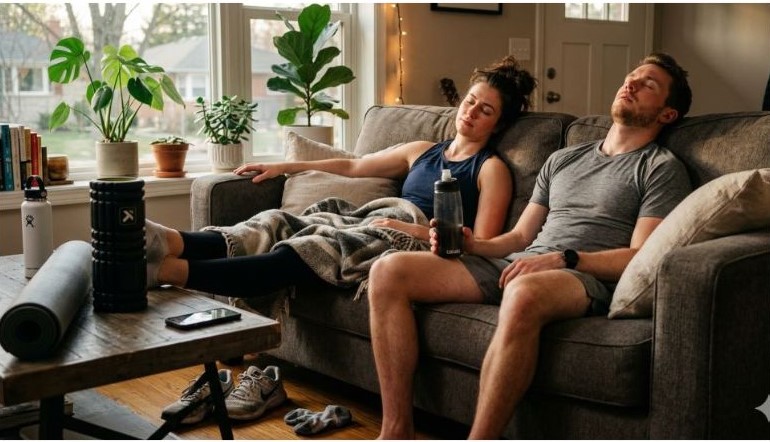
Active recovery involves very light physical movement designed to improve circulation without creating additional fatigue or muscle damage. Light active recovery should help your body feel better, not more exhausted.
Best Active Recovery Exercises for Beginners
Walking

Light walking is one of the best beginner recovery methods because it improves blood circulation without stressing joints or muscles.
Gentle Stretching
Stretching helps reduce stiffness and improve mobility after workouts.
Yoga
Low-intensity yoga can improve flexibility, breathing, and relaxation while reducing muscle tightness.
Easy Cycling
Light stationery cycling with minimal resistance keeps the legs moving without heavy impact.
Swimming
Water reduces pressure on joints while allowing gentle full-body movement.
How Your Body Recovers After Exercise
To understand active recovery vs. rest days, you first need to understand what happens inside your body after exercise.
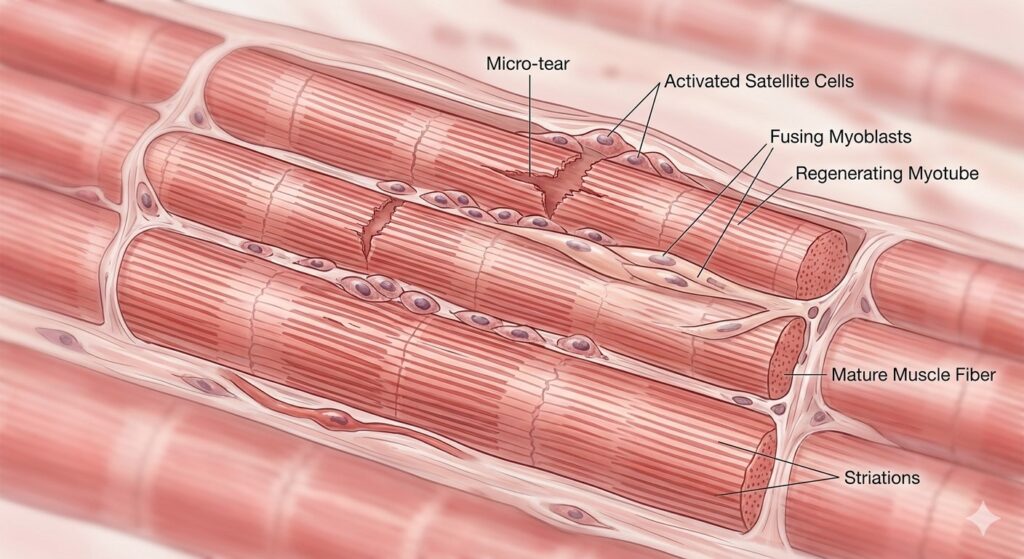
During workouts, your muscles experience microscopic damage called muscle fiber micro-tears. Your body then repairs these fibers, making them stronger and more resilient.
This repair process requires:
- Oxygen
- Nutrients
- Hydration
- Sleep
- Reduced stress
Your cardiovascular system helps deliver these recovery resources throughout the body.
The Role of Blood Flow
Active recovery slightly increases heart rate and circulation. This increased blood flow may help transport nutrients and oxygen to recover muscles more efficiently.
This is why light movement often reduces muscle stiffness. The Role of Complete Rest Passive rest conserves energy so the body can focus entirely on the following:
- deep muscular repair
- nervous system recovery
- hormone regulation
- inflammation reduction
Both recovery methods are useful; they simply serve different purposes.
Active Recovery vs. Rest Days: Key Differences
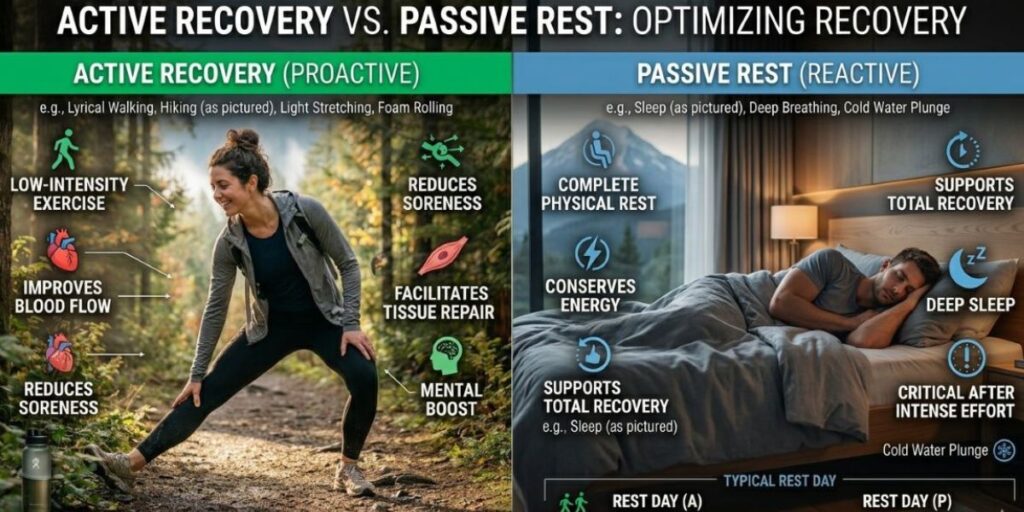
| Feature | Active Recovery | Passive Rest |
| Intensity | Very low | None |
| Main Goal | Improve circulation. | Deep systemic recovery |
| Best For | Mild soreness | Severe fatigue or exhaustion |
| Joint Stress | Extremely low | None |
| Mental Effect | Keeps movement habits active | Provides a complete mental break |
| Recovery Focus | Blood flow and mobility | Full-body restoration |
Best Active Recovery Exercises for Beginners
Not every recovery activity is equally effective.
The best active recovery exercises are
- low intensity
- low impact
- short duration
- non-exhausting
Recommended Recovery Activities

20- to 30-Minute Walk
Improves circulation while reducing stiffness.
Mobility Drills
Gentle shoulder, hip, and spine mobility work helps maintain movement quality.
Foam Rolling
May temporarily reduce muscle tightness and discomfort.
Easy Stretching Routine
Focus on slow breathing and controlled movement.
Recovery Cycling
Use minimal resistance and maintain a relaxed pace.
When Beginners Should Take a Full Rest Day
Beginners often underestimate how much recovery their bodies need.
Choose a complete rest day if you experience:
- Sharp joint pain
- Severe muscle soreness
- Full-body fatigue
- Poor sleep
- Low motivation
- Mental exhaustion
- Dizziness or weakness
- Unusually high resting heart rate
Sleep Matters More Than Another Workout
If you sleep poorly, your recovery capacity drops dramatically.
Quality sleep is one of the most important recovery tools available. Learn how to build a recovery-focused sleep schedule in our guide on the Best Sleep Routine for Gym Beginners to Boost Recovery.
Poor sleep negatively affects:
- Muscle repair
- Testosterone production
- Growth hormone release
- Energy levels
- Cognitive performance
In many cases, extra sleep is more beneficial than another workout.
When Beginners Should Choose Active Recovery

Choose active recovery when:
- Muscles feel slightly stiff
- Soreness is mild
- Energy levels are still decent
- You want movement without intense effort
- Sitting all day increases stiffness
Active recovery is especially useful after:
- Moderate workouts
- Long sitting periods
- Mild DOMS (delayed-onset muscle soreness)
The “Talk Test”
A simple way to measure recovery intensity:
You should easily hold a full conversation during active recovery.
If you are:
- Breathing heavily
- Sweating excessively
- Feeling muscle burn
Then your recovery session is too intense.
Signs You Are Not Recovering Properly

Your body gives warning signs when recovery is insufficient.
Ignoring them leads to:
- Burnout
- Stalled progress
- Chronic soreness
- Overtraining
- Injury risk
Common Signs of Poor Recovery
- Persistent Soreness
- Muscles remain sore for several days.
- Declining Performance
- Your workouts feel harder despite consistent effort.
- Fatigue
- You constantly feel drained or sleepy.
- Sleep Problems
- You feel tired but struggle to sleep deeply.
- Irritability
- Mood changes often increase when recovery is poor.
- Joint Pain
- Persistent joint discomfort is a major warning sign.
- Lack of Motivation
- You mentally dread workouts instead of enjoying them.
- If multiple symptoms appear together, your body likely needs additional recovery and sleep.
Beginner Recovery Mistakes to Avoid
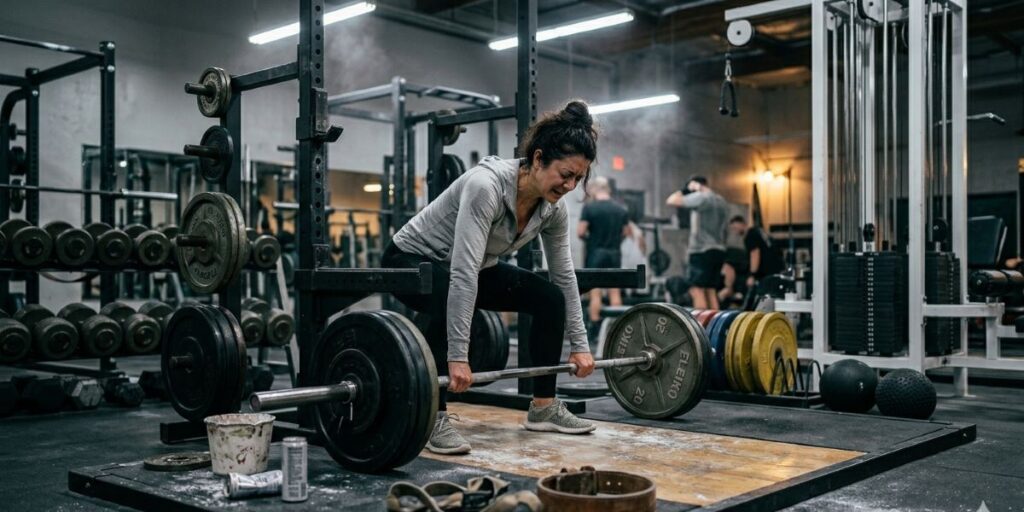
- Training Hard Every Day
- More workouts do not automatically create better results.
- Muscles grow during recovery, not during training itself.
- Ignoring Sleep
- Sleep is one of the most powerful recovery tools available.
- Without quality sleep, recovery slows dramatically.
- Eating Too Little
Your body needs:
- Protein
- Carbohydrates
- Hydration
- Calories
to rebuild muscle tissue effectively.
Turning Recovery into Cardio
Many beginners accidentally perform active recovery too intensely.
Recovery should refresh the body, not exhaust it.
Skipping Mobility Work
Tight muscles and restricted movement patterns increase injury risk over time.
Sample Beginner Recovery Schedule
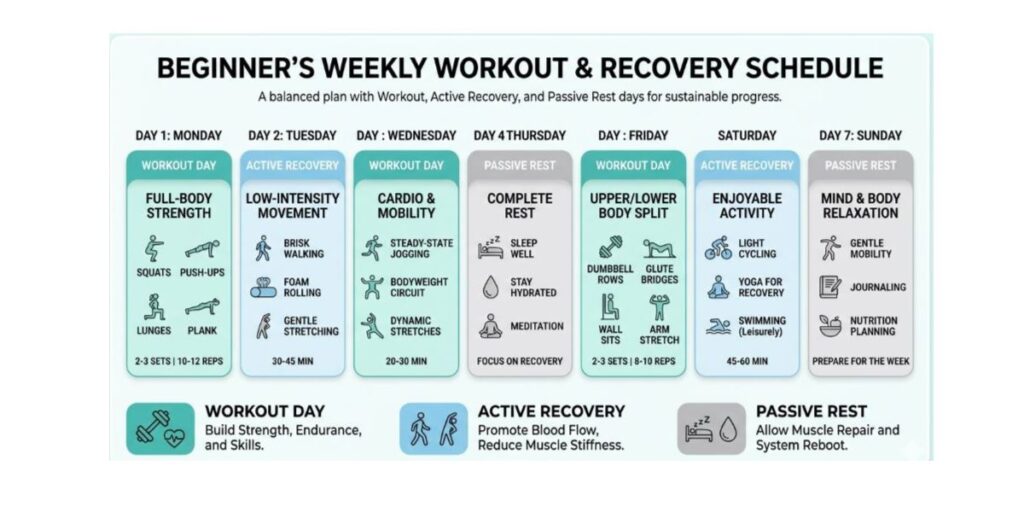
A balanced beginner schedule may look like this:
| Day | Activity |
| Monday | Full-body workout |
| Tuesday | Active recovery walk + stretching |
| Wednesday | Full-body workout |
| Thursday | Full passive rest |
| Friday | Full-body workout |
| Saturday | Light yoga or cycling |
| Sunday | Full passive rest |
This structure gives beginners:
- Enough stimulus for progress
- Enough recovery for adaptation
- Lower injury risk
- Improved consistency
Frequently Asked Questions

Is walking considered active recovery?
Yes. Walking is one of the best active recovery methods because it improves circulation without causing significant fatigue.
Should beginners take two rest days per week?
Most beginners benefit from at least one or two full rest days weekly.
Can active recovery reduce soreness?
Light movement may help reduce stiffness and improve circulation, which can temporarily ease muscle soreness.
Is stretching enough for recovery?
For many beginners, stretching combined with walking or mobility work is highly effective.
Can too much recovery slow progress?
Excessive inactivity can reduce conditioning over time, but most beginners are far more likely to under-recover than over-recover.
How long does muscle recovery take?
Most beginner workouts require roughly 24 to 72 hours of recovery depending on workout intensity, sleep quality, nutrition, and training experience.
Final Verdict: Active Recovery vs. Rest Days
When comparing active recovery vs. rest days, there is no universal answer.
Both methods are essential. Passive rest protects your joints, nervous system, and overall recovery capacity when your body is heavily fatigued. Active recovery improves circulation, reduces stiffness, and helps maintain movement habits without adding major physical stress.
The real skill is learning to listen to your body honestly. If your body feels mildly sore but functional, active recovery is usually beneficial. If your entire system feels exhausted, mentally drained, or painfully sore, complete rest is the smarter choice.
Beginners who recover properly:
- build muscle more efficiently
- reduce injury risk
- improve workout consistency
- avoid burning out
- sustain long-term progress
Recovery is not weakness.
Recovery is the process that allows progress to happen.
Scientific References:
- American College of Sports Medicine (ACSM): Leading global authority on sports medicine, exercise science, fitness, and recovery research.
- National Sleep Foundation Trusted nonprofit organization focused on sleep health, recovery, sleep quality, and evidence-based sleep education.
- PubMed Recovery Studies. Scientific database containing peer-reviewed research on active recovery, DOMS, overtraining, sleep, and muscle recovery.
- Frontiers in Physiology A high-authority open-access physiology journal frequently publishing exercise recovery and sports science research.
- Additional highly valuable supporting resources you should also use in future recovery articles:
- ACSM Journals Direct access to ACSM peer-reviewed sports science journals.
- Sleep Health Journal (National Sleep Foundation): Scientific sleep research journal associated with NSF.
- Exercise is Medicine (ACSM Initiative): An evidence-based exercise health initiative backed by ACSM.
- CDC Sleep Resources: Government-backed sleep and recovery recommendations.

I’m Mr. Baig, founder of Recover Better Lab. I create evidence-based fitness recovery content to help beginners recover smarter and build sustainable healthy habits.
Mission: My mission is to provide trustworthy, research-backed recovery and fitness content that helps people optimize their health, performance, and overall well-being.