
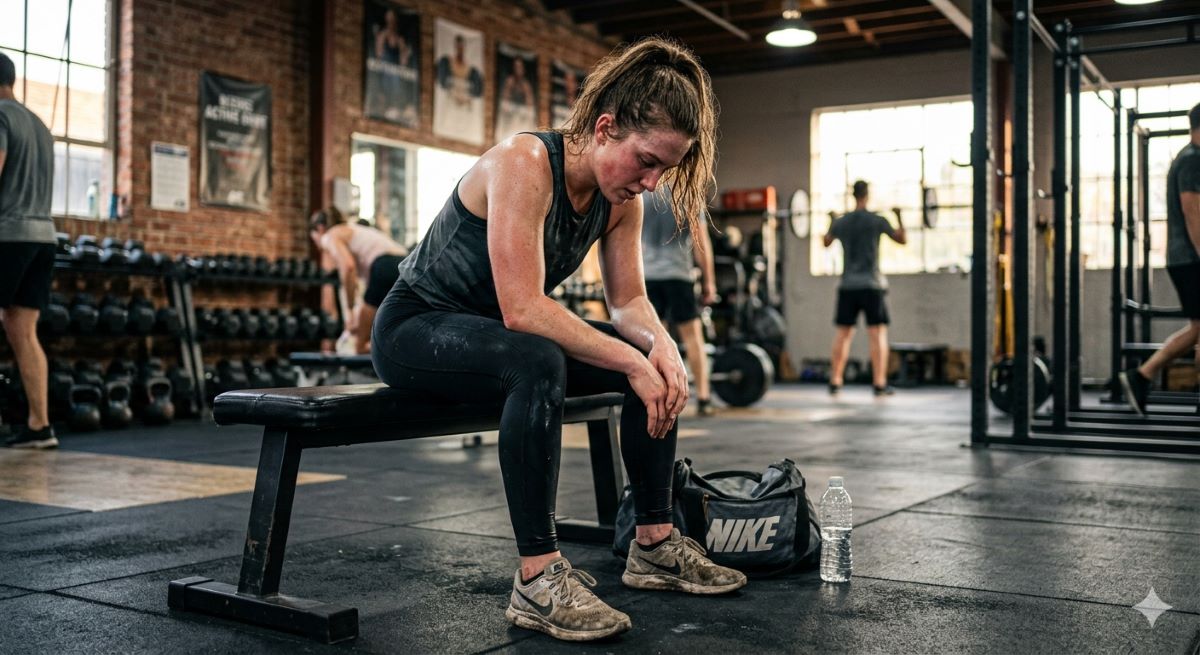
Why am I so sore after my first workout? For beginners, muscle soreness after unfamiliar exercise is common and can sometimes be more noticeable than expected.
Introduction
This guide explains why soreness happens, how long it lasts, when it becomes a warning sign, and how beginners can recover faster without making common mistakes. If you have ever asked yourself, “Why am I so sore after my first workout?” you are not alone.
You finish your first workout feeling proud. Then the next morning hits. Your legs hurt when you sit down. Walking downstairs feels impossible. Even lifting your arms becomes uncomfortable.
At that moment, many beginners wonder the following:
“Did I injure myself?”
“Did I overdo it?”
“Is this normal?”
Quick Answer
Soreness after your first workout is usually related to delayed onset muscle soreness (DOMS), which can occur when your muscles are exposed to exercise they are not accustomed to. It often develops several hours after exercise and becomes more noticeable over the following days. The intensity and duration of soreness vary from person to person and depend on the workout and individual factors. Severe, worsening, or unusual pain should not automatically be assumed to be DOMS.
Table of Contents
What Causes Soreness After Your First Workout?
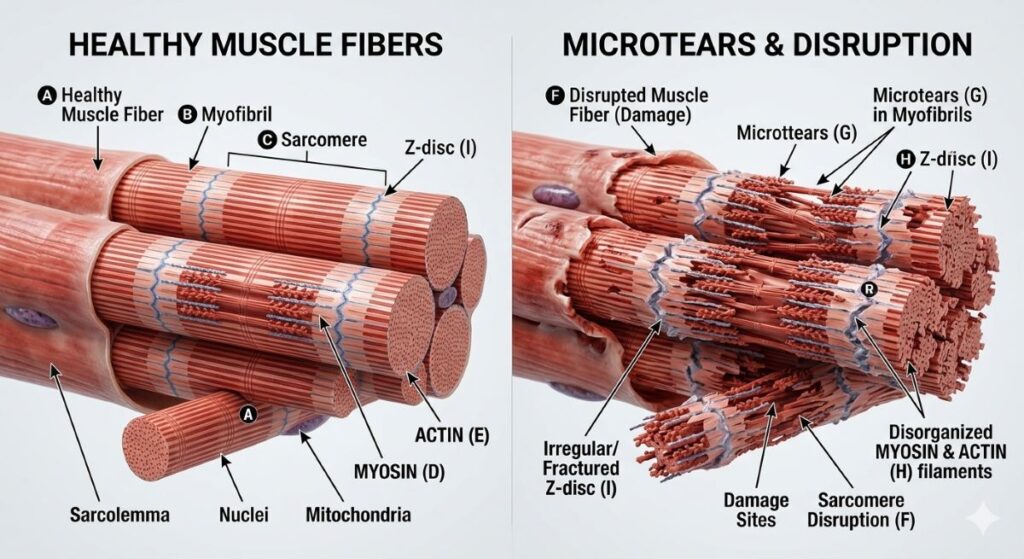
Your first workout can feel very different from the exercise your muscles are accustomed to. New movements, unfamiliar training loads, and eccentric contractions can place stress on muscle tissue and lead to DOMS.
For beginners, even a relatively simple workout can create noticeable soreness because the muscles have not yet adapted to that type of exercise.
Soreness is more likely when you:
- Try a new exercise or movement pattern
- increase the intensity or amount of exercise
- perform movements with a strong eccentric component
- return to exercise after a long break
This does not mean that muscle soreness is required for a workout to be effective.
Why do beginners feel? Why am I so sore after my first workout?
Beginners can experience more noticeable soreness because their muscles are not yet accustomed to the demands of structured exercise. New movement patterns and training loads can create a stronger stimulus than the body has recently experienced.
Other factors can also influence how sore you feel, including the intensity and amount of exercise, the type of movements performed, and whether you are returning to exercise after a break.
For example, a first workout that includes squats, lunges, or other unfamiliar lower-body movements may leave the legs noticeably sore afterward. This does not necessarily mean the workout was harmful or that more soreness would produce better results.
What Is DOMS?
Quick Definition
Delayed onset muscle soreness (DOMS) is muscle soreness and stiffness that develops after unfamiliar or more demanding exercise. It usually becomes noticeable several hours after exercise and can remain noticeable over the following days. DOMS is particularly associated with exercise involving eccentric muscle contractions, such as lowering into a squat or descending stairs:
- first workouts,
- intense leg training,
- returning to exercise after a break,
- or trying unfamiliar exercises.
Why DOMS Happens
DOMS is more likely after exercise that is unfamiliar or more demanding than your usual activity. Eccentric contractions are particularly associated with DOMS because muscles produce force while lengthening.
Examples include:
- lowering into a squat
- walking or running downhill
- lowering a dumbbell during a strength exercise
- descending stairs
These movements can place greater mechanical stress on muscles than movements performed primarily while the muscle is shortening.
Why Soreness Often Gets Worse on Day 2
DOMS does not always appear immediately after exercise. Soreness can become more noticeable several hours after a workout and may feel stronger the following day.
This delayed pattern is one of the features that distinguishes DOMS from discomfort that occurs during exercise. The timing and intensity vary between people and depend on factors such as the type of exercise, training intensity, and how accustomed your muscles are to the activity.
Is Soreness a Good Sign?
Muscle soreness is not a reliable measure of how effective a workout was. A new or demanding workout can cause noticeable soreness, but a workout can also be effective without causing much soreness.
As your body becomes accustomed to an exercise routine, you may experience less soreness even while continuing to improve strength, fitness, or muscle development.
Therefore, soreness should not be treated as a goal or used as the main way to judge your progress.
Normal Soreness vs. Injury Warning Signs
Most soreness after a first workout is temporary and affects the muscles that were exercised. However, not every type of post-workout pain is DOMS.
Typical DOMS may include:
- muscle tenderness or stiffness
- discomfort when using the affected muscles
- soreness that develops after exercise rather than during it
- soreness that gradually improves over time
Pain may need more attention if it is:
- sharp or severe
- localized to a specific area or joint
- associated with significant swelling or bruising
- accompanied by unusual weakness or numbness
- affecting your ability to move or bear weight
- getting worse rather than gradually improving
Severe muscle pain, significant swelling, marked weakness, or dark-colored urine after strenuous exercise can be signs of a serious condition such as rhabdomyolysis and require prompt medical attention.
If you are unsure whether your symptoms are normal post-workout soreness or something else, consider speaking with a healthcare professional.
Warning:
If soreness becomes extreme, including dark urine, severe swelling, or intense weakness, seek medical attention immediately because these may indicate more serious conditions such as rhabdomyolysis.
How Long Does Workout Soreness Last?
The duration of workout soreness varies between people. DOMS often becomes noticeable several hours after unfamiliar or demanding exercise and gradually improves over the following days.
How long soreness lasts can depend on the type and intensity of exercise, how accustomed you are to the activity, and individual recovery factors. There is no fixed number of days that applies to every beginner.
If soreness is severe, continues to worsen, or does not follow the usual pattern of gradual improvement, it should not automatically be assumed to be DOMS.
Should You Work Out While Sore?
Whether you should exercise while sore depends on the severity of the soreness and the activity you plan to do.
Mild soreness does not necessarily require complete rest. If you can move normally and the soreness is manageable, light activity or training a different muscle group may be reasonable.
If soreness is significant, affects your normal movement or strength, or makes it difficult to maintain proper exercise technique, allow more time for recovery before doing another demanding workout.
Soreness should not be used as the only measure of recovery. Sharp, severe, localized, worsening, or unusual pain should not automatically be treated as DOMS and may require medical evaluation.
When You Should Rest More
Extra recovery may be smarter if:
- Soreness severely limits movement
- technique breaks down,
- Fatigue remains high,
- or pain feels abnormal.
Ignoring recovery repeatedly increases overtraining risk.
Does More Soreness Mean More Muscle Growth?
More soreness does not necessarily mean more muscle growth. A new or demanding workout can produce substantial soreness, but soreness itself is not a reliable indicator of muscle growth or workout quality.
Muscle development depends on factors such as appropriate training, progressive increases in training stimulus, adequate nutrition, and recovery. As your body adapts to an exercise routine, you may experience less soreness while still making progress.
For beginners, the goal should be to build a consistent training routine rather than trying to make every workout as painful as possible.
Key Takeaways
- Soreness after your first workout is usually normal.
- DOMS commonly peaks 24 to 72 hours later.
- Severe soreness is not required for muscle growth.
- Recovery quality matters as much as training quality.
- Sleep, hydration, nutrition, and proper programming improve recovery.
- Beginners often progress better with moderation than extreme intensity.
Frequently Asked Questions:
Is it normal to be sore after your first workout?
Yes. Muscle soreness is common after unfamiliar or more demanding exercise, particularly when your muscles are not accustomed to the activity. However, severe or unusual pain should not automatically be assumed to be normal soreness.
How long does beginner muscle soreness last?
DOMS often develops several hours after exercise and gradually improves over the following days. The duration varies between people and depends on the workout and individual factors, so there is no fixed number of days that applies to every beginner.
Should I skip the gym if I’m sore?
Not necessarily. Mild soreness may still allow light activity or training a different muscle group. If soreness significantly affects your movement, strength, or exercise technique, allow more time for recovery before another demanding workout.
Does soreness mean muscle growth?
No. Soreness can occur after a new or demanding workout, but it is not a reliable measure of muscle growth or workout effectiveness. You can make progress without experiencing significant soreness.
When should soreness become more concerning?
Seek medical advice if pain is severe, worsening, localized, unusually persistent, or different from typical post-workout soreness. Significant swelling, unusual weakness, or dark-colored urine after strenuous exercise also requires prompt medical attention.
Ready to Recover Faster?
How to Recover Faster After a Workout for Beginners.
Best Foods for Muscle Recovery at Home
Disclaimer
This article is for educational and informational purposes only and should not be considered medical advice. Always consult a qualified healthcare professional before making significant changes to your sleep, exercise, or recovery routine, especially if you have underlying health conditions or sleep disorders.
References
- Cheung K, Hume P, Maxwell L. Delayed onset muscle soreness: treatment strategies and performance factors. Sports Medicine. 2003.
https://pubmed.ncbi.nlm.nih.gov/12617692/ - Byrne C, Twist C, Eston R. Neuromuscular function after exercise-induced muscle damage: theoretical and applied implications. Sports Medicine. 2004.
https://pubmed.ncbi.nlm.nih.gov/14715039/ - Proske U, Morgan DL. Muscle damage from eccentric exercise: mechanism, mechanical signs, adaptation, and clinical applications. Journal of Physiology. 2001.
https://pubmed.ncbi.nlm.nih.gov/11731568/

I’m Mr. Baig, founder of Recover Better Lab. I create evidence-based fitness recovery content to help beginners recover smarter and build sustainable healthy habits.
Mission: My mission is to provide trustworthy, research-backed recovery and fitness content that helps people optimize their health, performance, and overall well-being.