
Estimated Reading Time: 10–12 minutes
Last Reviewed: July 2026
Quick Answer
Most beginners don’t know. How long should beginners rest between workouts? They should rest 24 to 48 hours between workouts targeting the same muscle groups. Strength training beginners typically benefit from 3 to 4 workout sessions per week with at least 1 to 2 full rest days. Recovery time may increase after intense workouts or when sleep and nutrition are inadequate.

Beginner Recovery Guidelines For How Long Should Beginners Rest Between Workouts?
| Workout Type | Recommended Recovery |
| Light Walking | 0 to 24 hours |
| Beginner Cardio | 24 hours |
| Full-Body Strength Training | 48 hours |
| Heavy Resistance Training | 48 to 72 hours |
| High-Intensity Interval Training (HIIT) | 48 hours |
| Mobility or Stretching Sessions | Minimal recovery needed |
Starting a fitness journey is exciting, but many beginners focus only on exercise while ignoring recovery. The truth is that your body becomes stronger during recovery, not during the workout itself. One of the most common questions new exercisers ask is, “How long should I rest between workouts?”
The answer depends on workout intensity, fitness level, sleep quality, nutrition, and recovery capacity. However, most beginners benefit from 24 to 48 hours of recovery between training the same muscle group and at least 1 to 2 complete rest days per week.
In this guide, you’ll learn exactly how much recovery time beginners need, signs that you need more rest, and how to build an effective workout schedule that supports long-term progress.
Table of Contents
Why Recovery Matters More Than Beginners Think
Many new gym-goers assume that exercising every day will accelerate results. Excessive training without sufficient recovery can slow progress.
During recovery, your body:
- Repairs damaged muscle fibers
- Replenishes glycogen stores
- Reduces inflammation
- Restores hormone balance
- Improves strength and endurance
- Support nervous system recovery
Without enough rest, your performance eventually declines.
Recovery is not laziness; it’s a critical part of the training process.
What Happens If You Don’t Rest Enough?
Beginners are especially vulnerable to overtraining because their bodies are still adapting to new physical stress.
Common consequences include:
Persistent Muscle Soreness
Delayed Onset Muscle Soreness (DOMS) is normal after new workouts. However, soreness lasting several days may indicate inadequate recovery.
Reduced Performance
If your workout suddenly feels harder than usual, your body may still be fatigued from previous sessions.
Increased Injury Risk
Fatigued muscles provide less support for joints and connective tissues, increasing the risk of strains and overuse injuries.
Insufficient recovery often disrupts sleep patterns, creating a cycle of fatigue and slower recovery.
Loss of Motivation
Mental fatigue can be one of the earliest warning signs of excessive training.
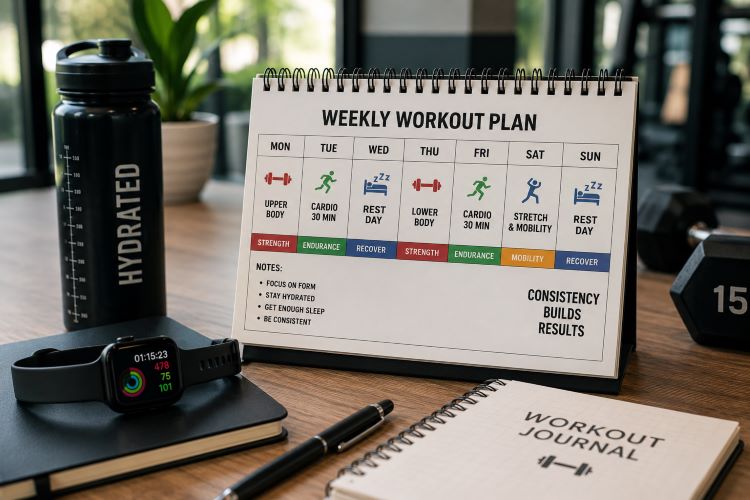
| Option 1: Three-Day Training Plan | Option 2: Four-Day Training Plan |
| Monday: Full Body Workout | Monday: Upper Body |
| Tuesday: Recovery Day | Tuesday: Lower Body |
| Wednesday: Full Body Workout | Wednesday: Rest |
| Thursday: Recovery Day | Thursday: Upper Body |
| Friday: Full Body Workout | Friday: Lower Body |
| Saturday: Light Activity | Saturday: Active Recovery |
| Sunday: Complete Rest | Sunday: Rest |
These schedules allow muscles to recover while maintaining consistent progress.
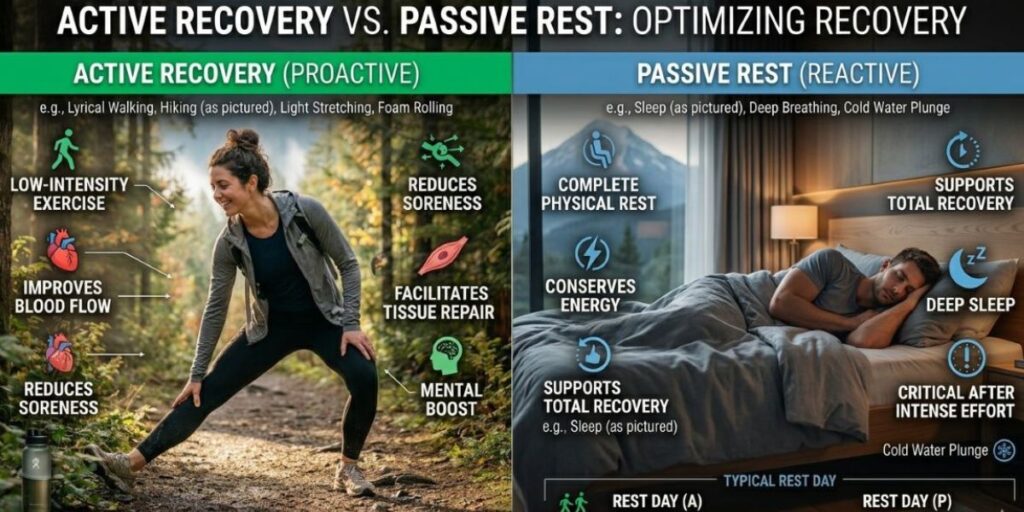
Active Recovery vs Complete Rest
Not every recovery day needs to involve sitting on the couch.
Active Recovery Active recovery involves low-intensity movement that promotes circulation and recovery.
| Examples include: | Benefits: | Complete rest is more beneficial when: |
| Walking | Improves blood flow | You’re extremely sore |
| Gentle Cycling | Reduces stiffness | Sleep quality has been poor |
| Yoga | Supports muscle repair | You’re recovering from illness |
| Mobility exercises | Enhances recovery speed | Training volume has increased significantly |
| Light stretching |
The best approach is usually a combination of both.
Signs Your Body Needs More Recovery Time
Learning to recognize recovery signals is one of the most valuable fitness skills beginners can develop.
Watch for:
Excessive Fatigue
Feeling tired all day despite adequate sleep may indicate accumulated training stress.
Elevated Resting Heart Rate
A consistently higher morning heart rate often suggests incomplete recovery.
Decreased Workout Performance
Struggling to lift normal weights or complete usual workouts can signal fatigue.
Poor Sleep
Difficulty falling asleep or staying asleep often correlates with inadequate recovery.
Joint Pain
Muscle soreness is common. Joint pain is not.
Persistent joint discomfort requires additional recovery and potentially modified training.
Factors That Affect Recovery Speed
Not everyone recovers at the same rate. Several factors influence how long beginners should rest between workouts.
Sleep Quality: Sleep is the most powerful recovery tool available.
Most adults require:
- 7 to 9 hours nightly
- Consistent sleep schedule
- Quality sleep environment
Poor sleep can dramatically increase recovery time.
Nutrition
Recovery depends heavily on nutrient intake.
Focus on:
- Adequate protein
- Complex carbohydrates
- Healthy fats
- Hydration
- Micronutrients
Insufficient nutrition slows muscle repair.
Reference by: Morton RW, Murphy KT, McKellar SR, et al. (2018).
“A Systematic Review, Meta-analysis, and Meta-regression of Protein Supplementation on Resistance Training-Induced Gains in Muscle Mass and Strength in Healthy Adults.” Published in the British Journal of Sports Medicine.
Age
Recovery generally becomes slower with age.
Older beginners may benefit from additional recovery days.
Workout Intensity
Higher-intensity workouts require longer recovery periods.
A light walk requires far less recovery than a heavy leg workout.
Stress Levels
Work stress, family responsibilities, and mental fatigue can significantly impact physical recovery.
How Beginners Can Recover Faster
Recovery doesn’t have to be passive.
You can actively support your body’s repair process.
Prioritize Sleep
Sleep should be your first recovery strategy.
Aim for:
- 7 to 9 hours nightly
- Consistent bedtime
- Limited screen exposure before sleep
Even mild dehydration can impair recovery and performance. Most beginners should drink water consistently throughout the day rather than only around workouts.
Protein supplies the amino acids required for muscle repair. Most active adults benefit from approximately the following:
1.4 to 2.0 grams of protein per kilogram of body weight
Walk More
Light movement improves circulation and helps reduce stiffness.
Even a 20-minute walk can support recovery.
Manage Stress
Recovery is influenced by both physical and mental stress.
Consider:
- Deep breathing
- Meditation
- Walking outdoors
- Journaling
Can Beginners Work Out Every Day?
Technically, yes. However, the intensity matters.
A beginner can perform:
- Walking daily
- Working daily Mobility
- Stretching daily
But performing intense strength training every day is rarely ideal.
Most beginners progress faster by balancing training and recovery rather than maximizing workout frequency.
Consistency beats intensity.
The Best Recovery Rule for Beginners
A simple guideline:
If the same muscle group is still significantly sore, give it more recovery time.
You don’t need a perfect schedule.
You need a sustainable one.
Listen to your body while maintaining consistency.
Recovery isn’t time lost; it’s where adaptation occurs.
Common Beginner Recovery Mistakes
Avoid these frequent errors:
Training Through Severe Soreness
Mild soreness is manageable.
Severe soreness requires recovery.
Ignoring Sleep
No supplement can replace quality sleep.
Under-Eating
Many beginners unintentionally eat too little to support recovery.
Excessive Cardio
Too much cardio can interfere with recovery from strength training.
Comparing Yourself to Advanced Athletes
Experienced lifters often recover faster because of years of training adaptations. Your recovery needs are unique.
Final Thoughts
For most beginners, 24 to 48 hours of recovery between workouts targeting the same muscles are ideal. The goal isn’t to work out as much as possible. The goal is to train consistently while giving your body enough time to adapt, repair, and grow stronger.
Prioritize sleep, nutrition, hydration, and stress management alongside your workouts. The beginners who recover well are usually the beginners who stay consistent, and consistency ultimately drives long-term results.
Frequently Asked Questions:
Is it okay to work out two days in a row as a beginner?
Yes. If you’re training different muscle groups or varying workout intensity, consecutive training days can be effective.
Should beginners take rest days?
Absolutely. Most beginners benefit from at least 1–2 full rest days each week.
How long does muscle recovery take for beginners?
Most muscles recover within 24–72 hours depending on workout intensity and individual factors.
Can I exercise while sore?
Mild soreness is usually fine. Severe soreness may require additional recovery time
What is active recovery?
Active recovery involves low-intensity activities such as walking, cycling, stretching, or yoga that promote recovery without adding significant fatigue.
Medical Disclaimer
The information in this article is intended for educational and informational purposes only.
It should not be considered medical advice, diagnosis, or treatment.
Always consult a qualified healthcare professional before making significant changes to your diet, exercise routine, or supplementation program.
When to Consult a Healthcare Professional
Seek professional medical advice if you experience:
- Persistent fatigue
- Unexplained weight loss
- Severe muscle pain
- Chronic recovery problems
- Dizziness during exercise
- Suspected nutrient deficiencies
- Existing medical conditions affecting nutrition
A registered dietitian, sports nutritionist, or healthcare provider can help develop an individualized recovery nutrition plan.
Active Recovery vs Rest Days: What Beginners Should Choose
How to Recover Faster After a Workout for Beginners
References
- American College of Sports Medicine (ACSM) Position Stands
- Evidence-based recommendations for exercise prescription, recovery, and resistance training frequency.
- National Strength and Conditioning Association (NSCA)
- Research and guidelines on strength training, recovery, and athletic performance.
- National Academy of Sports Medicine (NASM)
- Beginner exercise programming and recovery recommendations.
- CDC Physical Activity Guidelines for Adults
- Official recommendations for weekly exercise and recovery considerations.
- World Health Organization Physical Activity Guidelines
- Global standards for exercise frequency and health benefits.
- National Sleep Foundation
- Sleep recommendations and recovery science.

I’m Mr. Baig, founder of Recover Better Lab. I create evidence-based fitness recovery content to help beginners recover smarter and build sustainable healthy habits.
Mission: My mission is to provide trustworthy, research-backed recovery and fitness content that helps people optimize their health, performance, and overall well-being.