
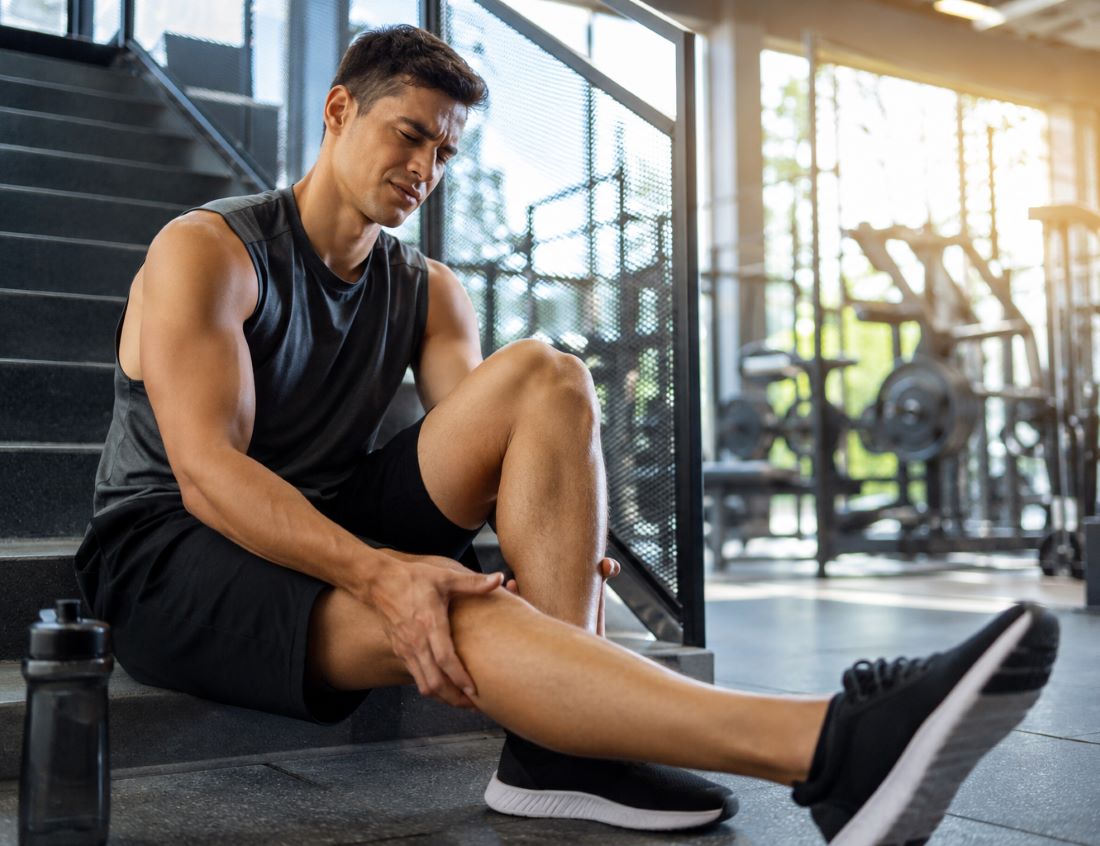
How Long Does Muscle Soreness Last After a Workout?

Mr. Baig

Founder, Recover Better Lab

Our mission is to provide trustworthy, research-backed recovery and fitness content that helps people optimize their health, performance, and overall well-being.

Have you ever finished a workout feeling great, only waking up the next morning wondering what happened to your legs, and how long does muscle soreness last after a workout?

Maybe climbing stairs suddenly feels difficult. Sitting down is uncomfortable. Standing up feels like a workout all by itself. By the second day, the soreness may feel even worse, leaving you wondering whether you pushed yourself too hard or injured something.

If you’ve been asking yourself how long muscle soreness lasts after a workout, you’re not alone.

Introduction

Muscle soreness is one of the most common experiences after exercise, especially for beginners, people returning after a break, or anyone trying a new workout routine. The good news is that most post-workout soreness is completely normal and often reflects your body’s natural recovery process.

The challenge is knowing the difference between normal soreness and signs that something may require extra attention.

In this guide, you’ll learn what causes muscle soreness, how long it typically lasts, how to recover faster, and when soreness may indicate a problem.

How long does muscle soreness last after a workout?

Most muscle soreness lasts between 24 and 72 hours after exercise. This soreness, known as delayed onset muscle soreness (DOMS), usually begins 12 to 24 hours after a workout, peaks around 24 to 48 hours, and gradually improves over the following days. In some cases, soreness can last up to 5 to 7 days, especially after a new or intense workout.

Could This Be Normal Muscle Soreness?

Do Any of These Sound Familiar?

Soreness started 12 to 24 hours after exercise

The soreness feels worse on Day 2

Walking or climbing stairs feels more difficult than usual

You recently started a new workout program

You increased workout intensity or volume

Movement feels uncomfortable but still possible

The soreness improves slightly each day

There is no severe swelling or sharp pain

Your Results

6 to 8 checked: Your soreness is likely normal DOMS.

3 to 5 checked: Mild-to-moderate recovery-related soreness.

0 to 2 checked: Your symptoms may be caused by something other than typical post-workout soreness.

What Is Happening Inside Your Muscles?

Most post-workout soreness happens because your muscles are adapting to a physical challenge and repairing small amounts of exercise-related damage.
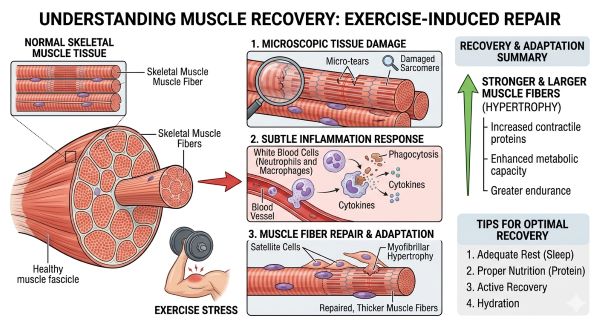
Microscopic muscle repair process after exercise causing delayed-onset muscle soreness
Tiny muscle fiber damage and repair are normal parts of exercise adaptation.

Understanding Delayed Onset Muscle Soreness (DOMS)

The soreness many people experience after exercise is called delayed onset muscle soreness, or DOMS.

Unlike the burning sensation you may feel during a workout, DOMS doesn’t appear immediately. Instead, it develops several hours later and becomes most noticeable the next day.

This is why you might finish a workout feeling fine but wake up sore the following morning.

What Causes Microscopic Muscle Damage?

When you exercise, especially during strength training, your muscle fibers experience tiny amounts of stress.

This stress creates microscopic damage within the muscle tissue. While the word “damage” may sound alarming, this is a normal part of the adaptation process.

Your body responds by:

  • Repairing damaged muscle fibers
  • Strengthening existing tissue
  • Improving future performance
  • Building resilience to similar workouts

Why Muscle Repair Leads to Soreness

As your body repairs these muscle fibers, a temporary inflammatory response occurs.

This process can create:

  • Tenderness
  • Stiffness
  • Reduced range of motion
  • Temporary weakness

Soreness is not usually caused by lactic acid, as many people believe. Lactic acid clears from the body relatively quickly after exercise. Instead, DOMS is largely related to the muscle repair process itself.

Recovery Science Spotlight

Your body doesn’t get stronger during your workout. It gets stronger while recovering from your workout. Exercise creates a stimulus. Recovery creates adaptation.

“Muscle soreness is often a sign that your body is adapting to a challenge, not necessarily a sign that something is wrong.”

Why Does Muscle Soreness Happen After a Workout?

Muscle soreness typically occurs when your muscles experience a level of stress they are not fully adapted to yet.

Several situations can trigger DOMS.

You Tried a New Exercise

New movement patterns challenge muscles in unfamiliar ways.

For example:

  • Starting strength training
  • Trying a new fitness class
  • Beginning a running program
  • Learning a new sport

Even fit individuals can become sore when introducing unfamiliar exercises.

You increased workout intensity.

Your body adapts gradually.

If you suddenly increase:

  • Weight lifted
  • Number of repetitions
  • Workout duration
  • Training frequency

Your muscles may experience more soreness than usual.

You Performed More Eccentric Movements

Eccentric movements occur when muscles lengthen while producing force.

Examples include:

  • Lowering into a squat
  • Walking downhill
  • Lowering a dumbbell
  • Descending stairs

These movements are particularly associated with DOMS.

Expert Tip

Many beginners assume soreness means they exercised correctly.

Soreness often reflects novelty, not workout quality. A highly effective workout may produce little soreness once your body becomes adapted.

Muscle Soreness Recovery Timeline

One of the most common questions beginners ask is

How long does DOMS last?

While every person recovers differently, most soreness follows a predictable pattern.

Muscle soreness recovery timeline showing DOMS progression after a workout
DOMS usually begin within 24 hours, peak around Day 2, and improve over several days.

0 to 12 Hours

Most people feel relatively normal immediately after exercise. You may experience fatigue, but significant soreness has usually not developed yet.

12 to 24 Hours

This is when DOMS typically begins.

You may notice:

  • Tight muscles
  • Mild tenderness
  • Reduced flexibility

24 to 48 Hours

For many people, soreness reaches its peak during this period.

Activities like:

  • Sitting down
  • Standing up
  • Climbing stairs

may feel noticeably more difficult.

48 to 72 Hours

Recovery usually begins. The discomfort gradually decreases, and normal movement becomes easier.

3 to 7 Days

Most soreness resolves completely during this period. However, recovery may take longer after:

  • Very intense workouts
  • Long periods without exercise
  • High-volume leg training

Why Am I So Sore After My Workout?

Most excessive soreness happens because the workout placed more stress on your muscles than they were prepared for.

New exercises can increase muscle soreness after a workout
New movement patterns often create more soreness because muscles are adapting to unfamiliar stress.

That doesn’t necessarily mean you did something wrong. It often means your body is adapting to a new challenge. However, understanding the most common causes can help you manage soreness and recover more effectively.

You Returned After a Long Break

One of the biggest triggers for DOMS is returning to exercise after weeks or months of inactivity.

Even if you were previously fit, your muscles lose some conditioning when training stops. When you resume exercise, the same workout that once felt easy can create significant soreness.

Real-Life Example

Imagine someone who used to exercise regularly but took three months off. Their first leg workout back may produce more soreness than expected because the muscles are no longer adapted to that level of stress.

You Did Too Much Too Soon

Motivation is often highest when people begin a new fitness program.

The problem is that enthusiasm can lead to the following:

  • Too many sets
  • Too much weight
  • Too many workout days
  • Insufficient recovery

Your muscles may simply need time to adapt.

Your Recovery Habits Need Improvement

Exercise creates demand. Recovery creates the results. If recovery habits are poor, soreness may last longer than necessary.

Important recovery factors include:

  • Sleep quality
  • Protein intake
  • Hydration
  • Stress management
  • Recovery days

You focused on high-volume leg training.

Leg workouts often produce more soreness than upper-body sessions because they involve large muscle groups.

Exercises commonly associated with DOMS include:

  • Squats
  • Lunges
  • Step-ups
  • Running
  • Hiking downhill

This is one reason many people search for answers after a difficult leg day.

Common Mistake:

Mistake:
Trying to “make up for lost time” by doing an extremely hard workout after a break.

Better Approach:
Gradually increase training volume over several weeks to allow your muscles to adapt safely.

Why Am I Sore 3 Days After a Workout?

Being sore three days after a workout is often completely normal. In fact, many people experience peak soreness between 24 and 72 hours after exercise. Several factors can influence how long soreness lasts:

  • Exercise intensity
  • Training experience
  • Age
  • Sleep quality
  • Nutrition
  • Hydration
  • Muscle groups trained

When Day 3 Soreness Is Usually Normal

Your soreness is likely normal if:

  • It is gradually improving
  • Both sides of the body feel similar
  • Movement is possible
  • There is no sharp pain
  • There is no significant swelling

When Day 3 Soreness May Need Attention

You may want to monitor symptoms more closely if:

  • Pain continues worsening
  • Daily activities become difficult
  • Swelling increases
  • Weaknesses become severe
  • Symptoms persist beyond a week

“Normal soreness usually gets better with time. Injury-related pain often gets worse or stays the same.”

Warning Signs That Soreness May Not Be Normal

Most muscle soreness is harmless, but certain symptoms deserve medical attention.

Watching These Warning Signs

⚠ Severe swelling

⚠ Sharp or stabbing pain

⚠ Joint pain rather than muscle soreness

⚠ Significant weakness

⚠ Loss of normal movement

⚠ Dark-colored urine

⚠ Symptoms lasting longer than a week without improvement

When to Seek Immediate Medical Attention

Rarely, severe muscle damage can contribute to a condition called rhabdomyolysis.

Warning signs include:

  • Extreme muscle pain
  • Severe swelling
  • Dark urine
  • Fever
  • Nausea

If these symptoms occur, seek medical care immediately.

Healthy Soreness vs Excessive Soreness

One of the easiest ways to evaluate your recovery is to compare your symptoms with typical DOMS.

If soreness is slowly improving, it’s usually part of the normal recovery process.

If symptoms are worsening, consider speaking with a healthcare professional.

Should You Work Out with Sore Muscles?

In many cases, yes, but it depends on the severity of the soreness.

When Light Exercise Is Usually Fine

You can often continue exercising if:

  • Soreness is mild
  • Movement feels normal
  • There is no swelling
  • Strength is mostly unaffected

Good options include:

  • Walking
  • Cycling
  • Mobility work
  • Light resistance training

When Rest May Be Better

Consider additional recovery if:

  • Soreness is severe
  • Movement is difficult
  • Strength is noticeably reduced
  • Fatigue is excessive

When You Should Stop Training

Stop exercising and seek advice if:

  • Pain is sharp
  • A specific injury is suspected
  • Swelling is severe
  • Symptoms worsen significantly

Myth vs Fact Box

Myth: If you’re not sore, your workout wasn’t effective.

Fact: Progress comes from consistent training and recovery. Many experienced exercisers make excellent progress without significant soreness.

Troubleshooting Guide

Problem → Cause → Solution

How to Recover from Sore Muscles Faster

You can’t eliminate DOMS instantly, but you can support the recovery process.

Prioritize Sleep

Sleep is one of the most important recovery tools available. During sleep, your body performs much of its repair work.

Eat Enough Protein

Protein provides the building blocks your muscles need to repair and adapt.

Good sources include:

  • Eggs
  • Greek yogurt
  • Chicken
  • Fish
  • Lean meat
  • Beans
  • Lentils
  • Tofu

Stay Hydrated

Dehydration can make recovery feel harder.

Aim to drink water consistently throughout the day rather than waiting until you feel thirsty.

Use Active Recovery

Light movement can improve circulation and reduce feelings of stiffness.

Examples:

  • Walking
  • Gentle cycling
  • Stretching
  • Mobility exercises

Manage Training Volume

Recovery improves when exercise intensity increases gradually.

A good rule:

Increase training slowly enough that your body has time to adapt.

Expert Tip

Recovery strategies that consistently help:

✓ Quality sleep

✓ Adequate protein

✓ Hydration

✓ Active recovery

✓ Smart training progression

Recovery gadgets and trendy hacks are far less important than these basics.

Simple 24-Hour Recovery Plan

Immediately After Your Workout

✓ Drink water

✓ Eat a balanced meal containing protein

✓ Perform a short cool-down

✓ Avoid sitting for long periods

That Evening

✓ Take a light walk

✓ Stretch gently if comfortable

✓ Prioritize sleep

✓ Maintain hydration

The Next Day

✓ Stay active

✓ Monitor soreness

✓ Adjust workout intensity if necessary

✓ Continue eating protein-rich meals

Frequently Asked Questions:

How long does muscle soreness last?

Most soreness lasts between 24 and 72 hours, though some cases may last up to a week after intense exercise.

How long does DOMS last?

DOMS typically peaks between 24 and 48 hours and gradually improves over the following days.

Why am I sore 3 days after a workout?

DOMS often remains noticeable for up to 72 hours, especially after unfamiliar or intense exercise.

Can muscle soreness last a week?

Yes. Severe DOMS from a new or demanding workout can occasionally last 5 to 7 days.

Does soreness mean muscle growth?

Not necessarily. Soreness indicates your body is responding to exercise, but progress can occur with little or no soreness.

Should I exercise while sore?

Mild soreness is usually compatible with light activity. Severe soreness may require additional recovery.

When to Seek Professional Help

Contact a healthcare professional if:

  • Pain is severe
  • Symptoms worsen over time
  • Significant swelling occurs
  • Daily activities become difficult
  • Dark urine develops
  • Symptoms persist beyond a week without improvement

Medical Disclaimer

This article is for educational purposes only and is not intended to diagnose, treat, cure, or prevent any medical condition. Always consult a qualified healthcare professional regarding concerns about pain, injury, or medical symptoms.

Key Takeaways

  • Most muscle soreness lasts 24 to 72 hours.
  • DOMS usually peaks between 24 and 48 hours.
  • Being sore for 3 days after a workout is often normal.
  • Sleep, hydration, nutrition, and active recovery support muscle repair.
  • Severe pain, swelling, or worsening symptoms may indicate a problem.
  • You do not need to be sore after every workout to make progress.

Beginner Action Plan

Step 1

Determine whether your soreness matches normal DOMS patterns.

Step 2

Support recovery through sleep, hydration, nutrition, and light movement.

Step 3

Reduce the temptation to train excessively when starting a new program.

Step 4

Monitor symptoms and seek professional advice if warning signs appear.

Conclusion

If you’ve been wondering how long muscle soreness lasts after a workout, the answer is usually reassuring. Most soreness is a normal part of the recovery process and typically improves within a few days.

Rather than viewing soreness as a problem, think of it as feedback from your body. Your muscles are adapting to a challenge, repairing themselves, and becoming more resilient. The goal isn’t to avoid soreness completely. The goal is to recover well, train consistently, and build habits that support long-term progress.

References:

1. National Institutes of Health (NIH)

2. American College of Sports Medicine

3. National Institutes of Health (PubMed)

4. Cleveland Clinic

Leave a Comment