
Quick Answer
Whether you should eat before or after a workout depends on your workout, when you last ate, and your overall nutrition. Eating before exercise can support energy and performance, while eating afterward provides nutrients needed for recovery. For most recreational exercisers, meeting your overall calorie and protein needs matters more than following a strict meal-timing rule.
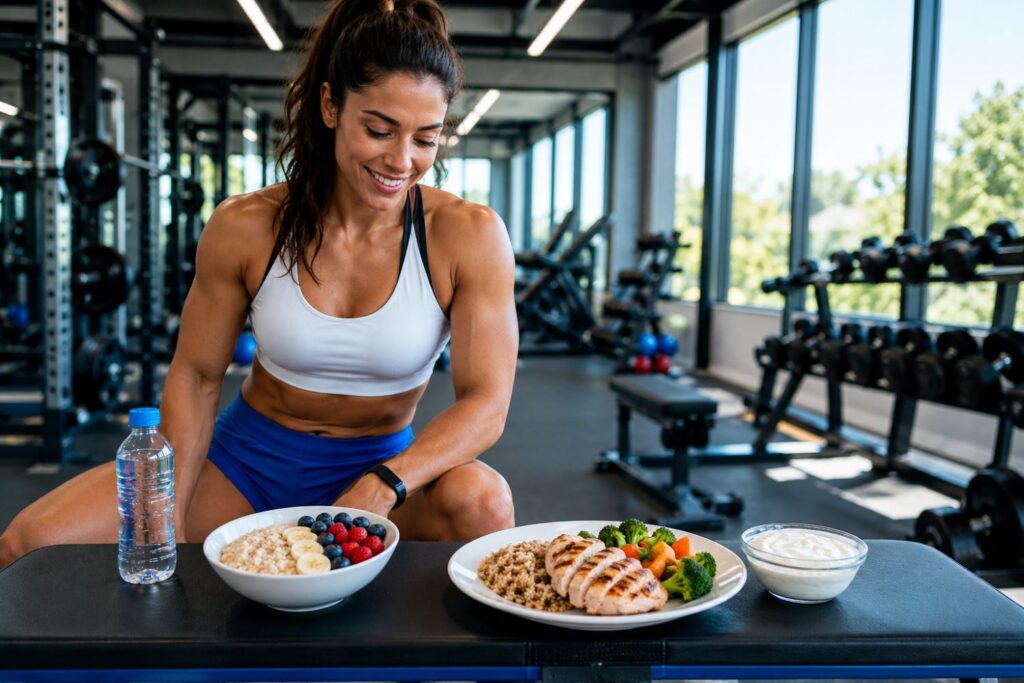
A balanced combination of carbohydrates and protein before and after exercise can support performance and recovery.
Introduction
Should You Eat Before or After a Workout? It’s one of the most common questions in fitness and sports nutrition. Some people never exercise without eating first, while others prefer fast workouts or focus only on eating after they finish training. This variety of advice often leads to confusion about which approach is supported by science.
Current research suggests there is no single rule that applies to everyone. The best approach depends on several factors, including the type of exercise you perform, how long and how intensely you train, your fitness goals, and when you last ate. For many healthy adults, both pre-workout and post-workout nutrition play important but different roles in supporting performance, recovery, and long-term progress.
This article explains what the evidence says about workout meal timing, when eating before exercise may be beneficial, when eating afterward becomes more important, and how to make practical decisions based on your individual needs.
Table of Contents
Should You Eat Before or After a Workout?
The question is not whether one meal is universally better than the other. Instead, it is whether your body would benefit more from fuel before exercise, nutrients after exercise, or both. Eating before exercise primarily helps prepare your body for physical activity by providing energy, maintaining blood glucose levels, and supporting performance during longer or higher-intensity workouts. Eating after exercise helps replenish energy stores, stimulate muscle protein synthesis, and supports recovery and adaptation.
For someone who ate a balanced meal one to three hours before training, immediate post-workout eating may be less urgent than many people believe. Conversely, someone exercising early in the morning after an overnight fast may benefit from eating soon after completing the session. Rather than viewing pre-workout and post-workout meals as competing strategies, it is more accurate to think of them as complementary parts of an overall nutrition plan.
Why Eating Before Exercise Can Matter
Benefits of Eating Before a Workout
A pre-workout meal provides your body with readily available energy. Carbohydrates help maintain blood glucose and replenish liver glycogen, while moderate amounts of protein contribute amino acids that support muscle function during and after exercise.
Potential benefits include the following:
Improved exercise performance
Better endurance during longer sessions
Reduced early fatigue
Greater ability to maintain workout intensity
Better concentration during training
These benefits become increasingly important during workouts lasting longer than about one hour or during high-intensity activities such as interval training, competitive sports, or heavy resistance exercise.

When a Pre-Workout Meal May Not Be Necessary
Not every workout requires eating beforehand. A pre-workout meal may be less important when:
Exercise lasts less than 45 to 60 minutes.
The workout is low intensity, such as walking or gentle cycling.
You ate a balanced meal within the previous few hours.
You experience digestive discomfort when eating before exercise.
Some individuals also prefer exercising before breakfast. While this approach can be appropriate for certain low- to moderate-intensity activities, it may reduce performance during longer or more demanding workouts. In general, meal timing should support your training rather than make it more difficult or uncomfortable.
Why Eating After Exercise Supports Recovery
Protein Helps Repair and Build Muscle
Exercise places stress on muscle tissue, and recovery is the period when the body repairs and adapts to that training stimulus. Protein provides the amino acids needed to support muscle protein synthesis and tissue repair. How Much Protein Do You Need for Muscle Recovery?
Research consistently shows that consuming adequate daily protein is one of the most important nutritional factors for supporting muscle recovery. After resistance training, protein intake stimulates muscle protein synthesis, the process responsible for repairing and building muscle tissue.
For many adults, a moderate serving of high-quality protein after exercise can support muscle protein synthesis. The amount needed varies with body size, age, training status, and total daily protein intake, so there is no single post-workout amount that applies to everyone. Examples of protein-rich foods include:
Greek yogurt
Eggs
Chicken or turkey
Fish
Lean beef
Cottage cheese
Tofu or tempeh
Soy milk
Whey or plant-based protein shakes
The goal is not to consume protein immediately after every workout but to ensure your daily protein intake is adequate and distributed across meals.
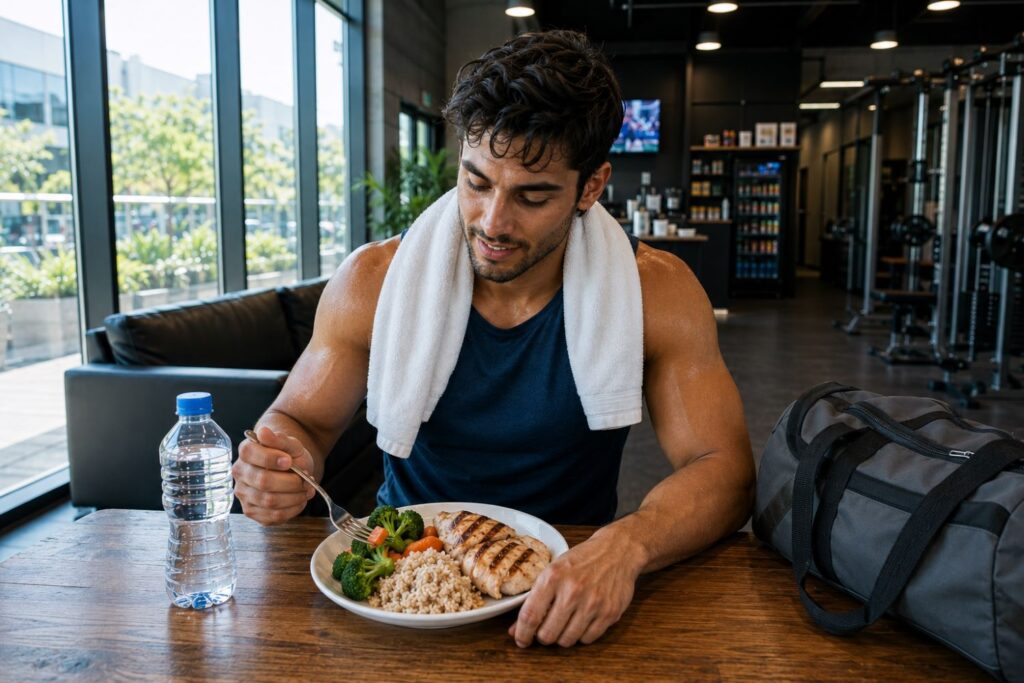
Carbohydrates Help Restore Energy Stores
Carbohydrates help replenish glycogen, the stored form of carbohydrate used as fuel during exercise. Replacing glycogen becomes more important when training is long, intense, or repeated within a short period. For a typical recreational workout, however, there is no need to consume carbohydrates immediately after exercise.
This becomes especially important if you:
Complete endurance workouts last longer than 60 to 90 minutes.
Perform multiple training sessions in one day.
Train on consecutive days with little recovery time.
Participate in competitive sports.
For shorter or less demanding workouts, immediate carbohydrate replacement is generally less critical, provided you consume balanced meals throughout the day. Nutritious carbohydrate sources include:
Oatmeal
Rice
Potatoes
Whole-grain bread
Fruit
Beans
Quinoa
Pasta
Combining carbohydrates with protein after exercise can support both energy restoration and muscle recovery.
Pre-Workout vs. Post-Workout Nutrition
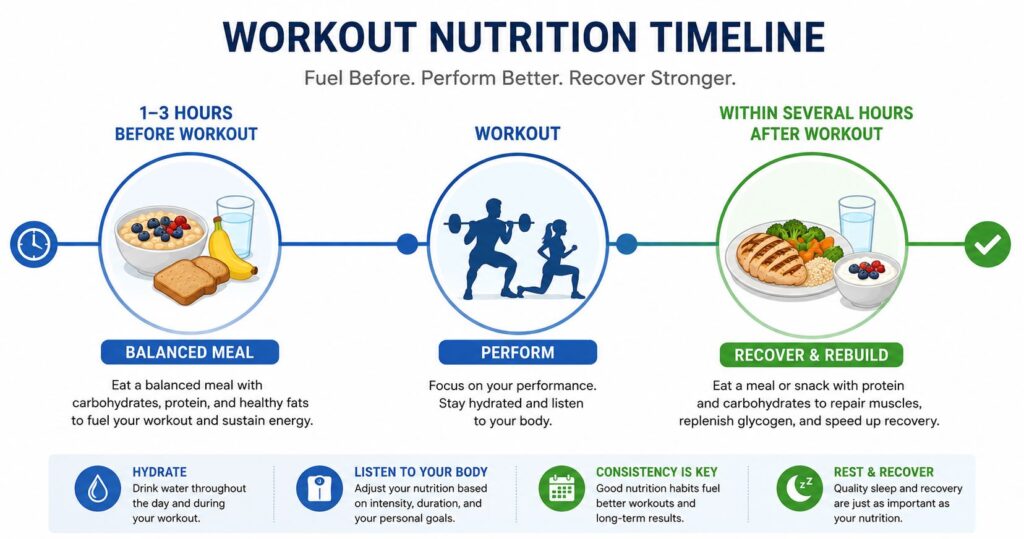
Pre-workout and post-workout nutrition serve different purposes, but neither is automatically more important than the other. Eating before exercise can provide energy and support performance, especially when you have not eaten for several hours or are doing a longer or more demanding workout.
After exercise, protein supports muscle repair and adaptation, while carbohydrates help replenish glycogen used during training. How soon you need to eat depends on when you last ate, how demanding the workout was, and when you plan to train again.
What Does Current Research Say?
Current research suggests that overall nutrition matters more than following a strict pre- or post-workout eating window. Adequate daily protein is important for supporting muscle growth and recovery, while protein consumed around resistance exercise can further stimulate muscle protein synthesis.
Carbohydrate timing becomes more relevant when exercise is prolonged, demanding, or repeated within a short period because restoring glycogen can help prepare the body for subsequent training. For most recreational exercisers completing one typical workout per day, however, there is less need to focus on precise carbohydrate timing.
Recent evidence also suggests that protein timing itself does not substantially change gains in lean body mass for most resistance-trained adults. This supports a practical approach: prioritize adequate daily protein and overall nutrition, then use meal timing to support your individual training schedule and comfort.
Does Your Goal Change the Answer?
Building Muscle
If your goal is to build muscle, prioritize adequate total calories and daily protein. Eating before training can support workout performance, while eating afterward provides another opportunity to consume protein and carbohydrates. You do not need to follow a precise meal-timing schedule to make progress.
Losing Weight
For fat loss, your overall calorie intake matters more than whether you eat before or after exercise. A sustainable calorie deficit is the main factor driving weight loss, while adequate protein and resistance training can help support lean muscle during the process.
Improving performance:
For longer, harder, or more frequent training, meal timing becomes more useful. Eating beforehand can help provide fuel for demanding sessions, while eating afterward can help replenish energy stores and provide protein for recovery.
What If You Exercise on an Empty Stomach?
Fasted exercise means exercising after going several hours without eating, often before breakfast. Some people find this comfortable, particularly for shorter, lower-intensity sessions. Others may feel weak, hungry, or unable to perform well without food.
Eating before exercise may be more useful when you are planning a longer or more demanding workout, lifting heavy weights, or notice that training without food affects your energy or performance.
There is no need to force fasted training if it does not feel good or fit your training needs. The better approach is to choose the option that allows you to train comfortably and maintain adequate nutrition throughout the day.
Is the Anabolic Window Really Only 30 Minutes?
For years, the idea of a 30-minute post-workout ‘anabolic window’ led people to believe that protein had to be consumed immediately after exercise. Current evidence suggests that this timeframe is much less restrictive for most people.
Protein after exercise can support muscle protein synthesis, but the exact timing matters less when you have already eaten a protein-containing meal before training and are meeting your overall daily protein needs. Eating a balanced meal within the next few hours is generally a practical approach for most recreational exercisers.
Timing becomes more important when you train fasted, perform prolonged exercise, or have another training session coming up soon.
While consuming protein after exercise supports muscle protein synthesis, the window is much wider than previously believed for most healthy adults. If you eat a protein-containing meal before training, your body continues digesting and absorbing amino acids during and after your workout.
This means that, for most recreational exercisers, eating a balanced meal within the next few hours is generally sufficient. The bigger picture matters more:
Total daily protein intake
Overall calorie intake
Consistent training
Adequate sleep
Proper hydration
These factors have a greater influence on long-term progress than trying to eat immediately after every workout.
Recovery Insight
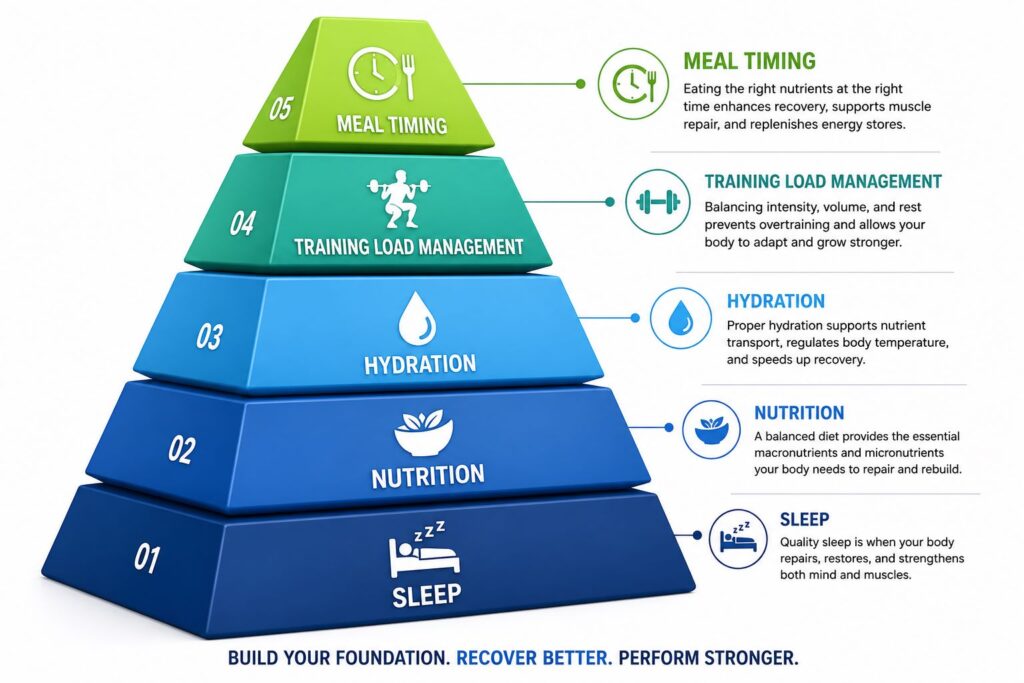
Meal timing can improve performance and recovery, but it cannot compensate for inadequate sleep, insufficient protein intake, dehydration, or inconsistent training. Think of it as one part of a complete recovery strategy, not the foundation.
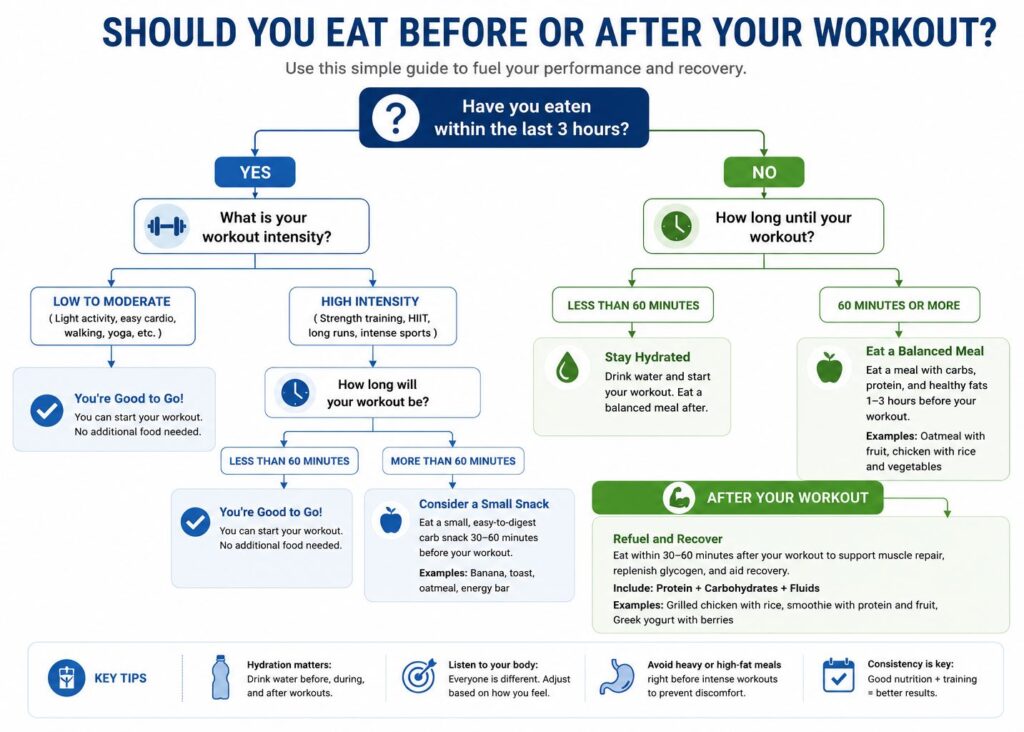
Practical Guidelines for Common Workout Scenarios
If you train in the morning:
“If you feel comfortable training before breakfast, you do not necessarily need to eat first. If you feel weak or hungry, a small, easily digested snack such as a banana or yogurt may be more practical.”
If you ate a meal recently:
“If you had a balanced meal within the previous few hours, you may not need another meal before training. Let your comfort and hunger guide you.”
If you have a long or demanding workout:
“Eating beforehand can be more useful for longer or higher-intensity sessions because carbohydrates and other nutrients can help support exercise performance.”
After a typical workout:
“For most recreational exercisers, there is no need to eat immediately. A balanced meal containing protein and carbohydrate within the following few hours is a practical approach.”
If you will train again soon:
“When another demanding workout is scheduled within a short period, paying closer attention to carbohydrate replacement and protein intake can help support recovery between sessions.” Can You Work Out While Sore?
Common Mistakes to Avoid
Even with good intentions, workout nutrition is often influenced by myths or unnecessary rules. Avoid these common mistakes:
1. Focusing too much on the clock
“Worrying about eating within a strict post-workout window can distract from the bigger priorities of adequate daily protein, energy, and overall nutrition.”
2. Skipping meals because you trained
“Exercise does not mean you need to compensate by avoiding food afterward. Your body still needs adequate energy and nutrients to support recovery.”
3. Ignoring how you feel during training
“If you regularly feel weak, hungry, or unusually fatigued during workouts, your pre-workout nutrition may need adjustment.”
4. Relying on supplements instead of a balanced diet
“Protein powders and other supplements can be convenient, but they are not required for most people. Regular meals can provide the protein, carbohydrates, and other nutrients needed for recovery.”
Medical Disclaimer
This article is intended for educational purposes only and should not be considered medical advice. Individual nutrition needs vary based on age, health status, medications, and activity level. If you have diabetes, kidney disease, gastrointestinal conditions, or another medical concern, consult a qualified healthcare professional or registered dietitian before making significant dietary changes.
Conclusion
Should you eat before or after a workout? Current evidence suggests there is no universal answer. The right choice depends on your workout, your goals, and when you last ate.
Eating before exercise can improve energy availability and performance, especially during longer or higher-intensity sessions. Eating afterward supports muscle repair, recovery, and replenishment of energy stores. For most recreational exercisers, both meals work together, and neither should be viewed as universally more important than the other.
Perhaps the most important takeaway is that meal timing should not distract from the bigger picture. Consistently eating a balanced diet that provides enough calories, protein, carbohydrates, healthy fats, and fluids has a greater impact on long-term health and fitness than trying to eat at an exact minute before or after every workout.
Rather than chasing perfect timing, build sustainable nutrition habits that fit your schedule, support your training, and promote consistent recovery.
Frequently Asked Questions
Should you eat before or after a workout?
Both can be useful. Eating before exercise can support energy and performance, while eating afterward provides protein and carbohydrates that support recovery. For most recreational exercisers, overall daily nutrition matters more than exact meal timing.
How long should you eat before a workout?
A balanced meal is often practical about 1–3 hours before exercise. If you are eating closer to the workout, a smaller, easily digested snack may be more comfortable.
How soon should you eat after a workout?
For most people, there is no need to eat immediately. A balanced meal containing protein and carbohydrates within the next few hours is generally sufficient, particularly if you ate before exercising.
Is it okay to work out on an empty stomach?
Some healthy adults can exercise comfortably without eating first, particularly during shorter or lower-intensity sessions. Eating beforehand may be more useful for longer or higher-intensity workouts.
Does the anabolic window really matter?
The idea that you must consume protein within 30 minutes of exercise is too rigid for most people. Total daily protein intake and overall nutrition are more important than eating immediately after training.
Learn more about
References
- Jäger R, Kerksick CM, Campbell BI, et al. “International Society of Sports Nutrition Position Stand: Protein and Exercise.” Journal of the International Society of Sports Nutrition. 2017;14:20. PubMed
- Morton RW, Murphy KT, McKellar SR, et al. “A systematic review, meta-analysis, and meta-regression of the effect of protein supplementation on resistance training-induced gains in muscle mass and strength in healthy adults.” British Journal of Sports Medicine. 2018;52(6):376–384. PubMed
- Aragon AA, Schoenfeld BJ. “Nutrient timing revisited: is there a post-exercise anabolic window?” Journal of the International Society of Sports Nutrition. 2013;10:5. PubMed

I’m Mr. Baig, founder of Recover Better Lab. I create evidence-based fitness recovery content to help beginners recover smarter and build sustainable healthy habits.
Mission: My mission is to provide trustworthy, research-backed recovery and fitness content that helps people optimize their health, performance, and overall well-being.