
Estimated Reading Time: 10–12 minutes
Last Reviewed: July 2026
Introduction:
Recovering well after a workout is an important part of building a consistent exercise routine. For beginners, soreness and fatigue can make it difficult to know when to train again and what to do between workouts.
Exercise places stress on the body and creates a stimulus for adaptation. Recovery gives the body time to restore energy, repair tissues, and adapt to that training. How quickly you recover depends on factors such as the type and intensity of exercise, sleep, nutrition, hydration, training experience, and individual differences.
This guide explains practical, evidence-based ways beginners can support recovery after exercise, including sleep, nutrition, hydration, active recovery, and appropriate rest.
Quick Answer
Beginners can support recovery after a workout by getting enough sleep, eating adequate protein and carbohydrates, staying hydrated, using light movement when appropriate, and allowing enough time between demanding sessions. Recovery time varies with the workout and the individual, so there is no fixed recovery period that applies to everyone.
Table of Contents
Why Recovery Matters for Beginners
Recovery is an important part of adapting to exercise, especially when you are new to training. Some muscle soreness and fatigue are common after unfamiliar or demanding exercise, but they do not necessarily indicate how effective a workout was.
Good recovery helps you return to training with enough energy and readiness to perform well. It also gives you time to adapt to the training stimulus and manage fatigue.
How quickly you recover depends on factors such as exercise intensity and volume, training experience, sleep, nutrition, hydration, and individual differences. Instead of trying to eliminate soreness as quickly as possible, beginners should focus on building recovery habits that allow them to train consistently.
The Simplified Science of Muscle Recovery
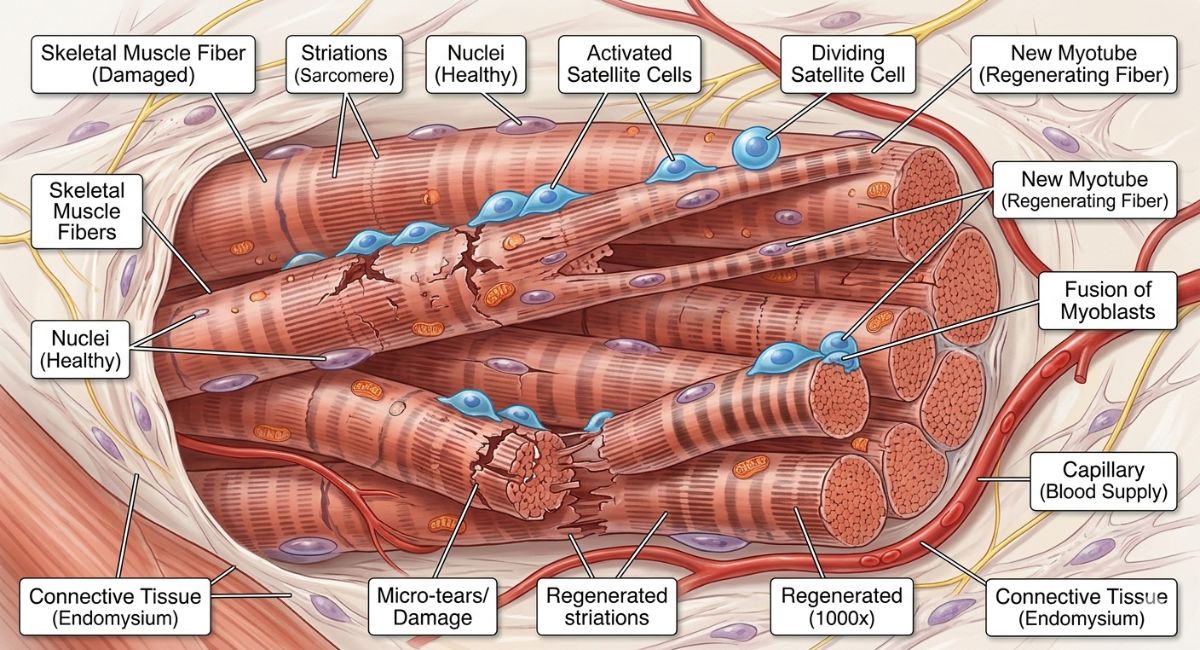
Recovery is the process through which the body restores itself after exercise and adapts to the training stimulus. Several processes contribute to recovery, including restoration of energy stores, repair and remodeling of tissues, and recovery of the nervous system.
Muscle Stress and Adaptation
Exercise places stress on muscles and other tissues. Unfamiliar, high-volume, or high-intensity exercise can cause temporary muscle damage and soreness, but muscle damage is not the goal of training and is not the only factor involved in muscle adaptation.
After exercise, the body responds to the training stimulus by repairing and adapting tissues. Adequate recovery, nutrition, and appropriate progression of training help support this process.
Delayed-Onset Muscle Soreness (DOMS)
Delayed-onset muscle soreness, or DOMS, is the tenderness and stiffness that can develop after unfamiliar or demanding exercise. It commonly becomes noticeable several hours after exercise and may be most noticeable over the following one to three days.
DOMS is influenced by several factors, including the type and intensity of exercise, training experience, and individual differences. The amount of soreness does not reliably indicate how effective a workout was.
Energy Replenishment
Exercise uses stored energy, including muscle glycogen. The amount used depends on the duration and intensity of the activity. Eating enough overall, including adequate carbohydrates and protein, helps support energy restoration and recovery.
For most people completing a typical workout, there is no need to follow a strict recovery timetable. Nutrition becomes more important when training is prolonged, demanding, or repeated within a short period.
Core Recovery Strategies
Accelerating your recovery does not require expensive tools or complicated therapies. Focus on these four foundational pillars to maximize your body’s natural healing mechanisms.
Sleep Recovery Tool

Sleep is an important part of recovery because it supports physical and cognitive processes involved in restoring the body after exercise. Most adults need 7–9 hours of sleep per night, although individual needs can vary.
Consistent, sufficient sleep can support exercise performance, energy, mood, and recovery. Instead of focusing on maximizing a particular sleep stage or hormone, beginners should prioritize getting enough sleep regularly and maintaining a consistent sleep schedule.
If you regularly feel tired despite allowing enough time for sleep, or if ongoing sleep problems are affecting your daily life or training, consider discussing them with a healthcare professional.
Hydration and Nutrient Delivery

Hydration supports normal circulation, temperature regulation, and physical performance. How much fluid you need depends on factors such as exercise duration, intensity, temperature, and how much you sweat.
For most shorter workouts, drinking water according to thirst and maintaining normal hydration throughout the day is usually sufficient. Electrolytes can be more useful when exercise is prolonged, sweating is substantial, or you are exercising in hot conditions.
Nutrition also contributes to recovery. A balanced diet that provides enough energy, protein, carbohydrates, and other nutrients supports the body’s normal recovery processes. There is no need for every beginner to use electrolyte supplements or specialized recovery products.
Post-Workout Nutrition
Nutrition provides the energy and nutrients the body needs to recover from exercise. Protein supplies amino acids that support muscle protein synthesis and tissue repair, while carbohydrates help replenish glycogen used during exercise.
For most beginners, the priority is meeting overall daily protein and energy needs rather than trying to eat within a strict post-workout window. A balanced meal or snack containing protein and carbohydrates after exercise can be a practical way to support recovery.
The amount and timing that works best will vary depending on the workout, when you last ate, your overall diet, and when you plan to exercise again.
Blood Flow and Circulation
Light movement after exercise can help you stay mobile and may reduce feelings of stiffness. Activities such as an easy walk, gentle cycling, or comfortable mobility exercises can be useful when you are experiencing mild soreness.
Active recovery should remain low intensity. The goal is to move without adding substantial stress or fatigue. It should not be used to push through significant pain or an injury. If movement makes your symptoms worse, or if you have an acute injury or illness, rest and consider getting appropriate medical advice instead.
Active Recovery vs. Passive Rest
| Factor | Active Recovery | Passive Rest |
| Blood Flow | Higher | Lower |
| Muscle Stiffness | Lower | Higher |
| DOMS Relief | Better | Moderate |
| Best For | Mild soreness | Injury or illness |
Active recovery means doing low-intensity movement while your body is recovering from a workout. Passive rest means taking a break from exercise and allowing the body to recover without planned physical activity.
For normal post-workout soreness, light movement may help you feel less stiff and keep you comfortable. Passive rest can also be appropriate when you are very fatigued or when movement causes discomfort.
The right choice depends on how you feel. Active recovery should not become another demanding workout.
When Passive Rest Is More Appropriate
Rest is more appropriate when you have significant fatigue, substantial pain, an acute injury, or an illness. Do not use exercise to push through symptoms that may indicate an injury.
For ordinary muscle soreness, complete inactivity is not always necessary. However, if light movement makes the soreness or pain worse, stop and allow more time for recovery.
Practical Post-Workout Recovery Routine Example
A simple recovery routine does not need to be complicated. The goal is to support the basic factors that contribute to recovery without turning recovery itself into another task to optimize.
After Your Workout
Spend a few minutes gradually reducing your activity rather than stopping abruptly after intense exercise. If you feel thirsty, drink water, and allow your breathing and heart rate to return toward normal.
Later That Day
Eat a normal balanced meal or snack that provides protein and carbohydrates. Continue drinking fluids according to your thirst and the conditions in which you exercised.
Avoid adding another demanding workout simply because you are not feeling sore yet. Recovery needs vary, and soreness is not a reliable measure of whether your body is ready for another hard session.
Before Your Next Workout
Prioritize a normal night’s sleep and assess how you feel before training again. If you have significant fatigue, worsening pain, or reduced performance, consider reducing the intensity or allowing more recovery time.
7 Recovery Mistakes Beginners Make
1. Not Getting Enough Sleep
Consistently getting enough sleep is an important part of recovery. Most adults need 7–9 hours per night.
2. Training Hard Despite Significant Fatigue or Pain
Mild soreness does not always require complete rest, but significant fatigue or pain is a reason to reduce training or allow more recovery time.
3. Not Eating Enough Protein
Adequate daily protein supports muscle repair and adaptation. Focus on meeting your overall protein needs rather than relying on a strict post-workout timing rule.
4. Neglecting Hydration
Insufficient fluid intake can affect exercise performance and normal body functions. Maintain normal hydration and pay greater attention to fluid and electrolyte replacement during prolonged exercise or heavy sweating.
5. Being Completely Inactive Between Workouts
Light movement can help you stay mobile when you have normal post-workout soreness. However, active recovery should remain low intensity.
6. Increasing Training Too Quickly
Increasing exercise volume or intensity too rapidly can make it harder to recover between sessions. Gradual progression gives your body time to adapt to increasing demands.
7. Using Soreness as a Measure of a Good Workout
Muscle soreness is not a reliable measure of workout quality or progress. A productive training session does not need to leave you extremely sore.
Frequently Asked Questions (FAQs)
How long does it take for muscles to recover after a workout?
Recovery time varies depending on the type and intensity of exercise, training experience, sleep, nutrition, and individual differences. There is no fixed recovery period that applies to everyone.
Should I work out if I am sore?
Mild muscle soreness does not necessarily mean you need complete rest. Light activity or training a different muscle group may be appropriate if you feel otherwise well. Avoid training through significant pain or worsening symptoms.
Can a hot bath help with workout recovery?
A warm bath may help you feel more relaxed and temporarily reduce feelings of muscle stiffness or discomfort. It should be viewed as a comfort measure rather than a method that directly speeds tissue repair.
What are signs that I am not recovering well?
Persistent fatigue, declining exercise performance, ongoing or worsening pain, and difficulty recovering between normal training sessions can indicate that your current training or recovery routine needs adjustment. These symptoms can also have causes unrelated to exercise.
Does stretching prevent muscle soreness?
Stretching can help maintain or improve flexibility and may make movement feel more comfortable, but stretching alone does not reliably prevent delayed-onset muscle soreness.
Beginner Workout Recovery Checklist
After a workout:
Do not use soreness alone to decide whether you are ready to train again.
Gradually reduce your activity and allow your breathing and heart rate to return toward normal.
Drink fluids according to your thirst and the conditions in which you exercised.
Eat a balanced meal or snack that provides adequate protein and carbohydrates.
Aim for 7–9 hours of sleep.
Use light movement the following day if it feels comfortable.
Allow enough recovery between demanding training sessions.
Final Conclusion
Recovery is an essential part of a sustainable exercise routine. Beginners do not need complicated recovery methods or a strict timetable. The basics matter most: get enough sleep, maintain adequate nutrition and hydration, use light movement when appropriate, and allow enough time between demanding workouts.
Recovery needs vary from person to person and from one workout to another. Pay attention to your energy, performance, soreness, and overall well-being rather than relying on a fixed number of recovery hours.
If you experience persistent or worsening pain, significant fatigue, or symptoms that do not improve with rest, consider speaking with a healthcare professional.
Want to know more:
Continue ReadingWhy Am I So Sore After My First Workout?
How Long Should Beginners Rest Between Workouts?
Medical Disclaimer
This article is for educational and informational purposes only and should not be considered medical advice. Always consult a qualified healthcare professional before making significant changes to your sleep, exercise, or recovery routine, especially if you have underlying health conditions or sleep disorders.
Reference:
- American College of Sports Medicine. “Exercise and Fluid Replacement.” Medicine & Science in Sports & Exercise. 2007.
PubMed—Exercise and Fluid Replacement - Jäger R, et al. “International Society of Sports Nutrition Position Stand: Protein and Exercise.” Journal of the International Society of Sports Nutrition. 2017.
PubMed—Protein and Exercise - Dupuy O, et al. “An Evidence-Based Approach for Choosing Post-exercise Recovery Techniques to Reduce Markers of Muscle Damage, Soreness, Fatigue, and Inflammation: A Systematic Review With Meta-Analysis.” Frontiers in Physiology. 2018.
PubMed—Post-exercise Recovery Techniques - Cintineo HP, et al. “Effects of Protein Supplementation on Performance and Recovery in Resistance and Endurance Training.” Frontiers in Nutrition. 2018.
PubMed—Protein Supplementation and Recovery - National Athletic Trainers’ Association. “Fluid Replacement for the Physically Active.”
PubMed—Fluid Replacement for the Physically Active

I’m Mr. Baig, founder of Recover Better Lab. I create evidence-based fitness recovery content to help beginners recover smarter and build sustainable healthy habits.
Mission: My mission is to provide trustworthy, research-backed recovery and fitness content that helps people optimize their health, performance, and overall well-being.