
Reading Time: 8 minutes.
Last Updated: August 2026
Have you ever finished a leg workout and wondered why do legs stay sore longer than other muscles? Whether you’ve completed a challenging strength-training session, gone for a long hike, or started a new running program, it’s common for your legs to remain sore for several days. In many cases, this is a normal part of your body’s adaptation to exercise. However, the unique size, workload, and function of your leg muscles mean they often require more time to recover than smaller muscle groups. Understanding why this happens can help you recover more effectively, avoid unnecessary worry, and recognize when soreness may indicate something more serious.
Leg muscles often stay sore longer because they are larger, work harder, and experience greater eccentric loading during exercise. Learn what causes DOMS, how long recovery normally takes, and when persistent soreness may signal an injury.
Quick Answer
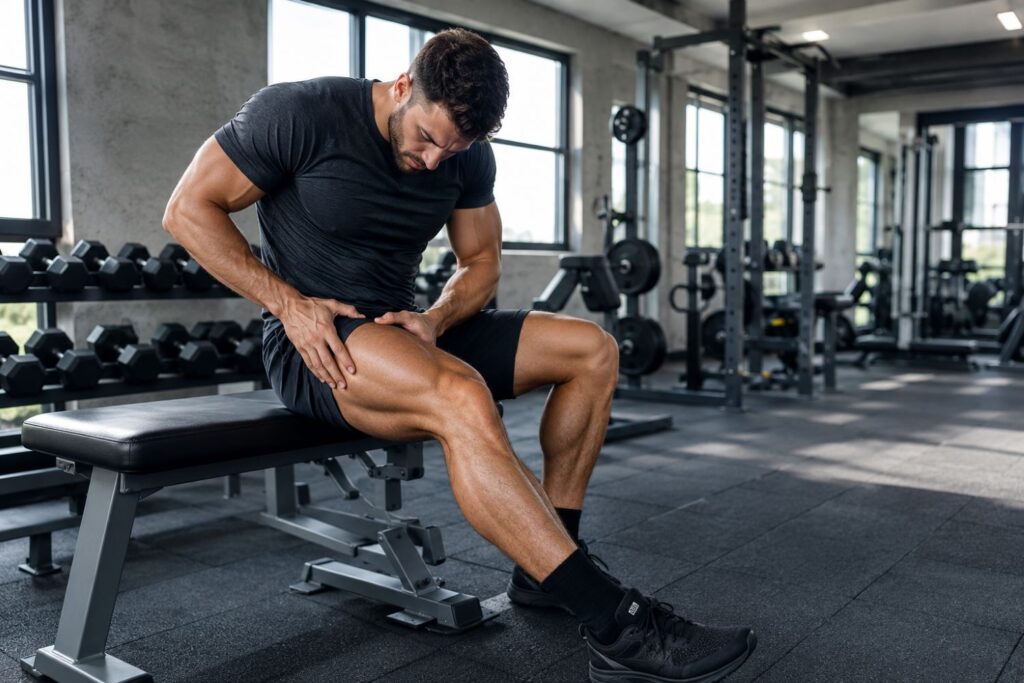
Legs often stay sore longer because they contain the body’s largest muscle groups and perform continuous weight-bearing activities. Exercises like squats, lunges, and downhill running create greater eccentric muscle contractions, leading to more microscopic muscle damage and delayed onset muscle soreness (DOMS). For most people, leg soreness peaks within 24 to 72 hours and improves within 3 to 7 days. Persistent, severe, or worsening pain may indicate an injury rather than normal recovery.
Table of Contents
Why Do Legs Stay Sore Longer Than Other Muscles?
Leg muscles perform some of the most demanding tasks in the human body. Every step you take, every staircase you climb, and every time you stand up from a chair, your legs are working. Because they are responsible for supporting your body weight throughout the day, they experience continuous stress even while recovering from exercise.
Larger Muscle Groups Require More Recovery
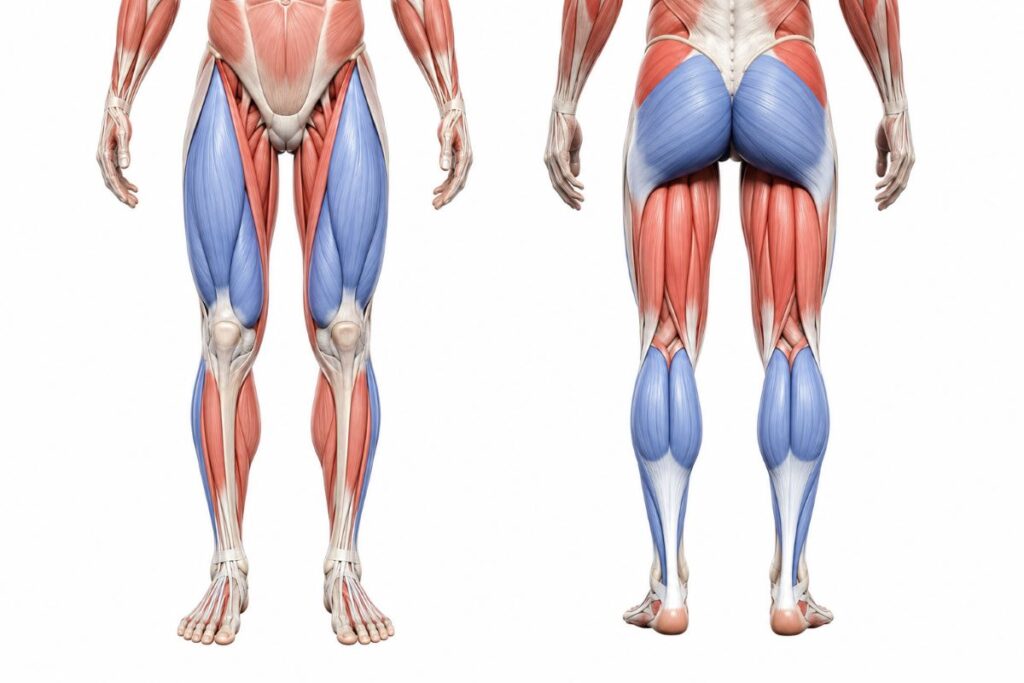
The quadriceps, hamstrings, gluteal muscles, and calves are among the largest muscle groups in the body. Larger muscles contain more muscle fibers that can experience microscopic damage during exercise. While this damage is a normal stimulus for strength and fitness improvements, repairing a greater volume of muscle tissue naturally takes longer. Unlike smaller muscles such as the biceps or shoulders, leg muscles often require several days to complete the repair process, particularly after high-intensity or unfamiliar exercise.
Eccentric Movements Create Greater Muscle Stress
One of the biggest reasons legs remain sore is the amount of eccentric muscle activity they perform. Eccentric contractions occur when a muscle lengthens while producing force, such as when lowering into a squat, walking downhill, descending stairs, or landing from a jump. Research consistently shows that eccentric exercise produces more microscopic muscle damage than concentric movements, making delayed soreness more noticeable after leg-focused workouts.
Daily Activities Continue to Challenge Recovery
Unlike upper-body muscles that can often rest between workouts, leg muscles rarely receive complete downtime. Walking, standing, commuting, carrying groceries, and household activities all require continuous muscle activation. This ongoing workload means recovery occurs while the muscles are still being used, which may contribute to soreness lasting longer than expected.
Connective Tissues Also Need Time to Recover
Exercise affects more than muscle fibers. Tendons, fascia, and other connective tissues also adapt to physical training. These structures generally recover more slowly than muscle tissue, especially after demanding lower-body workouts involving heavy loads or repetitive impact.
As a result, the sensation of soreness may persist even after the muscles themselves have begun healing.
What Is Delayed Onset Muscle Soreness (DOMS)?
Most exercise-related muscle soreness is caused by delayed onset muscle soreness (DOMS). This temporary condition develops after unfamiliar or high-intensity physical activity and reflects your body’s normal response to exercise-induced muscle stress rather than a harmful injury. Unlike the burning sensation felt during exercise, DOMS develops gradually. Scientists now understand that it is not caused by lactic acid buildup, which clears from the muscles shortly after activity. Instead, DOMS results from microscopic muscle fiber disruption followed by inflammation, tissue repair, and adaptation.
Why Do Legs Stay Sore Longer During DOMS?
The answer to why legs stay sore longer during DOMS lies in the type of work leg muscles perform. Exercises such as squats, lunges, step-ups, hill running, and downhill walking place substantial eccentric loads on large muscle groups. This combination creates a stronger repair response, which often leads to soreness that lasts longer than soreness in smaller muscles.
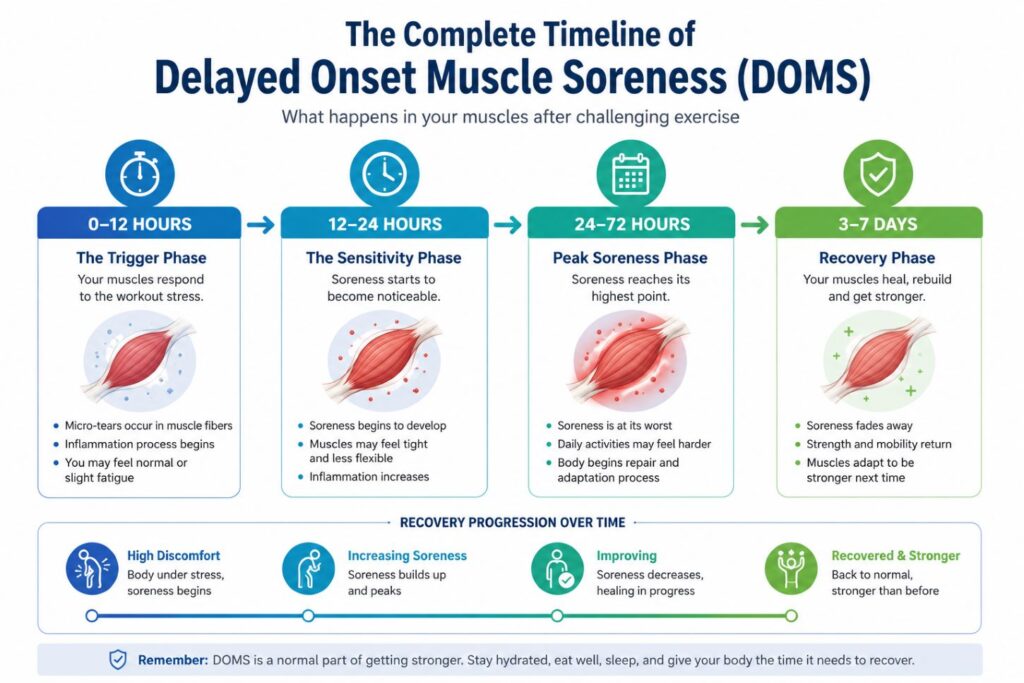
Although everyone recovers differently, a typical DOMS timeline is
- 0 to 12 hours: Little or no soreness.
- 12 to 24 hours: Stiffness begins to develop.
- 24 to 72 hours: Soreness usually reaches its peak.
- 3 to 7 days: Most people gradually recover.
- Beyond one week:
Persistent pain deserves further evaluation, especially if accompanied by swelling, weakness, or difficulty walking. Experiencing DOMS occasionally is a normal sign that your muscles are adapting to a new training stimulus. However, constantly chasing soreness is neither necessary nor an indicator of an effective workout.
Why Leg Workouts Cause More Soreness
Common Leg Exercises and Expected Soreness
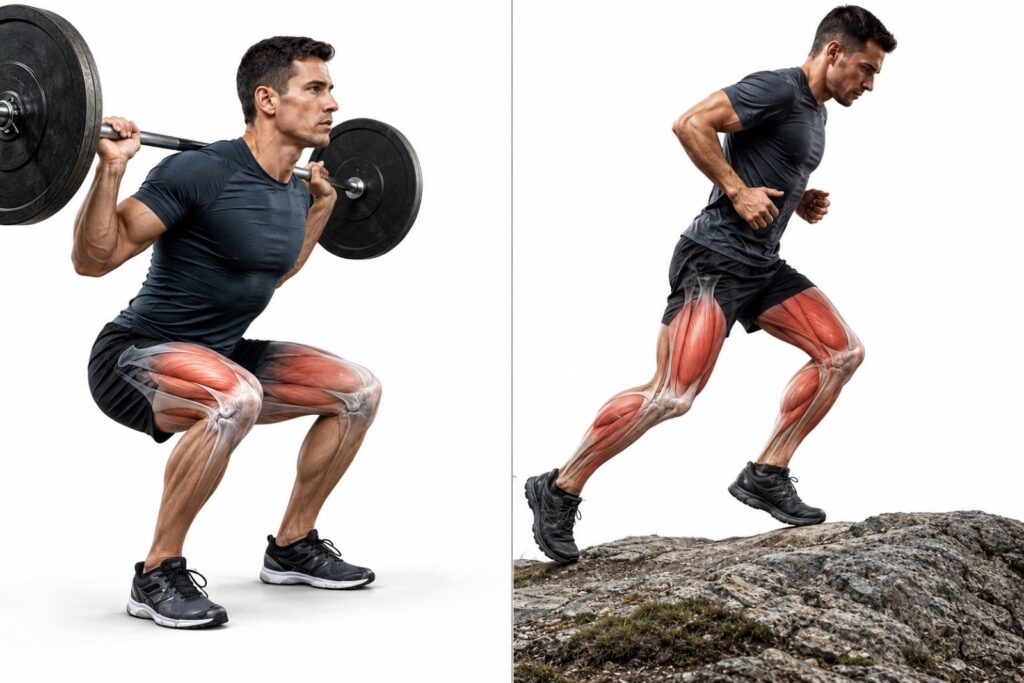
Not every workout produces the same level of muscle soreness. Lower-body training often challenges multiple large muscles simultaneously while placing high mechanical stress on joints and connective tissues. Certain exercises are especially likely to produce prolonged soreness because they emphasize eccentric muscle contractions.
Squats
Squats recruit quadriceps, hamstrings, glutes, calves, and core at the same time. Heavy resistance or high training volume can create widespread muscle stress throughout the lower body.
Lunges
Lunges require each leg to work independently, increasing muscle activation, balance demands, and overall workload. Because one leg bears most of the body’s weight during each repetition, soreness is often more pronounced.
Deadlifts
Deadlifts heavily involve the posterior chain, including the hamstrings, glutes, lower back, and calves. Increasing weight too quickly or performing high-repetition sets can extend recovery time.
Running Downhill
Downhill running places significant eccentric stress on the quadriceps as they repeatedly control the body’s descent. Many runners experience their greatest leg soreness after downhill routes rather than uphill climbs.
Stair Climbing
Descending stairs after an intense leg workout often feels particularly uncomfortable because the quadriceps must lengthen while supporting body weight. This explains why everyday activities can seem surprisingly difficult during peak DOMS.
Plyometric Training
Jump training, sprinting, and explosive sports involve rapid force production followed by forceful landings. These repeated impacts increase muscle and connective tissue stress, often resulting in greater soreness than steady aerobic exercise.
The more intense, unfamiliar, or higher-volume your lower-body workout is, the greater the likelihood that your legs will require additional recovery time before returning to full performance.
Normal DOMS vs. Muscle Injury
| Exercise | Expected DOMS |
| Squats | High |
| Lunges | High |
| Deadlifts | Moderate–High |
| Downhill Running | High |
| Stair Climbing | Moderate |
| Walking | Low |
| Cycling | Low–Moderate |
Factors That Can Make Leg Soreness Last Longer
The duration of muscle soreness varies from person to person. While most people recover within a few days, several factors can slow the recovery process and make leg soreness linger longer than expected.
Starting a New Exercise Program
One of the most common reasons for prolonged soreness is beginning a new workout routine. Muscles adapt to the demands placed on them, so unfamiliar exercises often produce greater microscopic muscle damage during the first few sessions. As your body becomes accustomed to the movement, the same workout usually causes less soreness, a phenomenon known as the repeated bout effect.
High Training Volume or Intensity
Increasing weight, repetitions, training frequency, or workout duration too quickly places additional stress on muscles and connective tissues. Without adequate recovery between sessions, soreness may persist or accumulate over time. Gradually progressing your training load is one of the most effective ways to reduce excessive soreness while continuing to build strength and fitness.
Poor Sleep Quality
Much of the body’s muscle repair occurs during sleep. Growth hormone release, protein synthesis, and tissue regeneration are all influenced by sufficient, high-quality sleep. Consistently sleeping too little may delay recovery and increase feelings of fatigue and muscle stiffness after exercise.
Inadequate Nutrition
Recovery depends on providing muscles with the nutrients needed for repair. A balanced diet that supplies enough:
- Protein
- Carbohydrates
- Healthy fats
- Vitamins
- Minerals
helps support normal muscle recovery. Inadequate calorie or protein intake may slow the repair process, particularly after demanding lower-body workouts.
Dehydration
Water plays an essential role in circulation, nutrient delivery, and normal muscle function. While dehydration is not a direct cause of DOMS, inadequate fluid intake may worsen fatigue, reduce exercise performance, and contribute to slower overall recovery.
Training Experience
Beginners often experience more soreness than experienced athletes because their muscles have not yet adapted to repeated exercise stress. Over time, regular resistance training makes muscles more resilient, reducing both the severity and duration of soreness after similar workouts.
Age
Recovery capacity gradually changes with age. Older adults can still build muscle and improve fitness, but tissue repair may occur more slowly than in younger individuals. Maintaining regular physical activity, proper nutrition, and sufficient recovery becomes increasingly important over time.
Is It Normal for Legs to Stay Sore for Several Days?
Yes. For most healthy individuals, sore legs lasting three to five days after a challenging or unfamiliar workout are considered a normal part of the recovery process. In some cases, particularly after a person’s first intense leg workout, a marathon, or heavy eccentric training, mild soreness may continue for up to one week before fully resolving. Normal DOMS usually has several characteristics:
- The soreness gradually develops several hours after exercise rather than immediately.
- Both legs are often affected in a similar way.
- The discomfort feels dull, stiff, or achy rather than sharp.
- Gentle movement often improves stiffness.
- Symptoms gradually improve each day.
Many people notice that their legs feel stiff after sitting for long periods but loosen up after walking for a few minutes. This pattern is typical of DOMS and generally reflects ongoing recovery rather than worsening injury.
However, soreness should show a clear trend toward improvement. If the pain becomes more severe instead of better, significantly limits your ability to walk, or remains unchanged for more than a week, it’s important to consider whether something other than normal muscle soreness may be responsible.
When Sore Legs May Signal an Injury Instead of DOMS
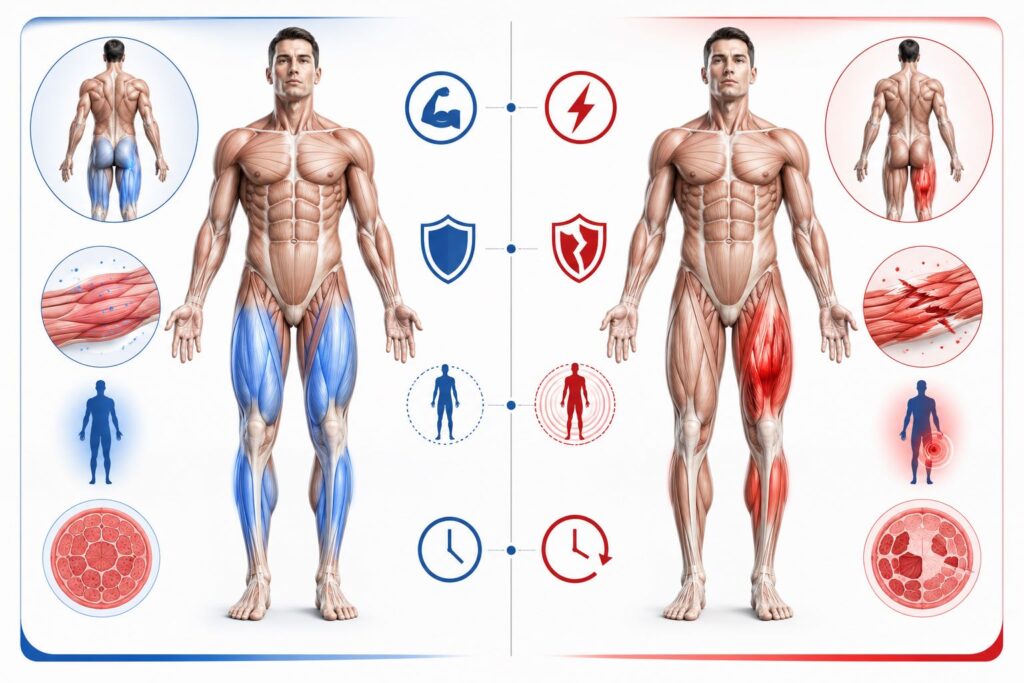
Most post-exercise leg soreness is harmless and resolves with time. However, not every type of pain after exercise is Delayed Onset Muscle Soreness (DOMS). Recognizing the difference between normal recovery and a possible injury is important. DOMS generally affects muscles on both sides of the body, develops gradually, and improves over several days. Injuries, on the other hand, often produce more localized pain and may interfere with normal movement.
Muscle Strain
Muscle strain usually occurs during exercise rather than several hours afterward. You may feel a sudden pull, sharp pain, or even a popping sensation while performing an activity.
Signs that suggest a muscle strain include:
Sudden pain during exercise
Pain concentrated in one specific area
Swelling or bruising
Weaknesses when using the affected muscle
Pain that worsens with movement
Tendon Injury
Tendons connect muscles to bones and can become irritated or injured from repetitive overload. Tendon pain is often more localized than DOMS and may persist during specific movements long after muscle soreness should have improved.
Stress Fracture
Stress fractures are tiny cracks in the bone caused by repetitive loading, especially in runners and athletes who increase training too quickly.
Unlike DOMS, stress fracture pain is usually
- Localized to one small area
- Worse with weight-bearing activity
- Persistent rather than gradually improving
- Tender when pressing directly over the bone
Other Warning Signs
Seek prompt medical evaluation if leg pain is accompanied by:
Severe swelling
Significant bruising
Inability to bear weight
Visible deformity
Numbness or tingling
Fever or unexplained redness
Dark-colored urine after intense exercise (which can rarely indicate a serious condition called rhabdomyolysis)
These symptoms are not typical of normal exercise-related soreness and should not be ignored.
| Feature | Normal DOMS | Possible Injury |
| Onset | 12 to 24 hours after exercise | Usually sudden during activity |
| Pain | Dull, aching, symmetrical | Sharp, localized |
| Swelling | Mild or none | May be significant |
| Walking | Usually, possible | Maybe difficult |
| Improves Daily | Yes. | Often, no. |
| Medical Review | Usually, unnecessary | Often recommended |
Can You Exercise with Sore Legs?
In many cases, yes, but it depends on the severity of the soreness.
Mild Soreness
If your legs feel mildly stiff or achy but your movement is normal, light physical activity is generally acceptable. Gentle walking, easy cycling, or mobility exercises may even help reduce stiffness by increasing blood flow.
Moderate Soreness
If soreness makes everyday movements uncomfortable, consider reducing workout intensity or choosing activities that place less stress on the affected muscles. Giving your legs additional recovery time can help prevent compensatory movement patterns that may increase injury risk.
Severe Soreness
If walking is painful, your range of motion is significantly limited, or muscle strength is noticeably reduced, postponing intense lower-body exercise is usually the safer choice. Continuing to train through severe soreness may impair performance and delay recovery.
Listening to your body does not mean avoiding exercise altogether; it means adjusting your training according to your current level of recovery.
What Helps Legs Recover Faster?
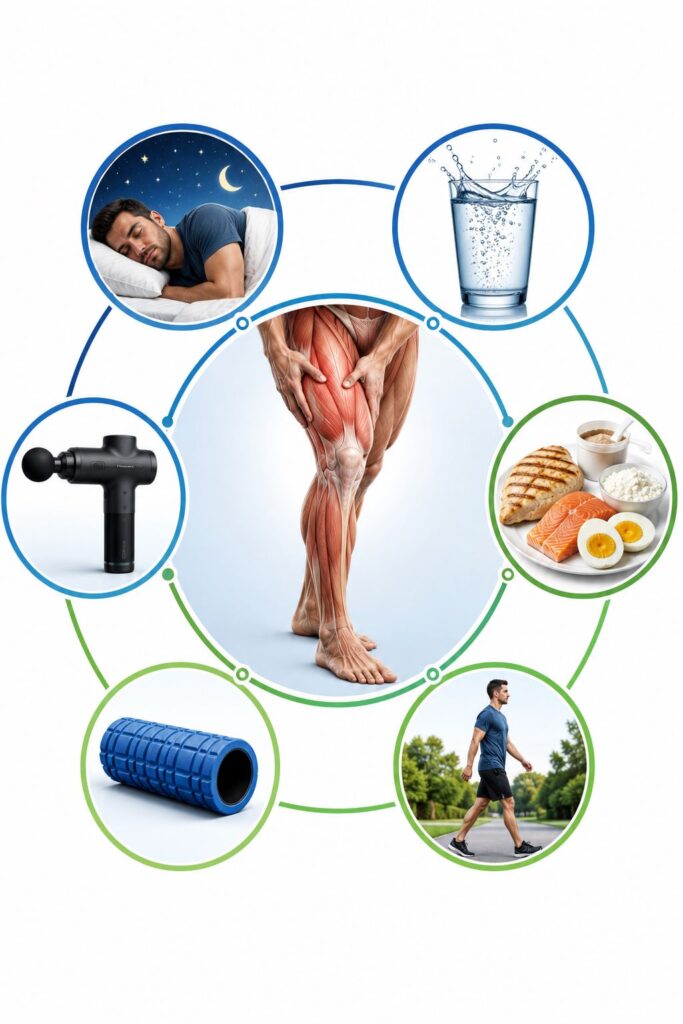
While no method can eliminate DOMS overnight, several evidence-based strategies can support your body’s natural recovery process.
Prioritize Sleep
Sleep is one of the most powerful recovery tools available. During sleep, the body carries out many of the processes involved in muscle repair, tissue regeneration, and adaptation to exercise.
Eat Enough Protein
Protein provides the amino acids needed to repair and rebuild muscle tissue. Consuming adequate protein throughout the day, particularly after resistance training, supports normal muscle recovery.
Stay Hydrated
Maintaining hydration supports circulation, nutrient delivery, and overall physical performance. Although drinking more water does not cure DOMS, it helps create an environment that supports healthy recovery.
Keep Moving
Complete bed rest is rarely necessary for uncomplicated DOMS. Gentle movement such as walking, easy cycling, or light stretching can help reduce stiffness without placing excessive stress on recovering muscles.
Consider Recovery Tools
Some people experience short-term relief from recovery tools such as the following:
- Foam rolling
- Massage guns
- Compression garments
- Gentle massage
Current research suggests these methods may temporarily reduce the perception of soreness for some individuals, but they do not dramatically accelerate the underlying muscle repair process.
Evidence-Based Recovery Methods
| Recovery Method | Evidence Strength | Primary Benefit |
| Sleep | High | Muscle repair |
| Adequate Protein | High | Muscle protein synthesis |
| Hydration | Moderate | Supports normal recovery |
| Active Recovery | Moderate | Reduces stiffness |
| Foam Rolling | Moderate | Temporary soreness relief |
| Massage Gun | Moderate | Temporary symptom relief |
| Compression Garments | Moderate | May reduce perceived soreness |
Progress Your Training Gradually
Perhaps the most effective long-term strategy is avoiding sudden increases in training volume or intensity. Progressive overload allows muscles, tendons, and connective tissues to adapt over time, reducing excessive soreness while continuing to improve strength and endurance.
Common Myths About Leg Soreness
Muscle soreness has been surrounded by misconceptions for decades. Understanding what the evidence shows can help you make better training and recovery decisions.
1. Lactic Acid Causes Soreness
This is one of the most common fitness myths. Lactic acid (more accurately, lactate) is produced during intense exercise, but it is cleared from the muscles within about an hour after activity. It is not responsible for the soreness that develops one or two days later. Instead, DOMS is linked to microscopic muscle fiber disruption, inflammation, and the body’s normal repair process.
2. More Soreness Means a Better Workout
Feeling extremely sore does not necessarily mean you had a more effective workout.
Muscle growth, strength gains, and improved fitness occur through consistent, progressive training, not by maximizing soreness after every session. In fact, excessive soreness can interfere with training quality if it limits movement or delays subsequent workouts.
3. If You’re Not Sore, Your Workout Didn’t Work
Many experienced athletes rarely experience significant soreness despite making excellent progress.
As your body adapts to regular training, muscles become more efficient at handling exercise stress. This means you can continue improving strength, endurance, and performance even when soreness is minimal or absent.
4. You Should Never Train Until Soreness Is Completely Gone
Mild residual soreness is often compatible with exercise, provided your movement quality and performance have returned to normal. Rather than waiting to feel completely pain-free after every workout, it’s generally more useful to assess how your body functions. If you can move comfortably, maintain proper technique, and perform without sharp pain, light or moderate training may be appropriate.
Key Takeaways
- Leg muscles are among the largest and hardest-working muscles in the body, so they often require more recovery time than smaller muscle groups.
- Most post-workout leg soreness is caused by Delayed Onset Muscle Soreness (DOMS), which typically peaks 24 to 72 hours after exercise.
- Eccentric movements such as squats, lunges, downhill running, and stair descent commonly produce greater soreness because they place higher mechanical stress on muscle fibers.
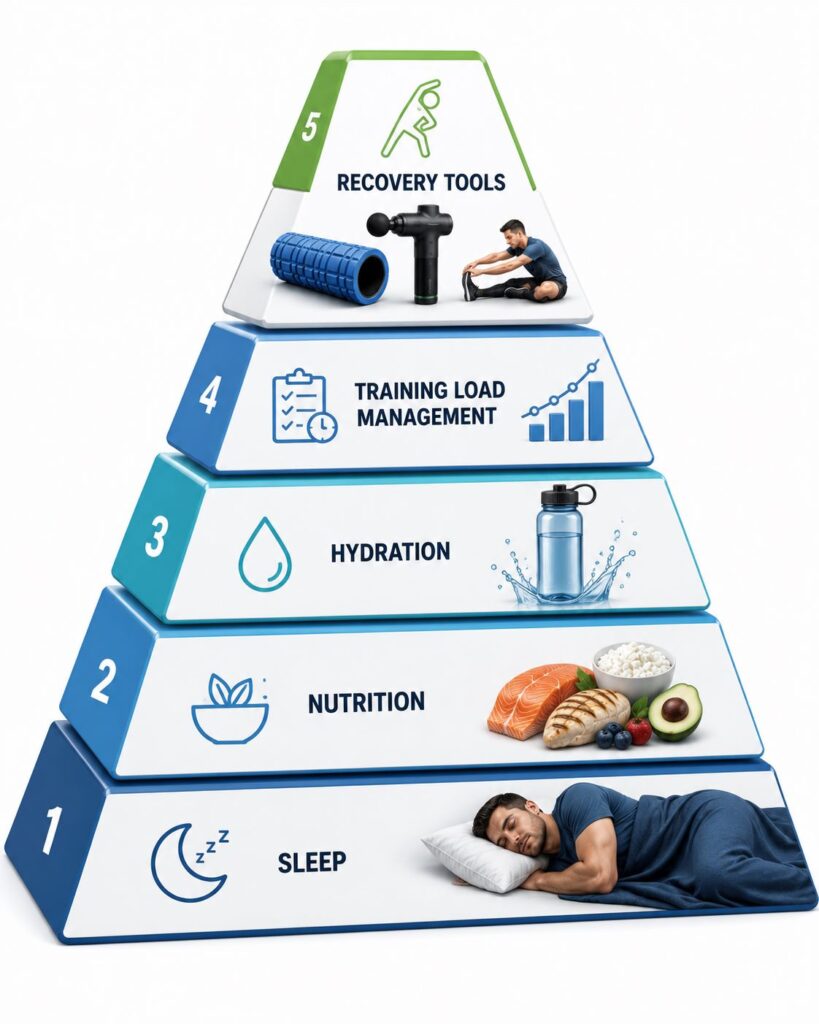
- Sleep, adequate nutrition, hydration, progressive training, and active recovery all support normal muscle recovery.
- Severe pain, significant swelling, inability to bear weight, or symptoms that continue worsening should be evaluated by a healthcare professional.
Recovery Reminder
Muscle soreness is a normal response to challenging exercise, not a measure of workout quality. Consistent training, adequate sleep, balanced nutrition, hydration, and gradual progression contribute more to long-term performance than chasing soreness after every session.
Self-Reflection
Ask yourself:
- Is my soreness gradually improving each day?
- Did I recently increase my workout intensity or try a new exercise?
- Am I getting enough sleep and protein to support recovery?
- Is the pain dull and widespread, or sharp and localized?
- Do I need an easier recovery day before my next leg workout?
Final Thoughts
If you’ve ever wondered why legs stay sore longer, the answer lies in the unique demands placed on your lower-body muscles. They are larger, support your body weight throughout the day, and are heavily involved in movements that create the type of muscle stress most likely to cause delayed soreness. In most cases, this discomfort is a normal part of the body’s adaptation to exercise and gradually improves with time.
The goal of recovery is not to eliminate every trace of soreness but to give your body the opportunity to repair, adapt, and become stronger. By combining progressive training with good sleep, balanced nutrition, proper hydration, and sensible recovery habits, you can reduce unnecessary discomfort while continuing to make steady progress.
If soreness becomes unusually severe, fails to improve, or is accompanied by symptoms that suggest an injury rather than normal DOMS, seeking medical evaluation is the safest course of action.
Conclusion
Leg soreness often lasts longer because your lower-body muscles are larger, work continuously throughout the day, and experience greater mechanical stress during many forms of exercise. In most cases, this prolonged soreness is simply part of the body’s natural adaptation process and improves within a few days. Understanding the difference between normal DOMS and potential injury allows you to recover confidently while making informed training decisions. By prioritizing progressive overload, quality sleep, balanced nutrition, hydration, and appropriate recovery strategies, you can support healthy muscle adaptation and continue building strength safely.
Frequently Asked Questions
Why do legs stay sore longer than other muscles?
Leg muscles are larger, work continuously during daily activities, and experience greater eccentric loading during exercises such as squats, lunges, and downhill running. These factors often make recovery take longer than it does for smaller muscle groups.
How long should leg soreness last?
Most cases of DOMS improve within three to five days, although soreness may occasionally last up to a week after an especially demanding or unfamiliar workout.
Why do stairs hurt after leg day?
Walking downstairs requires the quadriceps to contract while lengthening, a type of movement called an eccentric contraction. This places additional stress on muscles that are already recovering from exercise.
Can I exercise if my legs are still sore?
Light activity is often appropriate if soreness is mild and your movement remains comfortable. If soreness is severe or affects normal walking or exercise technique, allowing additional recovery time is usually recommended.
Does walking help sore legs recover?
Gentle walking may reduce stiffness and improve circulation, helping some people feel more comfortable during recovery. However, it does not eliminate DOMS immediately.
Why are my legs still sore after five days?
Recovery time varies depending on workout intensity, training experience, sleep, nutrition, and overall health. If soreness continues for a week, worsens, or is accompanied by swelling, weakness, or sharp pain, medical evaluation is advisable.
How can I recover faster after leg workouts?
Focus on getting enough sleep, eating adequate protein, staying hydrated, gradually increasing training volume, and incorporating light movement during recovery. Recovery tools such as foam rolling or massage guns may provide temporary symptom relief for some individuals.
When should I see a doctor for sore legs?
Seek medical care if you experience severe pain, inability to bear weight, significant swelling, visible deformity, numbness, fever, dark-colored urine after intense exercise, or soreness that does not gradually improve over time.
Medical Disclaimer
This article is intended for educational purposes only and should not be considered medical advice. It is not a substitute for professional diagnosis, treatment, or individualized healthcare recommendations. If you experience severe, persistent, or worsening leg pain or have concerns about your symptoms, consult a qualified healthcare professional for an appropriate evaluation.
References:
American College of Sports Medicine—Position stands and guidance on exercise recovery and resistance training.
National Strength and Conditioning Association—Evidence-based guidance on resistance training and recovery.
American Academy of Orthopaedic Surgeons — Muscle strain and injury information.
National Institute of Arthritis and Musculoskeletal and Skin Diseases—Educational resources on muscles, joints, and musculoskeletal health.
Centers for Disease Control and Prevention—Physical activity recommendations.
World Health Organization—Physical activity guidelines.
Mayo Clinic—General educational information on exercise and muscle soreness.
Cleveland Clinic—Patient education on DOMS and muscle recovery.

I’m Mr. Baig, founder of Recover Better Lab. I create evidence-based fitness recovery content to help beginners recover smarter and build sustainable healthy habits.
Mission: My mission is to provide trustworthy, research-backed recovery and fitness content that helps people optimize their health, performance, and overall well-being.