

Understanding the 7 signs you need a recovery day can help you avoid burnout, reduce injury risk, and make better progress in your fitness journey.
While many beginners believe that training harder always leads to better results, the body becomes stronger during recovery. If you have been feeling unusually sore, tired, unmotivated, or unable to perform at your normal level, your body may be telling you that it is time to step back and recover.
Introduction
Recovery days are often treated as optional. Many beginners believe that progress comes from pushing harder, training longer, and staying consistent no matter how tired they feel. But the reality is different.
Your body gets stronger during recovery, not during the workout itself. Exercise creates stress on muscles, joints, and the nervous system. Recovery is when your body repairs that damage, adapts, and prepares for future training.
Ignoring the need for recovery can slow progress, increase injury risk, and leave you feeling exhausted instead of energized. If you have been working out regularly and wondering whether you should take a day off, these seven signs can help you decide.
Quick Answer
The 7 signs you need a recovery day include persistent muscle soreness, declining workout performance, unusual fatigue, poor sleep quality, low motivation, irritability, and lingering aches or pains. These warning signs suggest your body may need time to recover before your next workout.
Table of Contents
How Do You Know You Need a Recovery Day?
You may need a recovery day if you experience persistent muscle soreness, declining workout performance, unusual fatigue, poor sleep, low motivation, increased irritability, or lingering aches and pains. These signs often indicate that your body needs time to recover and adapt before your next workout.
Why Do Recovery Days Matter?
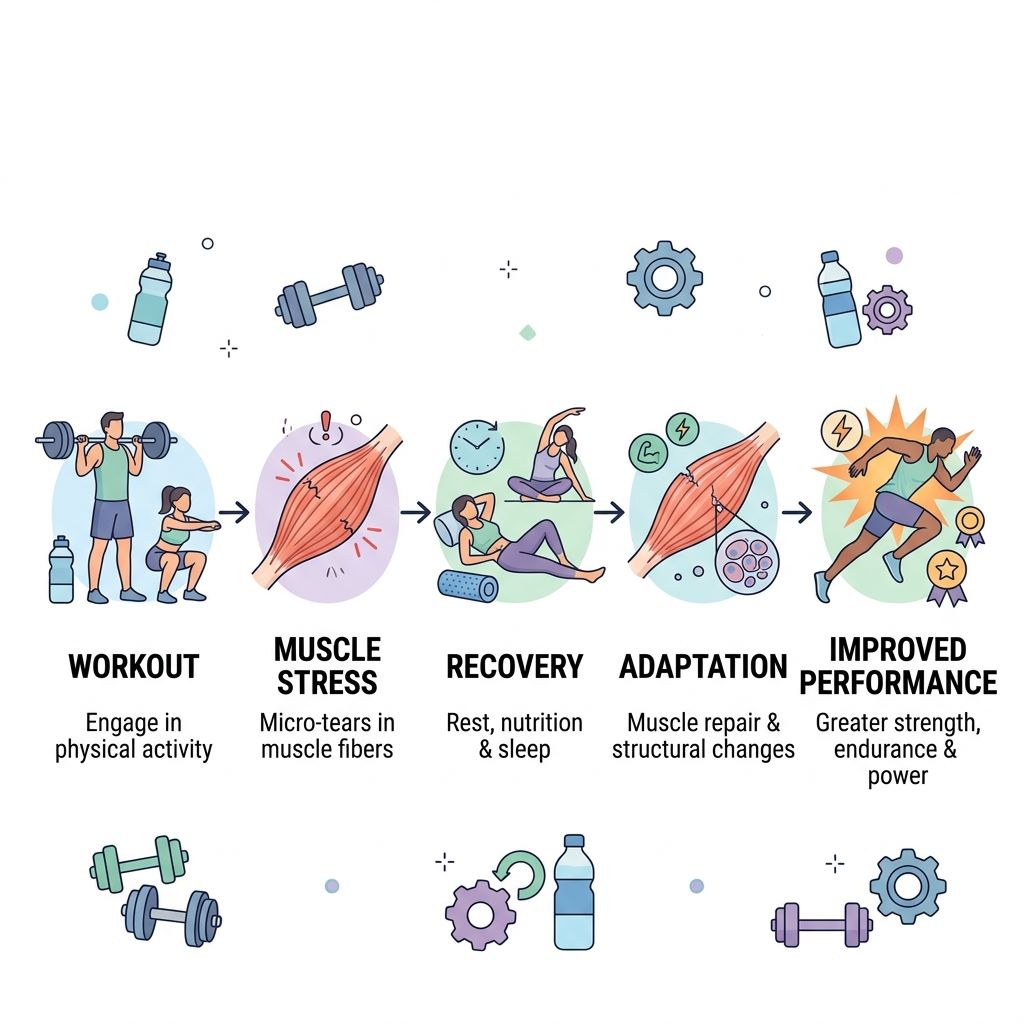
Many people think recovery means doing nothing. Recovery is part of training. When you exercise, your muscles experience tiny amounts of stress and damage. During recovery, your body repairs muscle tissue, restores energy stores, balances hormones, and supports overall physical adaptation.
Without enough recovery, your body remains in a state of stress. Over time, this can lead to fatigue, stalled progress, and a higher risk of injury. For beginners especially, recovery days are essential because the body is still adapting to new physical demands.
Why Recovery Matters More Than Most Beginners Realize
Many beginners focus almost entirely on workouts. The challenge is that exercise itself does not make you stronger. Training creates stress, while recovery allows your body to adapt to that stress.
Without enough recovery, muscles repair more slowly, energy stores remain depleted, and workout performance often begins to decline. Recovery is not a break from progress; it is part of the process that creates progress.
What Are the 7 Signs You Need a Recovery Day?
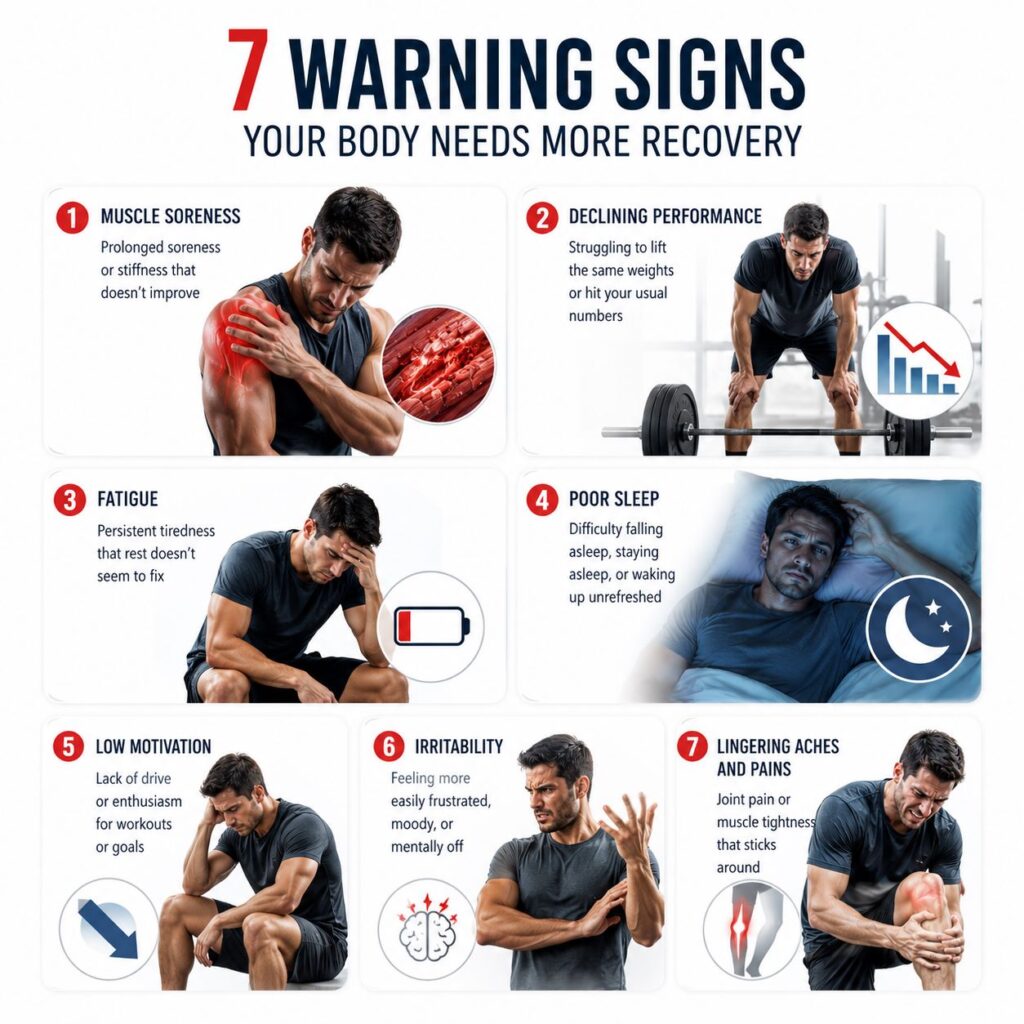
Your body often gives warning signals before fatigue, burnout, or injury become serious problems. While occasional tiredness or soreness is normal, multiple symptoms appearing together may indicate that your body needs additional recovery.
The most common signs include:
- Persistent muscle soreness
- Declining workout performance
- Unusual fatigue
- Poor sleep quality
- Low motivation to exercise
- Increased irritability
- Lingering aches and pains
The self-assessment below can help you quickly evaluate whether your body may be asking for a recovery day.
Quick Self-Assessment: Do You Need a Recovery Day?
Before reading further, take a moment to check the statements below.
✓ My muscles are still sore from previous workouts.
✓ My workout performance has been getting worse instead of better.
✓ I feel unusually tired throughout the day.
✓ My sleep quality has recently declined.
✓ I have little motivation to exercise.
✓ I feel more irritable or mentally drained than usual.
✓ Small aches and pains are starting to build up.
Your Results
0 to 2 checks:
Your body may recover normally.
3 to 4 checks:
A recovery day could help improve recovery and performance.
5 or more checks:
Your body may be showing multiple signs that it needs additional recovery before your next hard workout.
Why Ignoring the 7 Signs You Need a Recovery Day Can Slow Your Progress
Many beginners assume that pushing through fatigue, soreness, or low motivation will help them achieve faster results. Consistently ignoring recovery signals can have the opposite effect.
When your body does not get enough time to recover, workout performance often declines, muscle repair slows down, and the risk of overuse injuries increases. Over time, this can make training feel harder while producing fewer results.
Recognizing the signs that your body needs recovery is not a sign of weakness. It is an important part of building a sustainable fitness routine that supports long-term progress.
1. Your Muscles Stay Sore for Several Days
Feeling sore after a workout is normal, especially when starting a new fitness routine. This soreness, often called delayed onset muscle soreness (DOMS), usually peaks within 24 to 72 hours after exercise.
However, persistent soreness that lasts longer than expected may indicate that your body has not fully recovered.
Signs Your Soreness May Require a Recovery Day
- Muscles feel tender even after several days
- Everyday movements remain uncomfortable
- Soreness affects workout performance
- Pain does not improve with light movement
A recovery day allows damaged muscle fibers to be repaired properly before additional training stress is applied.
What to Do
- Prioritize sleep
- Stay hydrated
- Perform gentle stretching
- Consider light walking or mobility work
2. Your Workout Performance Is Getting Worse
Many people assume that poor performance means they need to train harder. Often, the opposite is true. If your usual workout suddenly feels much more difficult, your body may be asking for recovery.
Common Performance Warning Signs
| Performance Change | What It May Indicate |
| Lifting less weight than usual | Incomplete muscle recovery |
| Slower running pace | Fatigue accumulation |
| Reduced endurance | Energy depletion |
| Poor exercise technique | Physical and mental exhaustion |
One difficult workout is not necessarily a concern. However, several consecutive sessions with declining performance often suggest that recovery is needed.
3. You Feel Tired All Day
Exercise can make you feel pleasantly tired immediately afterward. But if you feel drained throughout the day despite eating and sleeping reasonably well, your body may be struggling to recover.
Recovery-Related Fatigue Often Feels Like
- Low energy from morning to evening
- Difficulty concentrating
- Reduced productivity
- Feeling exhausted after simple tasks
This type of fatigue is different from normal post-workout tiredness. It often reflects accumulated physical stress.
Taking a recovery day can help restore energy levels and improve overall performance later in the week.
4. Your Sleep Quality Has Declined
Sleep is one of the most powerful recovery tools available. Learn exactly how much sleep your body needs in our guide on How Much Sleep Do You Need for Muscle Recovery?
Many people expect exercise to improve sleep.
While it usually does, excessive training without enough recovery can sometimes have the opposite effect.
Sleep Problems That May Signal Overtraining
- Difficulty falling asleep
- Frequent nighttime waking
- Restless sleep
- Waking up feeling unrefreshed
Sleep and recovery work together. Poor recovery can disrupt sleep, and poor sleep can slow recovery. If your sleep quality suddenly worsens during a period of intense training, consider scheduling a recovery day.
5. You Feel Less Motivated to Exercise
Everyone has occasional days when motivation is low. However, a sudden and persistent lack of enthusiasm for workouts can be a warning sign.
When Low Motivation May Reflect Recovery Needs
- You dread workouts you normally enjoy
- You feel mentally exhausted before training
- Exercise feels like a burden rather than a challenge
- You repeatedly postpone workouts
Your brain and nervous system also need recovery. Sometimes the best way to regain motivation is to step back briefly rather than force another hard session.
6. You Are More Irritable Than Usual
Recovery is not just physical.
Training stress can affect mood, emotions, and mental well-being. If you notice yourself becoming unusually irritable or emotionally reactive, recovery may be part of the solution.
Mood Changes Associated with Inadequate Recovery
- Increased frustration
- Short temper
- Difficulty Managing Stress
- Feeling mentally overwhelmed
These changes often occur because prolonged physical stress influences hormone balance and nervous system function. A well-timed recovery day can help restore both physical and mental resilience.
7. Small Aches and Pains Are Starting to Add Up.
Muscle soreness is one thing.
Persistentt aches in joints, tendons, or connective tissues are another.
Warning Signs You Should Not Ignore
- Knee discomfort
- Shoulder irritation
- Lower back soreness
- Ankle or hip pain
- Recurring joint stiffness
Minor aches often appear before more serious injuries develop.
Taking a recovery day when these warning signs appear can help prevent longer periods away from training later.
Recovery Day vs Rest Day: What’s the Difference?
Many people use these terms interchangeably, but they are not the same.
| Recovery Day | Rest Day |
| Light movement is encouraged | Little or no structured activity |
| Supports blood flow and mobility | Focuses on complete recovery |
| May include walking, stretching, or yoga | Usually involves avoiding exercise |
| Helps reduce stiffness | Help address significant fatigue |
Both approaches can be valuable depending on how your body feels.
What Should You Do on Recovery Day?

Recovery Days Are Not Wasted Days
One of the most common fitness myths is that taking a recovery day means losing progress.
In reality, recovery days help your muscles repair, restore energy, and prepare for future workouts. A well-timed recovery day often improves consistency and long-term results more than pushing through fatigue.
A recovery day does not have to mean sitting on the couch all day. Gentle movement can support the recovery process.
Effective Recovery Day Activities
Walking
A relaxed walk increases circulation without adding significant training stress.
Mobility Exercises
Mobility work can help maintain joint function and reduce stiffness.
Gentle Stretching
Light stretching may improve comfort and range of motion.
Yoga
A beginner-friendly yoga session can support flexibility and relaxation.
Hydration and Nutrition
Recovery depends heavily on adequate hydration and nutrient intake.
Focus on:
- Protein for muscle repair
- Carbohydrates for energy replenishment
- Fruits and vegetables for vitamins and minerals
- Plenty of fluids throughout the day
How Many Recovery Days Should Beginners Take?
There is no single answer that works for everyone. Most beginners benefit from having at least one to three recovery days each week.
The exact number depends on factors such as the following:
- Workout intensity
- Training frequency
- Sleep quality
- Age
- Stress levels
- Overall fitness level
Beginner Recovery Guide
| Weekly Training Frequency | Common Recovery Range |
| 2 to 3 workouts per week | 1 to 2 recovery days |
| 4 to 5 workouts per week | 2 recovery days |
| 6+ workouts per week | 2 to 3 recovery days or more |
Listening to your body’s signals is often more valuable than following a rigid schedule.
Common mistakes people make with recovery
Ignoring Fatigue
Many beginners view fatigue as something to push through rather than something to evaluate.
Treating Recovery as Laziness
Recovery is part of the training process, not an interruption of it.
Sleeping Too Little
Sleep is one of the most important recovery tools available.
Eating Too Little
Insufficient nutrition can significantly slow recovery and adaptation.
Training Hard Every Day
More exercise does not always lead to better results. Consistent recovery helps create consistent progress.
Frequently Asked Questions
Is it okay to take a recovery day even if I don’t feel sore?
Yes. Recovery needs are not always reflected by soreness. Fatigue, poor sleep, reduced performance, or low motivation can also indicate the need for recovery.
Can I still walk on a recovery day?
Absolutely. Light walking is one of the best recovery activities because it promotes circulation without adding excessive stress.
Will taking a recovery day slow my progress?
No. Recovery days often improve long-term progress by helping your body repair, adapt, and perform better in future workouts.
What happens if I never take recovery days?
Consistently skipping recovery can increase fatigue, reduce performance, raise injury risk, and make it harder to maintain a sustainable exercise routine.
The Bottom Line
Many people wait until they are completely exhausted before taking a recovery day. A better approach is to recognize the warning signs early. Persistent soreness, declining performance, unusual fatigue, poor sleep, low motivation, irritability, and lingering aches are all signals that your body may need time to recover.
Remember that fitness progress is not built solely through hard workouts. It is built through the combination of training, recovery, nutrition, and sleep. Learning to respect recovery is one of the smartest habits a beginner can develop.
Medical Disclaimer
This content is for educational purposes only and should not be considered medical advice. Consult a qualified healthcare professional if you experience chronic sleep problems, persistent fatigue, sleep apnea symptoms, or ongoing recovery issues.
Related Recovery Guides
- How Many Rest Days Should Beginners Take?
- How to Recover Faster After a Workout for Beginners
- Best Foods for Muscle Recovery at Home
- How Much Sleep Do You Need for Muscle Recovery?
- Active Recovery vs Complete Rest: Which Is Better?
References:
- American College of Sports Medicine (ACSM). Recovery That Keeps You in the Game.
https://acsm.org/recovery-active-older-adults/ - American College of Sports Medicine (ACSM). Physical Activity Guidelines.
https://acsm.org/education-resources/trending-topics-resources/physical-activity-guidelines/ - Centers for Disease Control and Prevention (CDC). Physical Activity Guidelines for Adults.
https://www.cdc.gov/physical-activity-basics/guidelines/adults.html - U.S. Department of Health and Human Services. Physical Activity Guidelines for Americans, 2nd Edition.
https://health.gov/sites/default/files/2019-09/Physical_Activity_Guidelines_2nd_edition.pdf - National Academy of Sports Medicine (NASM). Active Recovery vs. Rest Day.
https://www.nasm.org/resource-center/blog/active-recovery-vs-rest - PubMed. American College of Sports Medicine Position Stand: Exercise and Fluid Replacement.
https://pubmed.ncbi.nlm.nih.gov/17277604/

I’m Mr. Baig, founder of Recover Better Lab. I create evidence-based fitness recovery content to help beginners recover smarter and build sustainable healthy habits.
Mission: My mission is to provide trustworthy, research-backed recovery and fitness content that helps people optimize their health, performance, and overall well-being.