
Introduction
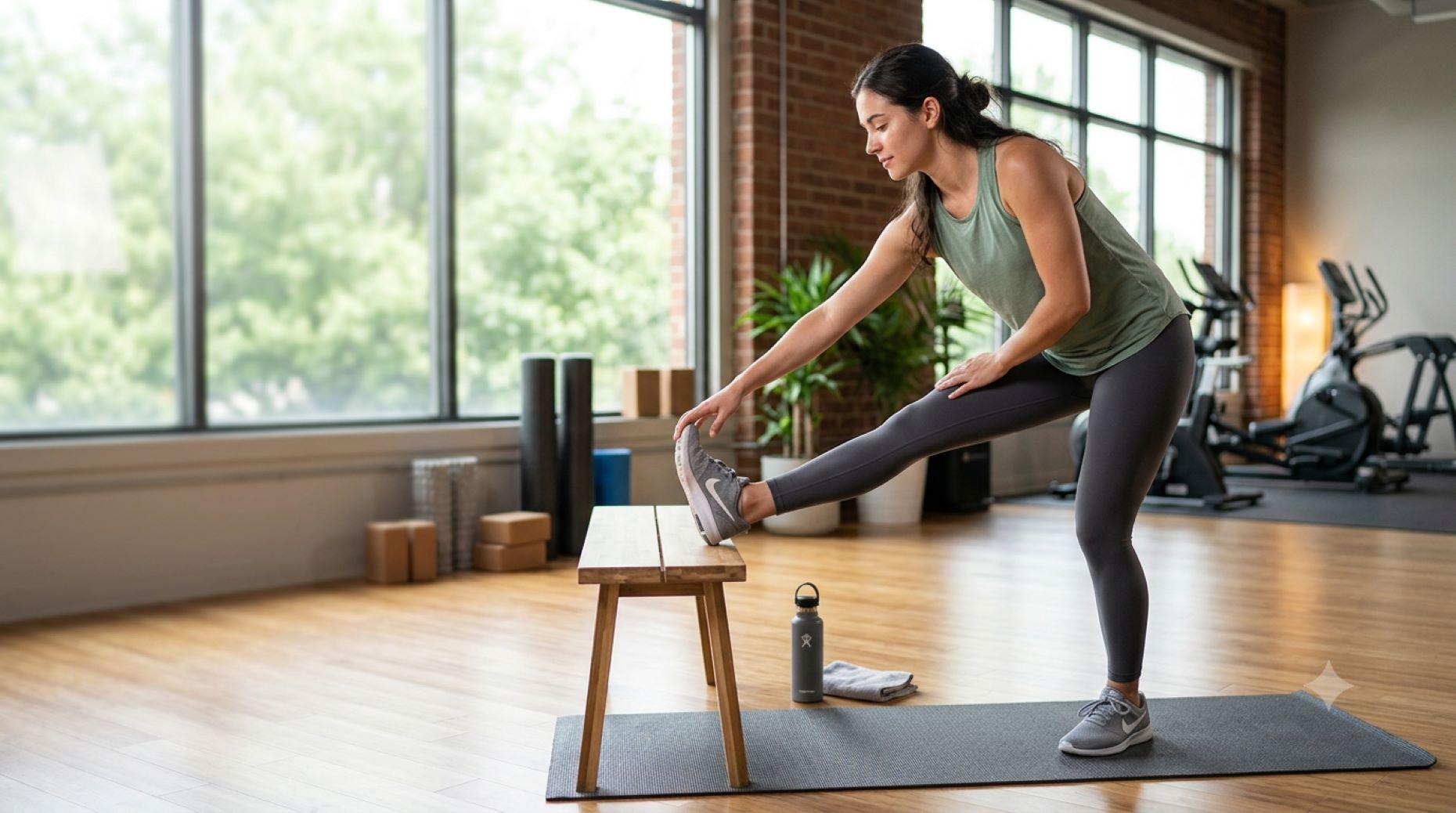
Does stretching reduce muscle soreness? It’s one of the most common questions people ask after a tough workout. Many beginners stretch after exercising because they believe it prevents soreness and helps muscles recover faster. While stretching can improve flexibility and temporarily reduce feelings of tightness, scientific research shows it has little effect on delayed onset muscle soreness (DOMS) or the body’s natural muscle repair process. In this guide, you’ll learn what stretching does, what the evidence says, and the best ways to support muscle recovery.
Quick Answer
Stretching may help you feel less stiff after exercise, but research shows it does not significantly reduce delayed onset muscle soreness (DOMS) or speed muscle repair. While regular stretching improves flexibility and mobility, recovery depends more on quality sleep, proper nutrition, hydration, and allowing muscles enough time to repair.
Table of Contents
Why Do Muscles Become Sore After Exercise?
Many people believe sore muscles simply need to be stretched. Post-workout soreness has a different cause. After an unfamiliar or challenging workout, your muscle fibers develop tiny, microscopic tears. This is a normal response to exercise and an important part of the body’s adaptation process. As your muscles repair these small areas of damage, they become stronger and better prepared for future workouts.
This soreness is known as delayed onset muscle soreness (DOMS). It usually
- Begins 12 to 24 hours after exercise
- Peaks between 24 and 72 hours
- Gradually improves over the next few days
Because DOMS is caused by the body’s natural repair process, not simply by “tight” muscles, stretching alone cannot eliminate the soreness. Instead, think of muscle soreness as a sign that your body is rebuilding and adapting. While gentle stretching may help you feel less stiff, it doesn’t repair muscle tissue or significantly shorten the recovery process. The good news is that soreness naturally becomes less severe as your body adapts to regular exercise, especially when you combine training with proper sleep, nutrition, hydration, and recovery.
Does Stretching Reduce Muscle Soreness?
The short answer is not significant.
Although stretching has long been recommended as part of a post-workout routine, research has consistently found that it has little to no meaningful effect on reducing delayed onset muscle soreness (DOMS) or speeding up muscle recovery. So why do many people say they feel better after stretching?
One reason is that stretching can temporarily reduce the feeling of muscle tightness and improve your range of motion. When your muscles feel less stiff, moving around may become more comfortable, creating the impression that soreness has improved. However, this temporary relief is different from repairing the microscopic muscle damage that causes DOMS.
Another reason is that stretching encourages gentle movement and relaxation. Slowing down after exercise, focusing on your breathing, and moving your muscles through a comfortable range of motion can help your body feel more relaxed, even though the recovery process itself hasn’t changed. This doesn’t mean stretching is a bad habit. It simply means its benefits are often misunderstood. Stretching supports flexibility, mobility, and movement quality, but it should not be relied on as the primary way to reduce muscle soreness after exercise.
If your goal is to recover faster, you’ll likely see greater benefits by prioritizing quality sleep, eating enough protein, staying hydrated, and allowing your muscles adequate time to repair.
Stretching Myths vs. Facts
Many people stretch after every workout because they’ve heard it reduces soreness. While stretching has important benefits, some common beliefs don’t match what research has found.
| Myth | Fact |
| Stretching prevents muscle soreness after every workout. | Research shows stretching has little to no meaningful effect on preventing delayed onset muscle soreness (DOMS). |
| Stretching repairs damaged muscle fibers. | Muscle repair occurs naturally and depends more on sleep, nutrition, hydration, and adequate rest. |
| The longer you stretch, the faster you’ll recover. | Longer or more intense stretching doesn’t speed muscle recovery and may increase discomfort if your muscles are already very sore. |
| Stretching should be painful to be effective. | A proper stretch should create gentle tension, not pain. Pain is a sign that you’re stretching too aggressively. |
| Stretching isn’t worth doing if it doesn’t reduce soreness. | Stretching still improves flexibility, mobility, posture, and overall movement quality, making it a valuable part of a balanced fitness routine. |
What Stretching Actually Does
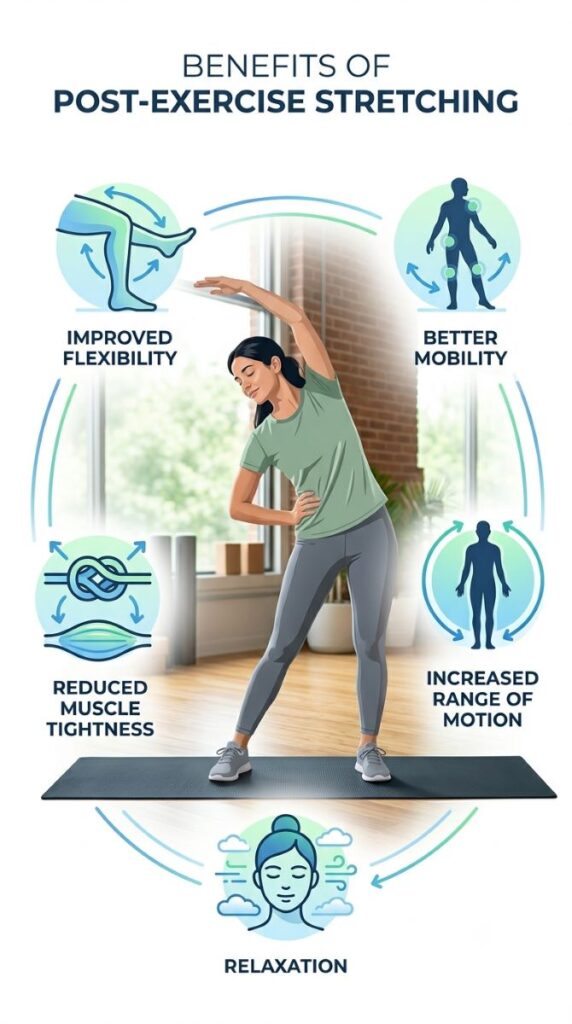
While stretching may not significantly reduce muscle soreness, it still offers several important benefits that support overall fitness and long-term movement.
Improves Flexibility
Regular stretching gradually increases the flexibility of your muscles and connective tissues. Better flexibility can make everyday movements and exercises feel easier and more comfortable over time.
Increases Range of Motion
Stretching helps your joints move through a fuller range of motion. Improved mobility can contribute to better exercise techniques and may make certain activities feel less restricted.
Reduces Feelings of Muscle Tightness
Many people notice that their muscles feel less tight immediately after stretching. Although this doesn’t repair muscle damage, it can make movement feel more comfortable during recovery.
Promotes Relaxation
Gentle stretching encourages your body to slow down after exercise. Combined with steady breathing, it can help reduce tension and leave you feeling more relaxed.
Supports Long-Term Mobility
Making stretching part of your regular routine can help maintain mobility as you continue exercising, making it easier to perform daily activities and workouts with good movement quality.
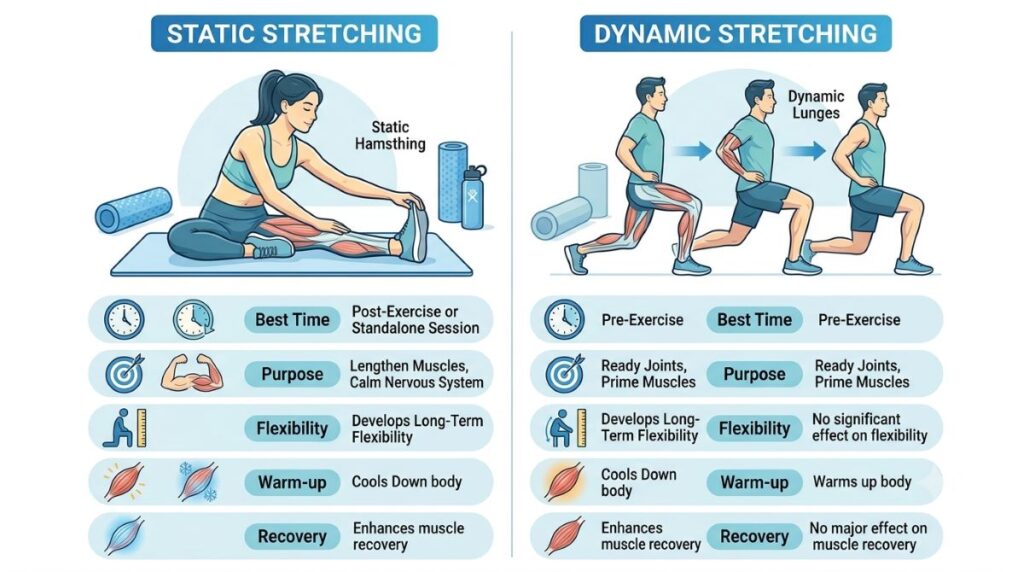
Static vs. Dynamic Stretching:
| Feature | Static Stretching | Dynamic Stretching |
| How it’s performed | Hold a stretch without moving | Move muscles and joints through a controlled range of motion |
| Best time to do it | After a workout or during flexibility sessions | Before a workout as part of a warm-up |
| Main benefit | Improves flexibility and helps reduce feelings of tightness | Prepare muscles and joints for exercise |
| Hold or repetitions | Hold each stretch for 15–30 seconds | Perform 8–12 controlled repetitions |
| Effect on muscle soreness | Little to no meaningful effect on DOMS | Little to no meaningful effect on DOMS |
| Best for | Flexibility, mobility, and relaxation | Warm-up and movement preparation |
Not all stretching is the same. Understanding the difference can help you choose the right type at the right time.
Static Stretching
Static stretching involves holding a muscle in a stretched position for about 15 to 30 seconds without moving.
Common examples include:
- Hamstring stretch
- Quadriceps stretch
- Calf stretch
- Chest stretch
Static stretching is generally best performed after a workout or during dedicated flexibility sessions when your muscles are already warm.
Dynamic Stretching
Dynamic stretching uses controlled, active movements to take your joints and muscles through their full range of motion.
Common examples include:
- Arm circles
- Leg swings
- Walking lunge
- Bodyweight squats
Dynamic stretching is typically recommended before exercise because it prepares your muscles and joints for movement without holding a stretch.
Which Is Better for Muscle Recovery?
Neither static nor dynamic stretching has been shown to significantly reduce delayed onset muscle soreness (DOMS). However, both can improve flexibility and mobility when used appropriately as part of a well-rounded fitness routine.
What Helps Muscle Recovery More Than Stretching?
Best Recovery Methods Ranked
While stretching has its place, some recovery habits have much stronger scientific support for helping your muscles recover after exercise.
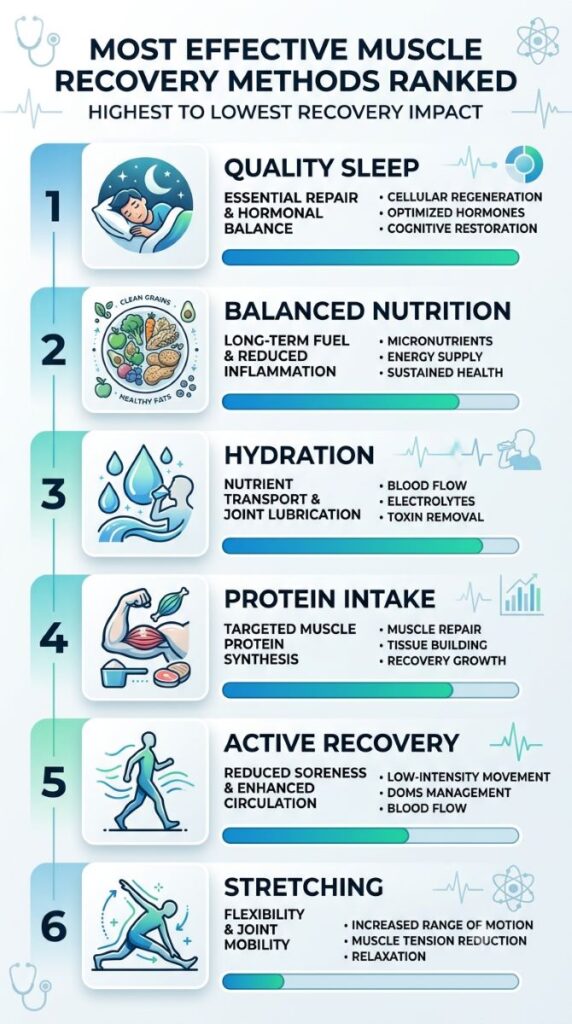
| Recovery Method | Help Reduce Soreness | Supports Muscle Repair | Overall Recovery Benefit |
| Quality sleep | ⭐⭐⭐⭐☆ | ⭐⭐⭐⭐⭐ | ⭐⭐⭐⭐⭐ |
| Adequate protein | ⭐⭐⭐⭐☆ | ⭐⭐⭐⭐⭐ | ⭐⭐⭐⭐⭐ |
| Proper hydration | ⭐⭐⭐☆☆ | ⭐⭐⭐⭐☆ | ⭐⭐⭐⭐☆ |
| Active recovery (walking or light cycling) | ⭐⭐⭐⭐☆ | ⭐⭐⭐☆☆ | ⭐⭐⭐⭐☆ |
| Balanced nutrition | ⭐⭐⭐⭐☆ | ⭐⭐⭐⭐☆ | ⭐⭐⭐⭐☆ |
| Stretching | ⭐⭐☆☆☆ | ⭐☆☆☆☆ | ⭐⭐⭐☆☆ |
Key takeaway:
Stretching is a helpful addition to your routine, but it shouldn’t replace the recovery habits that have the greatest impact on muscle repair and overall recovery. If your goal is to recover faster after exercise, several habits have a much greater impact than stretching alone.
Sleeping is one of the most important parts of muscle recovery. During sleep, your body repairs damaged muscle tissue, releases growth hormone, and prepares for your next workout.
Protein provides the amino acids your muscles need to repair and rebuild after exercise. Including a source of protein in your post-workout meal can support recovery.
Stay Hydrated
Water helps transport nutrients throughout the body and supports normal muscle function. Replacing fluids lost through sweat is an important part of recovery.
Along with protein, carbohydrates help replenish energy stores, while healthy fats, vitamins, and minerals support the body’s natural recovery processes.
Your muscles grow stronger during recovery, not during the workout itself. Scheduling rest days gives your body time to adapt and repair.
Try active recovery.
Light activities such as walking, easy cycling, or gentle swimming increase blood flow without placing excessive stress on your muscles. For many people, active recovery feels more beneficial than complete inactivity after a hard workout.
When Should You Stretch?
Stretching can be a valuable part of your fitness routine when used for the right reasons.
Simple Post-Workout Stretching Routine
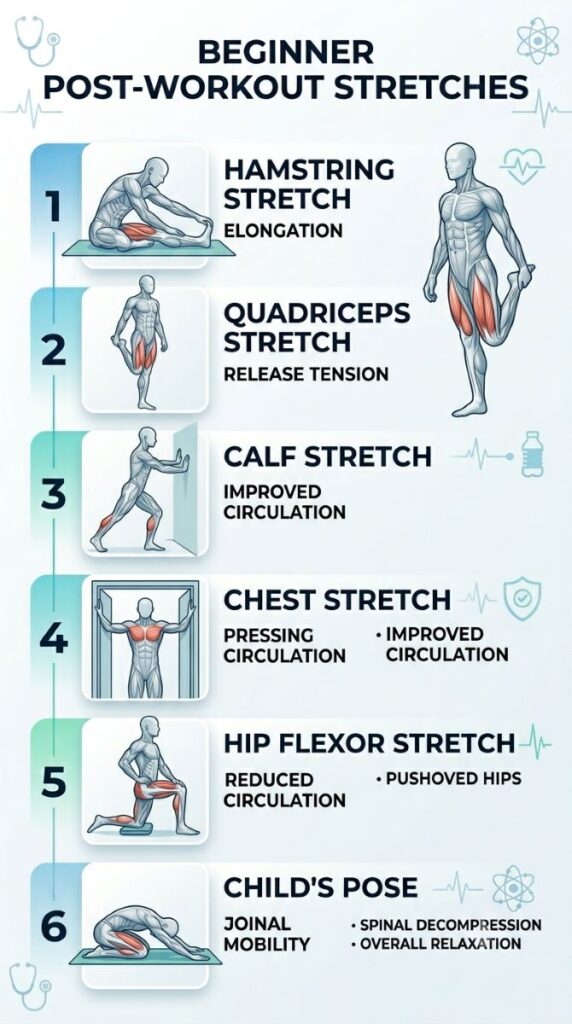
If you’d like to include stretching in your recovery routine, keep it gentle and focus on the major muscle groups you used during your workout.
| Stretch | Hold Time | Target Muscles |
| Hamstring Stretch | 20 to 30 seconds per leg | Back of the thighs |
| Quadriceps Stretch | 20 to 30 seconds per leg | Front of the thighs |
| Calf Stretch | 20 to 30 seconds per leg | Calf muscles |
| Chest Stretch | 20 to 30 seconds | Chest and shoulders |
| Hip Flexor Stretch | 20 to 30 seconds per side | Front of the hips |
| Child’s Pose | 20 to 30 seconds | Back, hips, and shoulders |
Tips for safe stretching:
- Stretch only until you feel gentle tension, not pain.
- Breathe slowly and avoid holding your breath.
- Never bounce during a stretch.
- Perform stretches after your muscles are warm.
- Stop immediately if you feel sharp or worsening pain.
You may benefit from stretching if your goal is to:
- Improve flexibility
- Increase joint mobility
- Reduce feelings of muscle tightness
- Relax after a workout
- Maintain healthy movement as you become more active
For most people, dynamic stretching is best before exercise to prepare the body for movement, while static stretching is better after a workout when the muscles are warm. If your muscles are extremely sore, stretch gently and avoid forcing your body into painful positions. Mild discomfort is normal, but sharp pain is a sign to stop. Remember that stretching works best as one part of a complete recovery plan. Pair it with quality sleep, good nutrition, hydration, and appropriate rest for the greatest recovery benefits.
Common Stretching Mistakes
Stretching is most effective when it’s done correctly. Avoid these common mistakes to get the most benefit while reducing the risk of discomfort or injury.
Stretching Cold Muscles
Stretching muscles that haven’t been warmed up can be uncomfortable and less effective. A few minutes of light movement before stretching helps prepare your muscles.
Stretching Too Aggressively
Stretch until you feel gentle tension, not pain. Forcing a stretch can strain muscles and connective tissues instead of helping them.
Bouncing During a Stretch
Rapid, bouncing movements can place unnecessary stress on your muscles. Slow, controlled stretches are generally safer and more effective.
Holding Your Breath
Breathing steadily helps your muscles relax during stretching. Try to breathe slowly and naturally instead of holding your breath.
Relying on Stretching Alone for Recovery
Stretching is only one part of a healthy recovery routine. Prioritizing sleep, nutrition, hydration, and recovery days will have a much greater impact on how well your muscles recover after exercise.
Muscle Recovery Checklist
Use this simple checklist after your workouts to support better recovery.
| Recovery Habit | Done? |
| Completed a proper cool-down | ☐ |
| Performed gentle post-workout stretching | ☐ |
| Drank enough water after exercising | ☐ |
| Ate a protein-rich meal or snack | ☐ |
| Included carbohydrates to replenish energy | ☐ |
| Planned for 7 to 9 hours of quality sleep | ☐ |
| Allowed enough recovery time before training the same muscles again | ☐ |
Remember: No single recovery method works on its own. The best results come from combining good nutrition, hydration, quality sleep, active recovery, and appropriate rest. Stretching is one helpful piece of that overall recovery plan.
When Stretching May Not Be the Right Choice
Although stretching is safe for most people, there are situations where it’s better to wait or seek medical advice.
Avoid stretching or use caution if you:
- Have a sudden muscle strain or tear.
- Feel sharp or severe pain during movement.
- Notice significant swelling or bruising after an injury.
- Have a suspected fracture or joint injury.
- Are recovering from surgery and haven’t been cleared up by your healthcare provider.
- Have a medical condition that limits safe movement.
If you experience severe pain, persistent swelling, numbness, or muscle soreness that lasts longer than a week without improving, it’s a good idea to consult a healthcare professional. For normal post-workout soreness, gentle movement, adequate rest, proper nutrition, hydration, and quality sleep remain the foundation of effective muscle recovery.
Frequently Asked Questions
Does stretching reduce muscle soreness after a workout?
Research suggests that stretching has little to no meaningful effect on delayed onset muscle soreness (DOMS). While it may temporarily reduce feelings of tightness, it does not significantly speed muscle repair.
Is it good to stretch when your muscles are sore?
Gentle stretching may help you feel less stiff if your soreness is mild. However, avoid intense stretching if your muscles are very sore or painful, as it may increase discomfort.
Is stretching before or after a workout better?
Dynamic stretching is generally recommended before exercise to prepare your muscles for movement. Static stretching is usually better after a workout when your muscles are warm.
Can stretching prevent DOMS?
Current evidence shows that stretching does not effectively prevent delayed onset muscle soreness. A balanced recovery routine that includes sleep, nutrition, hydration, and rest is more beneficial.
What is the best way to recover from sore muscles?
The most effective recovery strategies include getting enough sleep, eating adequate protein, staying hydrated, performing light active recovery, and allowing your muscles enough time to heal.
Key Takeaways
Stretching is a healthy habit, but its benefits are often misunderstood. While it can improve flexibility and mobility and temporarily reduce muscle tightness, research shows it does not significantly reduce delayed onset muscle soreness (DOMS) or speed muscle recovery. For the best recovery results, combine stretching with quality sleep, a balanced diet, adequate protein, proper hydration, and regular recovery days. Together, these habits support your body’s natural repair process and help you return to your workouts feeling stronger and ready to perform.
Final Thoughts
Stretching has earned a permanent place in many post-workout routines, but it’s important to understand what it can and can’t do. While it improves flexibility and mobility and may temporarily ease feelings of muscle tightness, it isn’t a shortcut to faster muscle recovery or a reliable way to prevent delayed onset muscle soreness (DOMS). The most effective recovery plan combines several healthy habits rather than relying on a single technique. Prioritize quality sleep, eat enough protein, stay hydrated, include active recovery when appropriate, and give your muscles enough time to repair between workouts.
By viewing stretching as one part of a complete recovery strategy instead of the entire solution, you’ll build healthier habits that support both your short-term comfort and your long-term fitness progress.
Medical Disclaimer
This content is for educational purposes only and should not be considered medical advice. Consult a qualified healthcare professional if you experience chronic sleep problems, persistent fatigue, sleep apnea symptoms, or ongoing recovery issues.
References
- Herbert RD, de Noronha M. Stretching to prevent or reduce muscle soreness after exercise. Cochrane Database of Systematic Reviews. 2011.
- American College of Sports Medicine. ACSM’s Guidelines for Exercise Testing and Prescription. Latest edition.
- National Strength and Conditioning Association. Essentials of Strength Training and Conditioning. Latest edition.
- American Council on Exercise. Exercise Recovery and Stretching Resources.
- Mayo Clinic. Stretching: Focus on Flexibility.

I’m Mr. Baig, founder of Recover Better Lab. I create evidence-based fitness recovery content to help beginners recover smarter and build sustainable healthy habits.
Mission: My mission is to provide trustworthy, research-backed recovery and fitness content that helps people optimize their health, performance, and overall well-being.