
Best Sleep Routine for Gym Beginners to Boost Recovery

Mr. Baig

Founder, Recover Better Lab

Our mission is to provide trustworthy, research-backed recovery and fitness content that helps people optimize their health, performance, and overall well-being.

Starting at the gym is exciting until poor recovery catches up with you. Most beginners obsess over workouts and protein but completely underestimate sleep. That mistake slows muscle recovery, increases fatigue, lowers motivation, and can even reduce workout results.

Your body does not build muscle during workouts. It repairs and grows during recovery, especially while sleeping. If you are constantly sore, tired, unmotivated, or struggling to improve in the gym, your sleep routine is probably the weak link.

This guide explains the best sleep routine for gym beginners, how sleep affects muscle recovery, and simple habits that improve recovery naturally without complicated bio hacks.

What Is the Best Sleep Routine for Gym Beginners?

The best sleep routine for gym beginners includes sleeping 7.5–9 hours nightly, maintaining a consistent sleep schedule, avoiding screens before bed, improving sleep environment quality, and supporting recovery with proper nutrition and hydration. Quality sleep helps repair muscles, restore energy, reduce soreness, and improve workout performance.

Quick Answer

A good sleep routine for gym beginners includes maintaining a consistent bedtime, sleeping 7 to 9 hours each night, limiting screen exposure before bed, reducing caffeine consumption late in the day, and creating a cool, dark sleeping environment. These habits support muscle repair, energy production, workout performance, and long-term fitness progress.

Table of Contents

Introduction

The best sleep routine for gym beginners can make a major difference in recovery, energy levels, and workout performance. Eat plenty of protein, and stay motivated in the gym, but if your sleep is poor, your recovery will likely suffer. Many gym beginners spend most of their time focusing on workouts and nutrition while overlooking one of the most powerful recovery tools available: sleep.

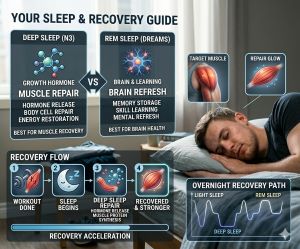
The reality is simple. Your muscles do not grow while you’re lifting weights. They grow while your body recovers. A large portion of that recovery happens during sleep, when your body repairs muscle tissue, restores energy levels, regulates hormones, and prepares you for your next workout.

Unfortunately, many beginners struggle with inconsistent bedtimes, late-night screen use, caffeine consumption, and poor sleep habits that quietly slow their progress. The result is often persistent soreness, low energy, slower recovery, and disappointing gym performance.

Want Faster Recovery?
Get our free Sleep Recovery Starter Guide and learn the exact habits beginners can use to improve recovery, energy, and workout performance.

Small adjustments can make a significant difference in how you feel and perform. In this guide, you’ll learn exactly how to build a beginner-friendly sleep routine that supports muscle recovery, improves workout performance, and helps you get more results from every training session.

Quick Recovery Insight

Many beginners look for the perfect workout program when the real bottleneck is recovery. Improving sleep by even 30 to 60 minutes per night can often provide more recovery benefits than adding another supplement to your routine.

7-Steps Sleep Routine for Gym Beginners

  1. Go to bed at the same time every night.
  2. Wake up consistently each morning.
  3. Limit blue light exposure before bed.
  4. Avoid caffeine late in the day.
  5. Keep your bedroom cool and dark.
  6. Follow a relaxing wind-down routine.
  7. Aim for 7 to 9 hours of quality sleep.

Why Sleep Matters for Muscle Recovery

Best Sleep Routine for Gym Beginners

Most beginners think recovery happens after a workout meal or on rest days. While nutrition and recovery days are important, sleep is where much of the body’s repair process takes place.

When you sleep, your body enters a highly active recovery state. Hormones are released, damaged muscle fibers begin repairing, energy stores are replenished, and your nervous system recovers from stress training.

Without adequate sleep, even the best workout program can produce slower results.

Growth Hormone Release

One of the most important recovery benefits of sleep is the release of growth hormone.

Growth hormone plays a major role in:

  • Muscle repair
  • Tissue recovery
  • Fat metabolism
  • Physical adaptation to exercise

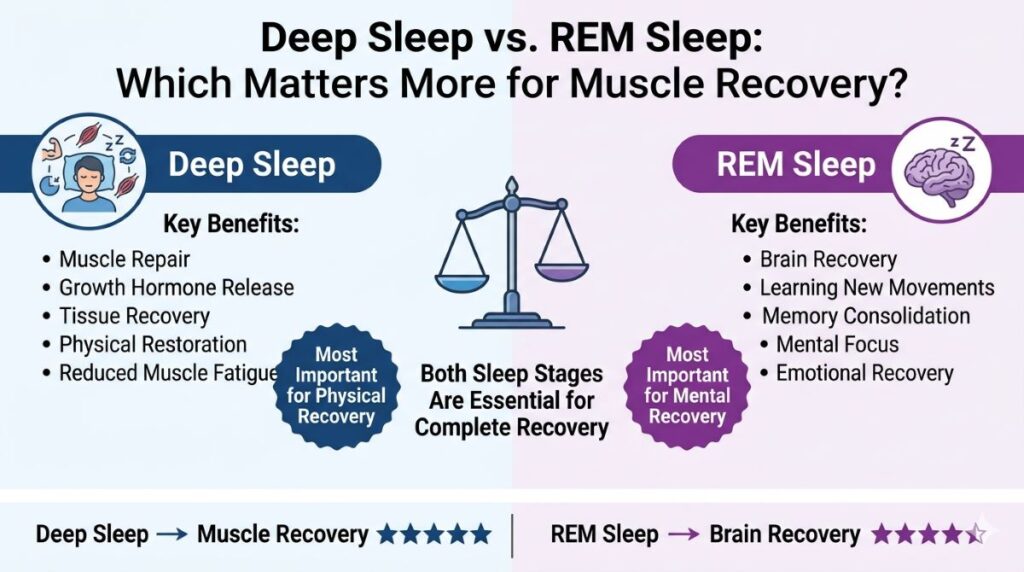
Deep sleep stages are particularly important because this is when growth hormone production reaches its highest level. For gym beginners, consistently missing sleep can reduce the effectiveness of this natural recovery process.

Muscle Repair and Protein Synthesis

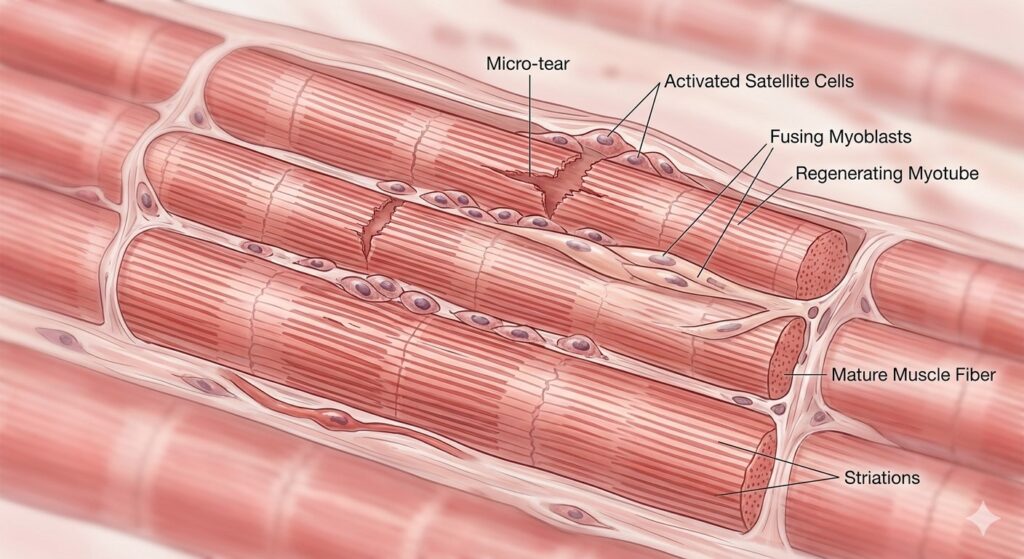
Every workout creates small amounts of stress and microscopic damage within muscle tissue. Your body responds by repairing and strengthening these tissues, making them better prepared for future workouts.

Sleep support:

  • Protein synthesis
  • Muscle tissue repair
  • Recovery from resistance training
  • Adaptation to exercise

Think of your workouts as the trigger and sleep as the construction crew that performs the rebuilding.

Nervous System Recovery

Recovery is not only about muscles. Strength training also places stress on the nervous system. Poor sleep can contribute to:

  • Reduced focus
  • Slower reaction times
  • Lower motivation
  • Poor workout performance

Quality sleep helps restore mental and physical readiness for future training sessions.

Reduced Inflammation

Exercise naturally causes inflammation as part of the recovery process. However, chronic sleep deprivation may increase excessive inflammation, making soreness feel worse and recovery take longer. Getting adequate sleep helps your body manage inflammation more effectively.

Recovery Benefits of Sleep

Recovery ProcessBenefit
Growth Hormone ReleaseSupports recovery and adaptation
Muscle RepairHelps rebuild damaged tissue
Protein SynthesisSupports muscle development
Energy RestorationReplenishes energy stores
Nervous System RecoveryImproves performance and focus
Inflammation ControlMay reduce excessive soreness

Recovery Challenge
For the next 7 days, prioritize 7 to 9 hours of sleep and track:

  • Energy levels
  • Muscle soreness
  • Workout performance

You’ll often notice improvements before changing anything else.

[Get the Free Recovery Tracker]

Signs Your Sleep Routine Is Hurting Recovery

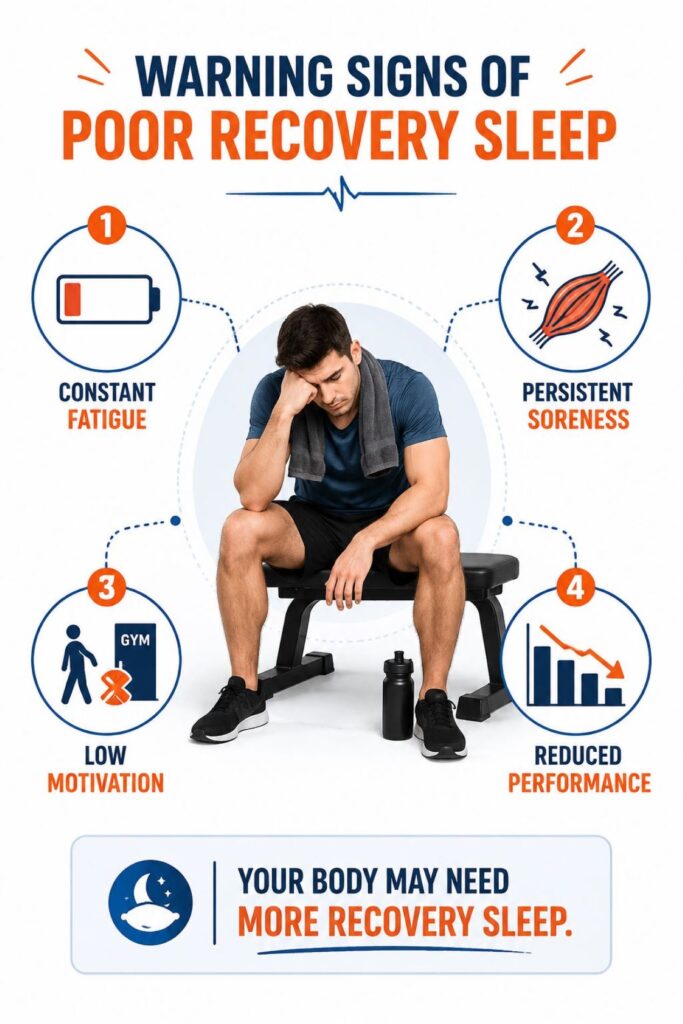
Many beginners assume they simply need to train harder when progress slows. But poor sleep may be the hidden reason your recovery is struggling. Watch these common warning signs.

Constant Muscle Soreness

Feeling sore after training is normal.

Remaining sore for several days after every workout may indicate inadequate recovery.

Low Energy Throughout the Day

If you regularly feel exhausted despite eating well, poor sleep may limit your recovery capacity.

Slower Gym Progress

Recovery is when adaptation occurs. Insufficient sleep can make it harder to improve strength, endurance, and overall performance.

Poor Motivation

Many people blame motivation when the real issue is fatigue. Sleep deprivation often reduces enthusiasm for exercise and healthy habits.

Brain Fog and Poor Focus

Difficulty concentration, forgetfulness, and mental fatigue are common signs that your recovery needs attention.

Recovery Self-Assessment Checklist

You wake up feeling tired most mornings.

You rely heavily on caffeine.

Muscle soreness lasts longer than expected.

Your gym performance feels inconsistent.

You struggle to stay focused throughout the day.

You often sleep fewer than seven hours.

If you checked three or more boxes, improving your sleep routine should become a priority.

Track these symptoms for one week. You may discover that better sleep, not harder training, is the missing piece in your recovery plan.

Common Beginner Sleep Mistakes That Slow Recovery

Many gym beginners believe recovery problems are caused by training intensity, workout programs, or nutrition mistakes. Poor sleep habits often create the biggest recovery bottleneck. The good news is that most sleep mistakes are easy to fix once you recognize them.

Using Screens Right Before Bed

Phones, tablets, laptops, and televisions expose your eyes to blue light. Blue light can interfere with melatonin production, the hormone that helps regulate your sleep-wake cycle. When melatonin production is disrupted, falling asleep becomes more difficult, and sleep quality may suffer.

Quick Fix:

  • Stop screen use 60 minutes before bed.
  • Enable night mode on devices.
  • Read a physical book instead.

Drinking Caffeine Too Late

Coffee, tea, energy drinks, and some pre-workout supplements can remain in your system for several hours. Many beginners consume caffeine during the afternoon or evening without realizing it may still affect their sleep later that night.

Quick Fix: Try avoiding caffeine within 6 to 8 hours of your planned bedtime.

Having an Inconsistent Sleep Schedule

Going to bed at 10 PM one night and 1 AM the next confuses your body’s internal clock. Consistency is one of the most overlooked factors in recovery. Your body performs best when sleep and wake times remain relatively stable.

Quick Fix: Choose a bedtime you can realistically maintain most days of the week.

Training Too Close to Bedtime

Evening workouts are not automatically bad. However, extremely intense training sessions right before bed may increase alertness and make it harder to fall asleep.

Quick Fix: Allow 2 to 3 hours between intense exercise and bedtime whenever possible.

Ignoring the Sleep Environment

as the following: Your bedroom directly affects sleep quality. Many people overlook factors such as the following:

  • Room temperature
  • Light exposure
  • Noise levels
  • Mattress comfort

Quick Fix: Create a bedroom environment that promotes recovery:

  • Cool
  • Dark
  • Quiet
  • Comfortable

Common Mistakes

Mistake: Sleeping whenever convenient.

Reality: Consistent sleep and wake times are often more beneficial than occasionally sleeping longer. The goal is not perfection. The goal is to build simple habits that support recovery consistently. Think of the following routine as a recovery system rather than a collection of separate tips.

Step 1: Set a Consistent Bedtime

Your body loves routine. Going to bed at approximately the same time each night helps regulate your circadian rhythm and improve sleep quality.

Why It Works

Consistent sleep timing:

  • Improves sleep efficiency
  • Supports hormone regulation
  • Enhances recovery quality

Beginner Action Step

Choose a bedtime that allows for 7 to 9 hours of sleep and stick to it for the next two weeks.

Common Mistake

Trying to make dramatic schedule changes overnight. Pick your bedtime tonight and commit to it for the next seven days.

Step 2: Create a Wind-Down Routine

Many beginners expect their bodies to switch instantly from high activity to sleep. Unfortunately, recovery does not work that way. A short wind-down routine signals to your brain that bedtime is approaching.

Activities to Include

  • Reading
  • Gentle stretching
  • Journaling
  • Deep breathing
  • Meditation

Why It Works

These activities reduce mental stimulation and help prepare your body for rest.

Beginner Action Step

Create a 15-minute bedtime routine.

Common Mistake

Using social media as a “relaxation” activity. Start with just one relaxing habit tonight.

Step 3: Limit Blue Light Exposure

Artificial light can delay sleep signals. This is especially true for smartphones and tablets.

Why It Works

Reducing blue light exposure helps support natural melatonin production.

Beginner Action Step

Turn off screens at least 60 minutes before bed.

Common Mistake

Scrolling social media while lying in bed. Charge your phone outside the bedroom tonight.

Step 4: Optimize Bedroom Temperature

A cooler room generally promotes better sleep quality.

Why It Works

Body temperature naturally decreases before sleep.

A cooler environment supports this process.

Recommended Temperature

Approximately 60–67°F (15–19°C)

Beginner Action Step

Experiment with room temperature and bedding for one week.

Common Mistake

Sleeping in an overly warm room. Make your bedroom feel like a recovery zone, not a workspace.

Step 5: Reduce Evening Stimulants

Many gym beginners unknowingly sabotage sleep with stimulants. Common examples include:

  • Coffee
  • Energy drinks
  • Strong tea
  • Pre-workout supplements

Why It Works

Reducing stimulants helps your body transition into sleep more naturally.

Beginner Action Step

Track caffeine intake for three days.

Common Mistake

Taking pre-workout supplements late in the evening. Check the caffeine content of your favorite drinks today.

Step 6: Use Recovery-Friendly Nutrition

Nutrition and sleep work together. A balanced evening meal can support overnight recovery.

Best Evening Nutrition Choices

  • Lean protein
  • Greek yogurt
  • Cottage cheese
  • Oats
  • Bananas
  • Magnesium-rich foods

Why It Works

These foods support muscle recovery and may help maintain stable energy levels overnight.

Common Mistake

Going to bed when extremely hungry or overly full.

Beginner Action Step

Include a protein source with your evening meal. Build a recovery-focused dinner plate tonight.

Step 7: Follow a Consistent Wake-Up Time

Many people focus only on bedtime. Wake-up time is equally important.

Why It Works

A regular wakeup schedule strengthens your body’s internal clock.

Beginner Action Step

Wake up at the same time every day, including weekends whenever possible.

Common Mistake

Sleeping several extra hours on weekends. Set tomorrow’s wake-up alarm before going to bed tonight.

Expert Tip

Recovery Starts Before You Fall Asleep

Most beginners think recovery begins after they wake up. But recovery begins when you create the conditions for quality sleep. The habits you follow during the final hour before bed often determine how effectively your body repairs and rebuilds overnight.

Quick Recovery Checklist

Use this checklist every evening:

1. Finish caffeine intake early.

2. Reduce screen exposure.

3. Complete a short wind-down routine.

4. Keep the bedroom cool.

5. Eat a balanced evening meal.

6. Set tomorrow’s wake-up time.

7. Aim for 7 to 9 hours of sleep.

You don’t need a perfect sleep routine. You need a repeatable one. Consistency beats perfection when it comes to recovery.

Best Evening Habits for Faster Recovery

Best Evening Habits for Faster Recovery

1. What you do during the final few hours of the day can have a major impact on how well you recover overnight.

2. Many gym beginners focus on training and nutrition but overlook their evening habits.

3. Small improvements before bed can help your body transition into recovery mode more effectively.

Gentle Stretching

Light stretching before bed may help reduce muscle tightness and improve relaxation. This does not need to be a full workout. A simple 5- to 10-minute routine is often enough.

Benefits

  • Promotes relaxation
  • May reduce muscle stiffness
  • Supports mobility
  • Helps transition into sleep mode

Beginner Tip

Focus on major muscle groups trained during the day.

Reading Instead of Scrolling

Many people spend their final hour in bed looking at social media or watching videos. Reading a physical book can be a more recovery-friendly alternative.

Benefits

  • Reduces screen exposure
  • Encourages relaxation
  • Help quiet mental distractions
  • Supports better sleep preparation

Beginner Tip

Choose light, enjoyable reading rather than work-related material.

Deep Breathing Exercises

Stress can interfere with both sleep quality and recovery.

Simple breathing exercises can help calm the nervous system.

Example

Try the 4.4.4 methods:

  • Inhale for 4 seconds
  • Hold for 4 seconds
  • Exhale for 4 seconds

Repeat for several minutes.

Benefits

  • Encourages relaxation
  • Reduces stress
  • Supports sleep readiness

Meditation

Meditation doesn’t need to be complicated. Even five minutes of quiet mindfulness can help prepare your mind for sleep.

Benefits

  • Improves relaxation
  • Reduces racing thoughts
  • Supports consistent sleep habits

Beginner Tip

Start with guided meditation apps or simple breathing exercises.

Short Evening Walks

A gentle walk after dinner can support recovery without overstimulating the body.

Benefits

  • Encourage relaxation
  • Help digestion
  • Support stress reduction
  • Promote healthy routines

Beginner Tip

Keep the pace light and comfortable.

Expert Tip

Build a Recovery Trigger

Choose one simple habit that signals bedtime every night.

Examples include:

  • Reading for 10 minutes
  • Stretching for 5 minutes
  • Drinking herbal tea
  • Practicing breathing exercises

When repeated consistently, these habits become powerful recovery cues that help your brain prepare for sleep.

Evening Recovery Checklist

Before bed, ask yourself:

1. Did I limit screen exposure?

2. Did I avoid late caffeine?

3. Did I complete my wind-down routine?

4. Is my bedroom cool and comfortable?

5. Did I set tomorrow’s wake-up time?

6. Am I allowing enough time for 7 to 9 hours of sleep?

Recovery doesn’t start when you fall asleep. It starts with the habits you build before bedtime.

What to Avoid Before Bed

Good recovery habits matter, but avoiding recovery-killing habits is equally important. Many beginners unknowingly sabotage their sleep every night.

Energy Drinks

Energy drinks often contain large amounts of caffeine and stimulants. Consuming them late in the day can significantly interfere with sleep quality.

Why It Hurts Recovery

  • Delays sleep onset
  • Reduces sleep quality
  • Increases nighttime alertness

Excessive Caffeine

Coffee can be beneficial for workouts. The problem occurs when caffeine remains active at bedtime.

Why It Hurts Recovery

  • Makes falling asleep harder
  • May reduce sleep duration
  • Can increase nighttime waking

Alcohol

Many people believe alcohol helps them sleep. While it may initially make you feel sleepy, it can reduce overall sleep quality.

Why It Hurts Recovery

  • Disrupt sleep cycles
  • May impair recovery processes
  • Can increase dehydration

Heavy Meals Before Bed

Eating extremely large meals shortly before bedtime may cause discomfort and interfere with sleep.

Why It Hurts Recovery

  • Digestive discomfort
  • Increased nighttime waking
  • Reduced sleep quality

Better Alternative

Eat balanced meals earlier and keep late-night snacks moderate.

Stress-Triggering Activities

Activities that increase stress and mental stimulation can delay sleep.

Examples include:

  • Heated arguments
  • Work emails
  • Financial planning
  • Intense gaming
  • Stressful social media content

Why It Hurts Recovery

A highly activated mind often struggles to transition into sleep.

Myth vs Fact Box

Myth:

Alcohol improves recovery because it helps you fall asleep faster.

Fact:

While alcohol may initially increase sleepiness, it can disrupt important sleep stages that support recovery.

Myth:

Watching videos in bed helps your brain relax.

Fact:

Screen exposure and mental stimulation often make falling asleep more difficult.

Myth:

Missing sleep during the week can be fully fixed on weekends.

Fact:

Consistent sleep patterns generally support better recovery than trying to catch up occasionally. The easiest way to improve recovery may not be adding a new habit; it may be removing a bad one.

Sleep Duration Recommendations for Gym Beginners

One of the most common questions beginners ask is

“How many hours should I sleep for recovery?”

There is no perfect number for every individual.

However, most active adults recover best when they consistently get between 7 and 9 hours of quality sleep.

Sleep Duration Comparison Table

Sleep HoursRecovery QualityEnergy LevelsPerformance Impact
6 HoursPoorLowReduced
7 HoursGoodModerateAcceptable
8 HoursExcellentHighStrong
9 HoursExcellentVery HighOptimal for many active individuals

What Happens with 6 Hours of Sleep?

Many adults function for six hours. However, recovery may suffer over time. Potential issues include the following:

  • Increased fatigue
  • Slower recovery
  • Reduced performance
  • Lower motivation

This range provides sufficient opportunity for:

  • Deep sleep
  • REM sleep
  • Hormonal recovery
  • Muscle repair
  • Nervous system recovery

Is More Sleep Always Better?

Not necessarily. Sleep quality matters just as much as sleep quantity. Nine hours of poor-quality sleep may be less beneficial than eight hours of high-quality sleep.

Quick Recovery Insight

If you sleep six hours per night, don’t aim for nine hours immediately. Increase sleep gradually by 15 to 30 minutes per week until you consistently reach your target. Before changing your workout program, try improving your sleep duration for the next two weeks and monitor your recovery.

Sample Sleep Schedule for Gym Beginners

A common mistake beginners make is trying to copy the routines of professional athletes or fitness influencers.

The best sleep schedule is the one you can follow consistently. The examples below provide realistic recovery-focused schedules for different lifestyles.

Morning Workout Sleep Schedule

If you prefer exercising before work or school, your sleep routine should prioritize an earlier bedtime.

Example Schedule

TimeActivity
5:45 AMWake Up
6:15 AMWorkout
7:15 AMBreakfast
12:30 PMLunch
6:30 PMDinner
9:15 PMBegin Wind-Down Routine
10:00 PMSleep

Why It Works

  • Consistent wakeup time
  • Sufficient recovery opportunity
  • Supports morning training performance
  • Encourages healthy circadian rhythms

Evening Workout Sleep Schedule

Many beginners can only train after work. That’s perfectly fine if recovery habits remain strong.

Example Schedule

TimeActivity
7:00 AMWake Up
8:00 AMBreakfast
1:00 PMLunch
6:00 PMWorkout
7:15 PMDinner
9:45 PMWind-Down Routine
10:45 PMSleep

Why It Works

  • Allow post-workout recovery nutrition
  • Create separation between training and bedtime
  • Maintain sleep consistency

Sleep Tips for Shift Workers

Shift workers often face unique recovery challenges. While perfection may be impossible, consistency still matters.

Practical Strategies

  • Use blackout curtains
  • Wear an eye mask if necessary
  • Keep sleep and wake times consistently
  • Reduce light exposure before sleep
  • Consider strategic naps when appropriate

Recovery Priority

Protect total sleep duration whenever possible. For shift workers, recovery often depends more on sleep quantity and consistency than perfect timing.

Quick Recovery Checklist

1. Follow a consistent bedtime.

2. Follow a consistent wake-up time.

3. Plan workouts around sleep when possible.

4. Protect sleep duration.

5. Avoid sacrificing sleep for extra training.

Your recovery schedule should fit your lifestyle, not someone else’s. Build a routine you can maintain long-term.

How Do Sleep and Nutrition Work Together?

Sleep and nutrition are often discussed separately. They work together as a recovery team. You can think of nutrition as providing the building materials while sleep provides the repair time. Both are essential.

Protein Supports Overnight Recovery

During sleep, your body performs much of its muscle repair work. Consuming sufficient protein throughout the day helps provide the amino acids needed for recovery.

Recovery-Friendly Protein Sources

  • Greek yogurt
  • Cottage cheese
  • Eggs
  • Chicken breast
  • Fish
  • Lean meat

Hydration Supports Sleep Quality

Even mild dehydration can negatively affect recovery and overall well-being.

Hydration supports:

  • Muscle function
  • Temperature regulation
  • Recovery processes
  • Physical performance

Beginner Goal

Drink water consistently throughout the day instead of trying to catch up at night.

Magnesium-Rich Foods

Magnesium plays a role in many important bodily functions. Foods containing magnesium include:

  • Pumpkin seeds
  • Almonds
  • Spinach
  • Black beans
  • Oats

Why It Matters

Magnesium supports normal muscle and nervous system function.

Recovery-Friendly Evening Snacks

A light evening snack may support recovery for some people.

Examples include:

  • Greek yogurt with berries
  • Cottage cheese and fruit
  • Oatmeal with banana
  • Protein smoothie

Avoid extremely large meals immediately before bed.

Recovery Nutrition and Sleep Table

HabitRecovery Benefit
Adequate ProteinSupports muscle repair
Consistent HydrationSupports overall recovery
Magnesium-Rich FoodsSupports normal body function
Balanced Evening MealHelps avoid hunger before bed
Healthy Recovery SnacksSupports overnight recovery

Expert Tip

Sleep Beats Most Supplements

Many beginners spend significant money searching for recovery supplements. While some supplements may have value, few provide the recovery benefits that consistent quality sleep offers. If your sleep routine is poor, improving it should be a higher priority than adding another supplement. Insert naturally:

Best Foods for Muscle Recovery at Home

Hydration for Exercise Recovery

Common Recovery and Sleep Myths

Recovery misinformation is everywhere. Let’s separate fact from fiction.

Myth #1: More Training Always Produces Better Results

Reality

Progress happens when training and recovery work together. Training harder while recovering poorly often leads to slower progress.

Myth #2: Sleep Is Less Important Than Nutrition

Reality

Nutrition and sleep are both essential. Ignoring either one limits recovery potential.

Myth #3: You Can Fully Catch Up on Sleep During Weekends

Reality

Occasional catch-up sleep may help, but it does not completely replace consistent sleep habits.

Myth #4: Supplements Can Replace Sleep

Reality

No supplement can fully compensate for chronic sleep deprivation.

Myth #5: Soreness Means Your Workout Was Effective

Reality

Soreness is not always an indicator of progress. Recovery quality, performance improvements, and consistency matter far more.

Myth #6: Six Hours Is Enough for Everyone

Reality

Recovery needs vary, but most active adults benefit from 7 to 9 hours of quality sleep.

Recovery Reality Check

The most successful gym beginners are not necessarily the people who train the hardest. They are often the people who recover the most consistently.

Enjoying This Guide?

Join the Recover Better Lab newsletter and receive:

  • Weekly recovery tips
  • Sleep optimization strategies
  • Beginner workout recovery guides
  • Evidence-based fitness advice

Recover Better Starting Tonight

Don’t wait for the perfect workout plan. Start with the recovery habit that delivers results every single day: quality sleep. Download the free Sleep Recovery Starter Guide and take the first step toward better recovery, more energy, and stronger workouts.

Frequently Asked Questions

Is 7 Hours of Sleep Enough for Muscle Recovery?

For many adults, 7 hours can support recovery. However, most gym beginners generally benefit from 7 to 9 hours of quality sleep to maximize muscle repair, energy levels, and workout performance.

Does Sleep Help Build Muscle?

Yes. Sleep supports growth hormone release, protein synthesis, and muscle repair processes that contribute to muscle development and workout recovery.

Can Naps Improve Recovery?

Short naps of 20 to 30 minutes may help reduce fatigue and improve alertness, especially if nighttime sleep has been limited.

What Is the Best Bedtime for Gym Beginners?

The best bedtime is one that consistently allows you to achieve 7 to 9 hours of sleep while fitting your daily schedule.

Does Poor Sleep Affect Strength Gains?

Yes. Poor sleep may reduce recovery quality, decrease workout performance, and make it harder to progress consistently in the gym.

Should I Take Magnesium Before Bed?

Some people find magnesium helpful as part of their nutrition routine. However, food-first nutrition and healthy sleep habits should remain the primary focus.

Can Sleep Reduce Muscle Soreness?

Quality sleep supports recovery processes that may help reduce excessive soreness and improve readiness for future workouts.

Is Sleep More Important Than Supplements?

For most beginners, improving sleep habits will usually provide greater recovery benefits than adding new supplements.

Does Late-Night Exercise Affect Sleep?

It can be for some individuals. High-intensity exercise close to bedtime may increase alertness and make falling asleep more difficult.

How Long Does Recovery Take After a Workout?

Recovery time varies based on workout intensity, training experience, nutrition, and sleep quality. Most beginners benefit from 24 to 72 hours of recovery between training sessions for the same muscle groups.

Can Weight Loss Affect Sleep Quality?

Yes. Significant calorie restriction, hunger, and poor nutrition habits may negatively affect sleep quality in some individuals.

What Foods May Support Better Sleep?

Recovery-friendly options include oats, bananas, Greek yogurt, cottage cheese, nuts, seeds, and other nutrient-dense foods as part of a balanced diet.

Medical Disclaimer

This article is intended for educational and informational purposes only. It should not be considered medical advice, diagnosis, or treatment. Always consult a qualified healthcare professional regarding medical concerns, sleep disorders, or health conditions.

When to Consult a Healthcare Professional

Speak with a healthcare professional if you experience:

  • Chronic insomnia
  • Severe daytime fatigue
  • Loud snoring or breathing interruptions during sleep
  • Suspected sleep apnea
  • Persistent recovery problems despite healthy sleep habits
  • Ongoing difficulty falling or staying asleep

Early intervention can help identify underlying sleep-related conditions and improve long-term health outcomes.

Key Takeaways

Sleep Is a Recovery Tool

Recovery doesn’t happen only through nutrition and rest days. Sleep plays a central role in muscle repair and performance.

Consistency Matters

A regular sleep and wake schedule often produces better results than inconsistent long sleep sessions.

Aim for 7 to 9 hours.

Most gym beginners recover best within this range.

Protect Your Evening Routine

Small habits before bed can significantly influence sleep quality.

Focus on Fundamentals

Sleep, nutrition, hydration, and consistent training create the foundation for long-term progress.

Sleep is only one part of effective recovery. To learn the complete recovery process, including nutrition, hydration, and active recovery strategies, read our guide on How to Recover Faster After a Workout for Beginners.

Beginner Action Plan

Tonight

✓ Choose a consistent bedtime.

✓ Set tomorrow’s wake-up time.

✓ Stop screen use 60 minutes before bed.

✓ Avoid late caffeine.

✓ Prepare a relaxing wind-down routine.

✓ Aim for at least 7 hours of sleep.

This Week

✓ Track sleep duration daily.

✓ Monitor energy levels.

✓ Monitor workout performance.

✓ Identify sleep obstacles.

✓ Improve one sleep habit at a time.

This Month

✓ Build consistency.

✓ Focus on recovery habits.

✓ Prioritize sleep as seriously as workouts.

✓ Evaluate improvements in recovery and performance.

Final Conclusion

Many gym beginners spend countless hours searching for the perfect workout plan, supplement stack, or recovery hack. The truth is often much simpler. Quality sleep remains one of the most powerful and underappreciated recovery tools available.

Every night, your body works to repair muscle tissue, restore energy, regulate hormones, and prepare you for future training sessions. When sleep improves, recovery often improves. When recovery improves, performance often improves.

The goal isn’t perfection. The goal is consistency. Start with one small improvement tonight and allow those habits to compound over time. Your future workouts will thank you.

Want Faster Recovery?

Start with the one recovery tool that costs nothing:

Better sleep.

Choose one strategy from this guide and implement it tonight.

Small changes repeated consistently can produce remarkable results over time.

Join the Recover Better Lab community.

Get beginner-friendly recovery tips, sleep optimization strategies, hydration guides, workout recovery advice, and evidence-based fitness content delivered directly to your inbox.

Related Reading

Continue building your recovery knowledge with:

  • How to Recover Faster After a Workout for Beginners
  • Active Recovery for Beginners
  • Workout Recovery Mistakes Beginners Make
  • Hydration for Exercise Recovery
  • Recovery Day Routine Guide
  • Best Foods for Muscle Recovery at Home
  • Best Sleep Habits for Muscle Recovery

Free Sleep Recovery Starter Guide for Gym Beginners

What You’ll Learn

  • The ideal recovery sleep schedule
  • Sleep habits that support muscle repair
  • Evening recovery checklist
  • Common recovery mistakes to avoid
  • Weekly sleep tracking worksheet

Download Your Free Guide

Newsletter Hook

Join thousands of recovery-focused readers learning how to sleep better, recover faster, and perform at their best.

Sleep Foundation Sleep Guides

National Sleep Foundation

Mayo Clinic Sleep Tips

Cleveland Clinic Recovery & Sleep

7 thoughts on “Best Sleep Routine for Gym Beginners to Boost Recovery”

Leave a Comment