
Reading Time: 10–12 minutes
Last Reviewed: July 2026

Quick Answer
How many carbs after a workout depends on the type, duration, and intensity of your exercise, as well as when you plan to train again. For most recreational exercisers, around 0.5 to 0.7 grams of carbohydrate per kilogram of body weight after exercise is generally sufficient when combined with a source of protein. People completing prolonged endurance exercise or training multiple times in a day may benefit from 1.0 to 1.2 g/kg during the early recovery period to replenish muscle glycogen more rapidly. Research suggests that meeting your overall daily carbohydrate needs is usually more important than consuming carbohydrates immediately after every workout.
Key Takeaways
- Carbohydrate needs after exercise vary based on your workout, not a single universal rule.
- Longer and more intense sessions use more muscle glycogen and generally require more carbohydrate for recovery.
- Recreational exercisers often recover well with moderate carbohydrate intake alongside adequate protein.
- Immediate carbohydrate intake becomes more important when recovery time between training sessions is limited.
- Total daily nutrition usually has a greater impact on recovery than trying to hit a perfect post-workout timing window.
Introduction
After finishing a workout, one of the most common nutrition questions is how many carbs after a workout you need. Some people believe carbohydrates are essential after every exercise session, while others avoid them completely because they worry they will slow fat loss or undo their hard work. These conflicting messages can make recovery nutrition seem far more complicated than it needs to be.
The reality is that your carbohydrate needs depend on what happened during your workout. A 30 minutes’ walk, a heavy strength-training session, and a two-hour run place very different demands on your muscles. As those demands change, so does the amount of carbohydrate your body may benefit from during recovery.
Carbohydrates play an important role because they help restore muscle glycogen, the stored form of carbohydrate that fuels moderate- to high-intensity exercise. Research indicates that replenishing glycogen is particularly important after prolonged or demanding training sessions, especially if you plan to exercise again within the next day. However, not every workout depletes glycogen to the same extent, and not everyone requires the same recovery strategy.
This article explains what current evidence suggests about post-workout carbohydrate intake, why recommendations differ between individuals, and how to decide what makes sense for your own training. Rather than relying on fixed numbers or outdated rules, you’ll learn how workout type, recovery time, and overall nutrition influence your carbohydrate needs.
Table of Contents
Why Your Body Uses Carbohydrates During Exercise
Every time you exercise, your muscles need energy to contract. Depending on how hard and how long you exercise, that energy comes from a combination of carbohydrates and fats. As exercise intensity increases, your body relies more heavily on carbohydrates because they can be converted into usable energy more quickly than fat.
Most of these carbohydrates are stored in your muscles and liver as glycogen. You can think of glycogen as a readily available energy reserve that your body draws up during physical activity. The harder or longer you exercise, the more of these stores may be used.
What Happens to Muscle Glycogen?
During moderate- and high-intensity exercise, glycogen is gradually broken down to provide glucose for working muscles. The amount used depends on several factors, including:
- Exercise intensity
- Exercise duration
- Training status
- Overall carbohydrate intake
- Muscle glycogen levels before exercise
For example, a brief resistance-training workout may reduce glycogen only modestly, whereas a long-distance run or cycling session can substantially lower muscle glycogen stores. This is one reason endurance athletes often require more carbohydrate during recovery than someone who exercises for general fitness.
Why Replacing Glycogen Supports Recovery
After exercise, your body begins repairing tissues, adapting to training, and restoring energy reserves. Rebuilding glycogen is one part of this recovery process. Research suggests that replenishing glycogen can help prepare your muscles for future exercise, particularly when recovery time is limited. If you train again within several hours or have another demanding session the following day, restoring glycogen becomes increasingly important for maintaining performance.
For many recreational exercisers who train once a day or less, glycogen stores are often restored through normal daily eating patterns without needing large amounts of carbohydrate immediately after exercise. This highlights an important point: recovery nutrition should match the demands of your training rather than follow the same routine after every workout.
Recovery Insight
Carbohydrates are not simply “energy foods.” After exercise, they help replenish the glycogen your muscles used during training. The amount you need depends less on the clock and more on how much glycogen your workout depleted.
How Many Carbs After a Workout?
There is no single carbohydrate recommendation that fits everyone. Current sports nutrition guidelines suggest adjusting your intake according to the demands of your workout, your body size, and how soon you plan to exercise again. For many people, this is a more useful question than simply asking, “How many carbs after a workout?” Instead, ask:
- How demanding was my workout?
- How much glycogen do I likely use?
- When is my next training session?
Your answers help determine how important rapid glycogen replenishment is for your recovery.
General Recommendation for Recreational Exercisers
If you exercise for general health, complete a typical gym session, or perform moderate resistance training once a day, your carbohydrate needs are usually modest. Research suggests that consuming approximately 0.5 to 0.7 grams of carbohydrate per kilogram of body weight after exercise is generally sufficient when combined with adequate daily nutrition.
For example:
| Body Weight | Approximate Carbohydrate Intake |
| 60 kg (132 lb.) | 30 to 42 g |
| 70 kg (154 lb.) | 35 to 49 g |
| 80 kg (176 lb.) | 40 to 56 g |
| 90 kg (198 lb.) | 45 to 63 g |
This amount can often be achieved through an ordinary meal rather than a specialized recovery drink. A serving of rice, potatoes, oats, fruit, or whole-grain bread paired with a protein source is sufficient for many recreational exercisers.
Recommendations for Endurance Athletes
Long-distance running, cycling, swimming, rowing, and similar endurance activities place much greater demands on muscle glycogen. Current consensus recommends 1.0 to 1.2 grams of carbohydrate per kilogram of body weight per hour for the first few hours after exercise when rapid recovery is needed, particularly if another demanding training session will occur within the next 24 hours. This higher intake helps restore glycogen more quickly and may support performance during subsequent exercise.
It is most relevant for:
- Marathon and half-marathon runners
- Competitive cyclists
- Triathletes
- Long-duration team sport athletes
- Individuals completing prolonged training sessions
For someone who exercises recreationally a few times each week, these higher recommendations are often unnecessary.
Recommendations for Strength Training
Resistance training also uses muscle glycogen, although the amount varies depending on the workout. A short session focused on a few compound lifts generally uses less glycogen than a high-volume workout involving multiple exercises, many sets, and short rest periods. Evidence indicates that combining moderate carbohydrate intake with protein supports overall recovery by helping replenish glycogen while providing the amino acids needed for muscle protein synthesis.
For most strength-training sessions, approximately 0.5 to 0.7 g/kg of carbohydrate alongside 20 to 40 grams of high-quality protein is a practical approach.
Training More Than Once Per Day
The importance of carbohydrates increases when recovery time is limited.
If you:
- train twice daily,
- compete in multiple events,
- perform physically demanding work between workouts, or
- have less than eight hours before your next session,
Rapid glycogen replenishment becomes a higher priority. Under these circumstances, delaying carbohydrate intake may slow glycogen restoration and reduce readiness for the next bout of exercise. For people who have 24 hours or more before training again, total daily carbohydrate intake usually has a greater influence on recovery than consuming carbohydrates immediately after exercise.
Long endurance sessions often involve significant fluid and electrolyte losses. Learn when electrolytes after exercise may be helpful in addition to carbohydrates.
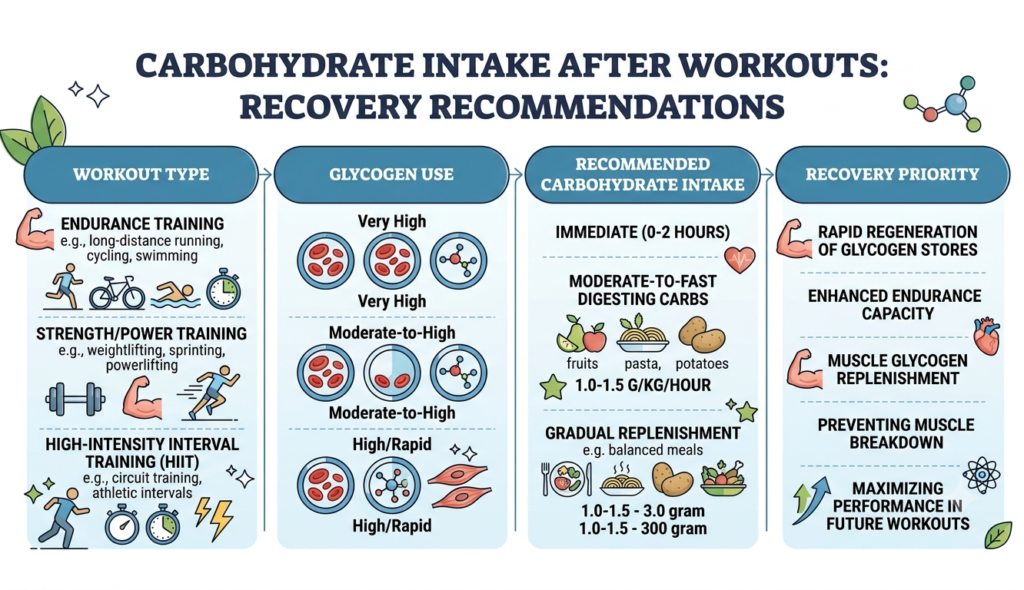
Carbohydrate Recommendations by Workout Type:
| Workout Type | Typical Glycogen Use | Suggested Carbohydrate Intake | Priority |
| Light walk or gentle yoga | Low | Normally balanced meals | Low |
| Moderate gym workout | Moderate | 0.5 to 0.7 g/kg | Moderate |
| High-volume resistance training | Moderate to High | 0.5 to 0.7 g/kg plus protein | Moderate |
| HIIT session | Moderate to High | 0.5 to 0.8 g/kg | Moderate |
| Long-distance running or cycling | High | 1.0 to 1.2 g/kg if rapid recovery is needed | High |
| Two training sessions in one day | High | 1.0–1.2 g/kg during early recovery | Very High |
Recovery Insight
The best carbohydrate intake after exercise is determined by the demands of your workout, not by a universal rule. Matching your nutrition to your training load is more effective than treating every workout the same.
Does Everyone Need the Same Amount?
The short answer is no. Two people can complete a workout of the same duration yet finish with very different recovery needs. Individual factors influence how much glycogen is used and how quickly it needs to be restored.
Workout Duration
Longer exercise sessions generally use glycogen than shorter ones.
For example:
- A 25-minute strength workout may only partially reduce glycogen stores.
- A 90-minute football match or long cycling ride can substantially deplete them.
As exercise duration increases, carbohydrate replacement becomes more important.
Exercise Intensity
Intensity is just as important as duration.
Low-intensity activities rely more on fat for energy, whereas moderate- and high-intensity exercise depends increasingly on carbohydrates.
This means:
- Easy walking may require little specific carbohydrate recovery.
- Sprint intervals or vigorous circuit training are more likely to benefit from post-exercise carbohydrates.
Recovery Time Before Your Next Session
One of the most overlooked factors is how soon you will train again. If your next workout is tomorrow afternoon, your body has many hours to replenish glycogen through normal eating.
If your next session begins in six hours, recovery nutrition becomes much more time-sensitive. This is why elite athletes often follow structured carbohydrate recommendations, while recreational exercisers usually do not need the same level of precision.
Body Weight Matters
Because larger individuals generally have more muscle mass and greater glycogen storage capacity, carbohydrate recommendations are commonly expressed relative to body weight rather than as a fixed number of grams. Using grams per kilogram allows recommendations to be scaled appropriately instead of assuming everyone has identical nutritional needs.
Recover Better Lab Glycogen Recovery Framework
Rather than relying on a single recommendation, think of post-workout carbohydrate intake as a decision based on your training. The three factors below, workout duration, exercise intensity, and time until your next session, help determine how important carbohydrate replenishment is for your recovery.
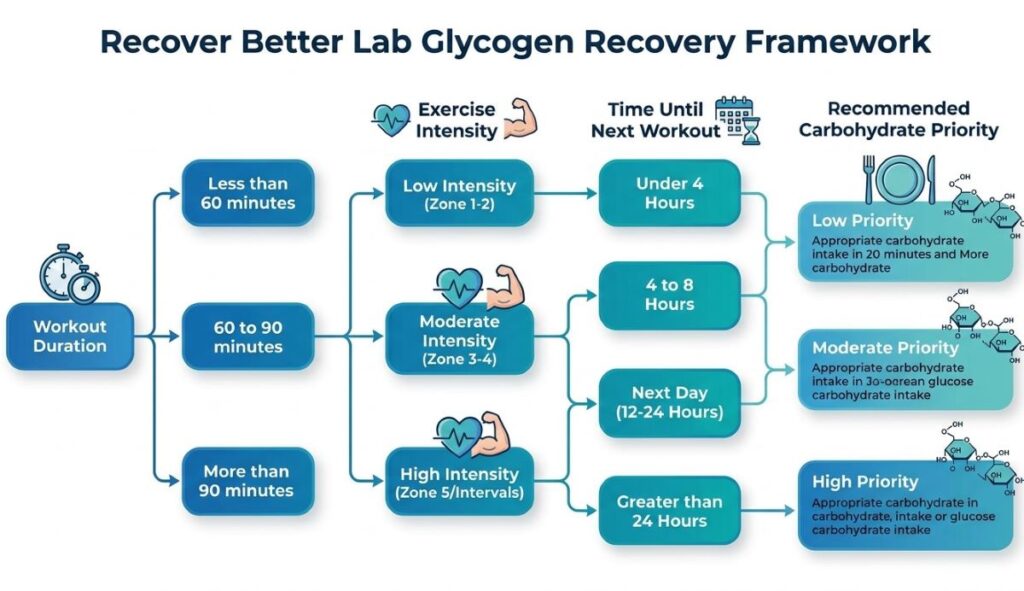
Figure: Recover Better Lab Glycogen Recovery Framework. Post-workout carbohydrate needs are influenced by workout duration, exercise intensity, and the time available before your next training session rather than a single universal recommendation.
Decision Framework
Ask yourself these four questions:
- Was my workout longer than 60 to 90 minutes?
- Yes: Carbohydrates become more important.
- No: Proceed to Question 2.
- Was the workout high intensity or high volume?
- Yes: Moderate carbohydrate intake is likely beneficial.
- No: Proceed to Question 3.
- Will I train again within the next 24 hours?
- Yes: Prioritize glycogen replenishment.
- No: Focus on meeting your overall daily carbohydrate needs.
- Am I eating enough throughout the day?
- Yes: Immediate timing is usually less critical.
- No: Improving total daily nutrition may have a greater impact on recovery than chasing a narrow post-workout window.
This framework reflects a central principle of recovery nutrition: the right amount of carbohydrate depends on the context of your training rather than a fixed recommendation for everyone.
Do You Need Carbs After Every Workout?
Not necessarily.
One of the biggest misconceptions in sports nutrition is that every workout must be followed by a high-carbohydrate recovery meal. Current evidence suggests that the importance of post-workout carbohydrates depends largely on how much glycogen was used during exercise and how quickly it needs to be restored.
If your workout was short, low intensity, or separated from your next session by a full day or more, your body can often replenish glycogen through your normal meals. In these situations, eating enough carbohydrates throughout the day is generally more important than consuming them immediately after exercise.
On the other hand, carbohydrates become increasingly valuable after
- Endurance exercise lasting longer than 60 to 90 minutes
- High-volume or high-intensity training sessions
- Competitive events
- Multiple workouts in the same day
- Training camps or tournaments with limited recovery time
The key message is that carbohydrates are strategic, not mandatory after every workout. Post-workout nutrition is only one part of recovery. Understanding whether to eat before or after a workout helps place carbohydrate timing into a broader nutritional context.
When Carbohydrates Matter Most
Research indicates that post-exercise carbohydrate intake deserves higher priority when:
- Muscle glycogen stores have been substantially depleted.
- Recovery time before the next exercise session is short.
- Maintaining performance for repeated training is important.
- Overall daily carbohydrate intake may not be sufficient.
These situations are common among endurance athletes and competitive team-sport athletes but are less common for people exercising three or four times per week for general fitness.
When They Matter Less
For many recreational exercisers, carbohydrate timing has a relatively small effect on recovery if overall nutrition is adequate.
This often applies when:
- The workout lasted less than an hour.
- Exercise intensity was light to moderate.
- There is at least 24 hours before the next workout.
- Daily carbohydrate intake already meets energy needs.
Skipping a large carbohydrate-rich snack immediately after these workouts is unlikely to impair recovery for most healthy adults.
Recovery Insight
The question is not “Should I eat carbs after a workout?” A better question is, “Did my workout create a meaningful need to replace glycogen?” This shift in thinking leads to more personalized and evidence-based nutrition decisions.
Carbs and Protein: Better Together?
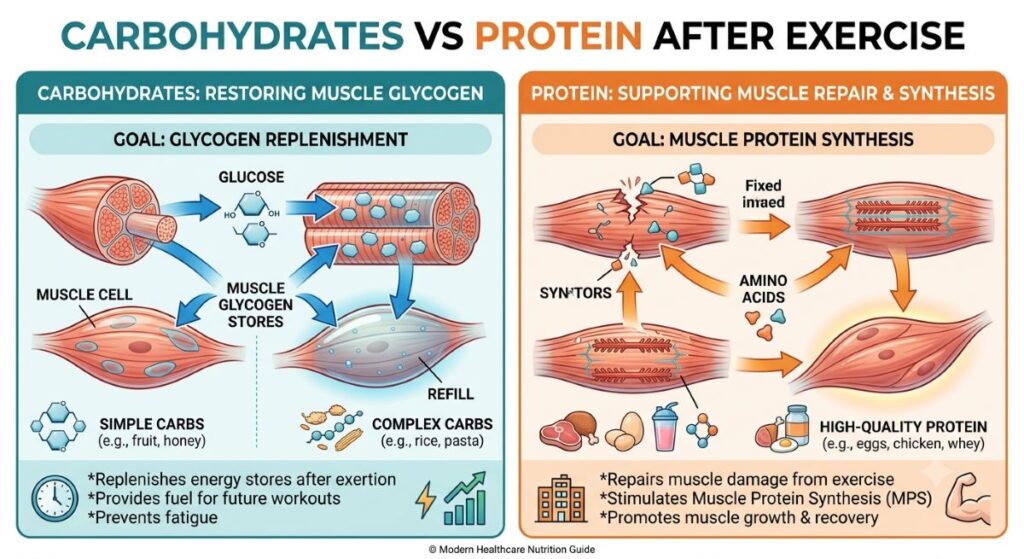
Carbohydrates and protein often work together rather than compete. Protein provides the amino acids needed to repair and rebuild muscle tissue, while carbohydrates help restore glycogen and may support the recovery process by stimulating insulin release, which facilitates nutrient uptake into muscle cells. Neither nutrient replaces the other because they serve different physiological roles.
Carbohydrates replenish glycogen, but recovery also depends on adequate protein intake. If you’re unsure how much protein is appropriate after exercise, our guide on how much protein you need after a workout explains the current evidence.
Why Protein Alone Isn’t Always Enough
Many people focus almost exclusively on protein after exercise, especially if muscle growth is their goal. While adequate protein is essential for muscle protein synthesis, it does not efficiently replenish glycogen on its own. If glycogen restoration is important, for example, after prolonged endurance exercise or before another training session, adding carbohydrates becomes beneficial. For lighter workouts, protein combined with balanced daily meals often provides sufficient nutritional support.
Suggested Carbohydrate and Protein Combinations
The exact ratio does not need to be perfect. Evidence indicates that consuming both nutrients within a balanced meal is generally effective for most people.
Examples include:
| Carbohydrate Source | Protein Source | Suitable After |
| Oatmeal | Greek yogurt | Morning workouts |
| Rice | Chicken breast | Strength training |
| Whole-grain wrap | Turkey | Moderate gym sessions |
| Baked potato | Cottage cheese | Resistance training |
| Banana | Milk or soy milk | Quick recovery snack |
| Fruit smoothie | Whey or plant protein | Busy schedules |
Rather than chasing a specific ratio, aim for a meal that includes a meaningful source of both carbohydrates and protein while fitting your daily energy needs. If you’re looking for practical ways to apply these recommendations, explore our collection of simple post-workout meal ideas that combine carbohydrates and protein using everyday foods.
Best Foods to Meet Your Carbohydrate Needs After Exercise
Whole foods can provide all the carbohydrates most people need after a workout while also supplying vitamins, minerals, and dietary fiber.
The “best” food is the one that fits your training demands, appetite, and overall eating pattern.
Whole Food Options
Examples include:
- Rice
- Potatoes
- Sweet potatoes
- Oats
- Whole-grain bread
- Whole-grain pasta
- Beans and lentils
- Corn
- Fruit
These foods provide carbohydrates at different digestion rates, but all can contribute to glycogen replenishment over time.

Quick Recovery Snacks
When a full meal is not practical, simple snacks can help bridge the gap until your next meal.
Examples include:
- Banana with yogurt
- Fruit and milk
- Whole-grain toast with peanut butter
- Overnight oats
- Homemade fruit smoothie
- Crackers with cottage cheese
Convenience can improve consistency, especially after early morning or lunchtime workouts.
Recovery Meals
Balanced meals are often the easiest way to meet recovery needs.
Examples include:
| Meal | Approximate Recovery Benefit |
| Grilled chicken, rice, and vegetables | Carbohydrates plus high-quality protein |
| Salmon, potatoes, and vegetables | Glycogen replenishment with healthy fats |
| Bean and rice bowl | Plant-based carbohydrate and protein |
| Turkey sandwich with fruit | Convenient balanced recovery meal |
| Greek yogurt with oats and berries | Suitable after moderate exercise |
These examples are not mandatory recipes but practical ways to combine the nutrients involved in recovery. Recovery involves more than carbohydrates alone. Our guide to the best foods for muscle recovery explains how different nutrients work together to support healing and adaptation.
Common Mistakes After a Workout
Avoiding Carbohydrates Completely
Some people eliminate carbohydrates because they believe they automatically prevent fat loss. Current evidence does not support this idea. Body weight is influenced primarily by overall energy balance and dietary patterns rather than consuming a moderate amount of carbohydrates after exercise.
Assuming More Carbohydrates Are Always Better
Eating substantially more carbohydrates than your training requires does not necessarily improve recovery. Nutrition should reflect the demands of your exercise rather than follow the mindset that more is always better.
Focusing Only on Timing
The old idea of a very short “anabolic window” has become less absolute as research has evolved. For most recreational exercisers, consuming balanced meals throughout the day is generally more important than eating within a strict 30-minute window after exercise.
Ignoring Overall Daily Intake
Recovery does not depend on one meal. Someone who eats well throughout the day will often recover more effectively than someone who perfectly times a single recovery snack but consistently falls short of their daily nutritional needs.
Recovery Reminder
Recovery nutrition should reflect the work your body has done, not what someone else ate after their workout. Before focusing on the exact number of grams of carbohydrate, consider the intensity of your exercise, how soon you’ll train again, and whether your overall daily diet supports your recovery goals. Consistency over time has a greater impact than trying to perfect a single post-workout meal. Nutrition is only one part of effective recovery. Hydration supports recovery by helping maintain normal physiological function during and after exercise.
Self-Reflection
Before changing your post-workout nutrition, ask yourself these questions:
- Was today’s workout long or particularly demanding?
- Will I be training again within the next 24 hours?
- Am I consistently eating enough carbohydrates throughout the day?
- Am I focusing on one post-workout meal while overlooking my overall diet?
- Am I avoiding carbohydrates because of evidence or because of common nutrition myths?
Your answers can help determine whether increasing post-workout carbohydrates is likely to improve your recovery or whether your current approach is already appropriate.
Conclusion
So, how many carbs after a workout do you really need?
The answer depends on your workout rather than a universal rule. Longer, more intense exercise generally requires more carbohydrates because it uses more muscle glycogen. Shorter or less demanding sessions often do not require aggressive carbohydrate replacement, particularly if you have plenty of time before your next workout.
Current evidence suggests that most recreational exercisers recover well by combining a moderate amount of carbohydrate with a quality protein source as part of a balanced meal. Endurance athletes and individuals training multiple times in a day may benefit from higher carbohydrate intake during the early recovery period to restore glycogen more rapidly.
Instead of trying to follow a fixed number after every workout, match your carbohydrate intake to your training demands. This flexible approach is more consistent with current sports nutrition recommendations and is easier to maintain over the long term.
Recover Better Lab Summary
What to remember about how many carbs after a workout:
- There is no single carbohydrate recommendation for everyone.
- Workout duration, intensity, and recovery time determine how important post-workout carbohydrates are.
- Most recreational exercisers generally benefit from 0.5 to 0.7 g/kg of carbohydrate after exercise when paired with protein.
- Endurance athletes or those training again within 24 hours may require 1.0 to 1.2 g/kg during early recovery.
- Protein repairs muscle, while carbohydrates primarily replenish muscle glycogen. Both have complementary roles.
- Overall daily nutrition usually has a greater influence on recovery than perfect meal timing.
Carbohydrates are one component of recovery. For a broader evidence-based approach, read our guide to complete recovery after a workout.
Frequently Asked Questions
How many carbs after a workout should I eat?
For most recreational exercisers, research suggests approximately 0.5 to 0.7 grams of carbohydrate per kilogram of body weight after exercise is sufficient when combined with adequate daily nutrition and protein.
Do I need carbs after lifting weights?
Usually, yes, but the amount depends on your workout. Moderate carbohydrate intake alongside protein can help replenish glycogen used during resistance training.
Are carbs necessary after cardio?
They can be, especially after long or vigorous cardio sessions. The longer and more intense the exercise, the greater the potential need to replenish muscle glycogen.
Is protein enough after a workout?
Protein is essential for muscle repair and adaptation, but it does not efficiently restore muscle glycogen. After demanding exercise, combining protein with carbohydrates generally provides more complete recovery support than protein alone.
What are the best carbs after a workout?
Whole-food carbohydrate sources such as rice, potatoes, oats, fruit, whole-grain bread, and pasta can all contribute to glycogen replenishment.
Can I skip carbs if I’m trying to lose weight?
Yes, depending on your workout and overall diet. Fat loss depends primarily on maintaining an appropriate energy balance over time rather than avoiding carbohydrates after exercise.
Medical Disclaimer
This article is intended for educational purposes only and should not be considered medical advice. Nutritional needs vary according to age, body composition, medical conditions, medications, and activity level. If you have diabetes, metabolic disease, gastrointestinal conditions, or other health concerns that affect your diet, consult a qualified healthcare professional or registered dietitian before making significant changes to your nutrition plan.
Evidence Strength
| Recommendation | Evidence Strength | Notes |
| Carbohydrates replenish muscle glycogen after exercise | High | Supported by multiple systematic reviews, consensus statements, and sports nutrition position stands. |
| Higher carbohydrate intake benefits prolonged endurance exercise and multiple daily training sessions | High | Consistent recommendation across major sports nutrition organizations. |
| Moderate carbohydrate intake is sufficient for most recreational exercisers | Moderate to High | Based on current consensus and practical application of available evidence. |
| Total daily carbohydrate intake is generally more important than immediate post-workout timing for most people | Moderate | Supported by recent research, though specific recommendations depend on training frequency and recovery demands. |
| Combining carbohydrates with protein supports overall post-exercise recovery | High | Strong evidence for complementary roles in glycogen restoration and muscle protein synthesis. |
References
- International Society of Sports Nutrition. International Society of Sports Nutrition Position Stand: Nutrient Timing.
DOI: 10.1186/1550-2783-10-5 - American College of Sports Medicine, Academy of Nutrition and Dietetics & Dietitians of Canada. Nutrition and Athletic Performance.
Publisher: Medicine & Science in Sports & Exercise. - International Olympic Committee Consensus Statement on Dietary Supplements and High-Performance Nutrition. Publisher: British Journal of Sports Medicine.
- International Olympic Committee Consensus Statement on Sports Nutrition (latest update).
Publisher: British Journal of Sports Medicine. - International Society of Sports Nutrition Position Stand: Protein and Exercise.
DOI: 10.1186/s12970-017-0177-8 - American College of Sports Medicine Position Stand on Exercise and Nutrition.
Publisher: Medicine & Science in Sports & Exercise. - Thomas DT, Erdman KA, Burke LM. Position of the Academy of Nutrition and Dietetics, Dietitians of Canada, and the American College of Sports Medicine: Nutrition and Athletic Performance.
Publisher: Journal of the Academy of Nutrition and Dietetics. - Burke LM, Hawley JA, Wong SHS, Jeukendrup AE. Carbohydrates for Training and Competition.
Publisher: Journal of Sports Sciences. - Recent systematic reviews on glycogen resynthesis, carbohydrate intake, and post-exercise recovery from journals such as Sports Medicine, Nutrients, and Sports (prefer the most recent reviews available at publication).

I’m Mr. Baig, founder of Recover Better Lab. I create evidence-based fitness recovery content to help beginners recover smarter and build sustainable healthy habits.
Mission: My mission is to provide trustworthy, research-backed recovery and fitness content that helps people optimize their health, performance, and overall well-being.