
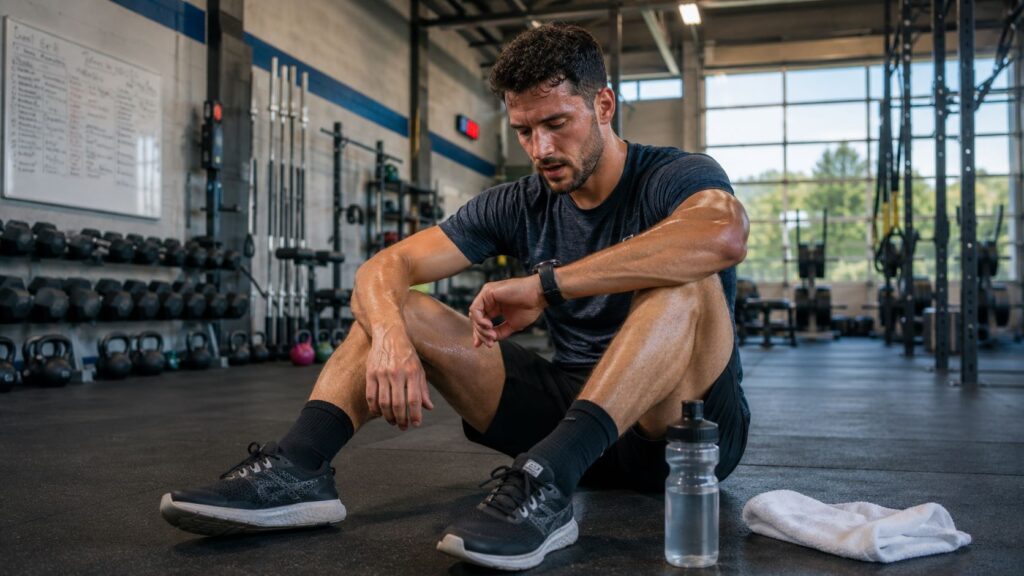
Overtraining vs overreaching refers to two different responses to training stress. Functional overreaching is a short-term increase in training load followed by adequate recovery, often leading to improved performance. Overtraining syndrome, in contrast, is a prolonged condition in which excessive training and insufficient recovery lead to persistent declines in performance, fatigue, and other physical and psychological symptoms. Most recreational exercisers experience temporary fatigue or overreaching, not true overtraining syndrome.
Key Takeaways
- Overreaching and overtraining are not the same.
- Functional overreaching can improve performance when followed by recovery.
- True overtraining syndrome is uncommon in recreational exercisers.
- Recovery determines whether training stress leads to adaptation or prolonged fatigue.
Introduction
Feeling tired after a challenging workout is a normal part of training. Muscles become fatigued, energy stores are depleted, and your body begins the process of repairing and adapting. In many cases, this temporary fatigue is exactly what helps you become stronger or fitter over time.
Problems arise when recovery cannot keep pace with training demands. As training stress accumulates without enough time or resources to recover, fatigue can become more persistent, performance may begin to decline, and everyday workouts may start to feel unusually difficult. At this point, many people wonder whether they are simply pushing themselves hard or whether they have crossed into something more serious.
Understanding overtraining vs overreaching is important because these terms are often used interchangeably, even though they describe different stages along a spectrum of training stress. Confusing them can lead people to either ignore early warning signs or assume they have a serious condition when they are experiencing a normal, temporary response to exercise.
Research suggests that true overtraining syndrome is relatively uncommon, particularly among recreational exercisers. More often, people experience accumulated fatigue or overreaching, both of which can improve with appropriate recovery and adjustments to training. Recognizing where you may fall on this spectrum allows you to make informed decisions rather than reacting out of concern or misinformation. Want to understand the recovery process in more depth.
Explore MoreThis article explains the differences between overreaching and overtraining, why they occur, how they affect performance, and what current evidence says about recognizing and managing each condition.
What Is Overreaching?
Overreaching is a short-term increase in training stress that temporarily exceeds your body’s current recovery capacity. As a result, performance may decline for a brief period, fatigue increases, and workouts often feel more demanding than usual.
Although this may sound concerning, overreaching is not always a problem. In well-designed training programs, it is sometimes used deliberately to stimulate greater adaptations. The key difference lies in whether sufficient recovery follows the period of increased training. Sports scientists generally distinguish between two forms of overreaching: functional overreaching and nonfunctional overreaching.
Functional Overreaching
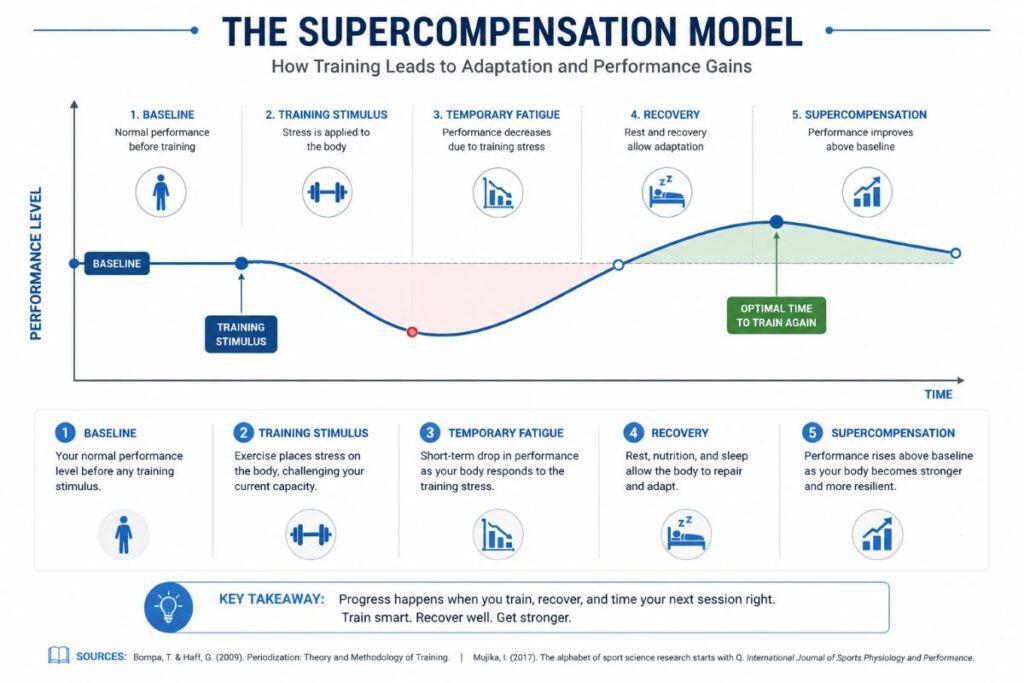
Functional overreaching is an intentional and temporary increase in training load followed by adequate recovery. During the overload period, performance may decrease slightly because fatigue accumulates faster than the body can recover. Once recovery is provided, however, many athletes experience improved performance compared with their previous level. This process is often associated with the principle of supercompensation, where the body adapts to training by becoming stronger, faster, or more resilient after sufficient recovery.
For example, a runner preparing for a race may complete a week of unusually demanding training before reducing training volume in the following week. During the high-load week, running pace may slow and legs may feel heavy. After recovery, performance often rebounds and may even improve beyond the original baseline. This temporary decline in performance is expected and does not necessarily indicate that training is causing harm.
Recovery Insight
A short-term drop in performance is not always a sign that your training program is failing. In many cases, it reflects normal fatigue that resolves once recovery matches training demands.
NonFunctional Overreaching
Non-functional overreaching occurs when increased training stress is not balanced by sufficient recovery. Unlike functional overreaching, performance does not rebound quickly, and improvements are delayed or absent. Recovery from non-functional overreaching may take several weeks or even months, depending on its severity and the individual’s overall recovery capacity.
People experiencing nonfunctional overreaching may notice the following:
- Persistent fatigue that extends beyond normal post-exercise soreness
- Declining performance despite continued training
- Reduced motivation to exercise
- Longer recovery between workouts
- Increased perception of effort during routine sessions
- Difficulty maintaining previous training intensity
Importantly, these signs are not unique to non-functional overreaching. Poor sleep, inadequate nutrition, illness, life stress, and other medical conditions can produce similar symptoms. Because of this overlap, symptoms should be viewed as signals to reassess recovery rather than as proof of a specific diagnosis.
What Is Overtraining Syndrome?
Overtraining syndrome (OTS) is a complex condition characterized by prolonged performance decline accompanied by persistent fatigue and other physical or psychological symptoms that continue despite extended recovery.
Unlike temporary training fatigue or overreaching, overtraining syndrome develops gradually after repeated periods of excessive training stress combined with inadequate recovery. Researchers believe that multiple factors including training load, sleep quality, nutrition, psychological stress, illness, and individual susceptibility interact over time to contribute to its development.
One of the defining features of overtraining syndrome is that recovery takes much longer than expected. Instead of improving after several days or weeks of rest, performance and well-being may remain impaired for months.
Possible features associated with overtraining syndrome include:
- Sustained decline in athletic performance
- Persistent fatigue
- Reduced exercise tolerance
- Disturbed sleep
- Mood changes such as irritability or low motivation
- Frequent illness or infections
- Increased perception of effort during familiar workouts
- Difficulty completing previously manageable training sessions
It is important to recognize that these symptoms are not exclusive to overtraining syndrome. They may also result from nutritional deficiencies, infections, hormonal disorders, mental health conditions, medication effects, or other medical problems. For this reason, overtraining syndrome is considered a diagnosis of exclusion, meaning healthcare professionals typically rule out other potential causes before making the diagnosis.
Current evidence also indicates that there is no single blood test, imaging study, or biomarker that can definitively diagnose overtraining syndrome. Clinical assessment, training history, symptom patterns, and exclusion of alternative explanations remain the foundation of diagnosis.
Why True Overtraining Is Less Common Than Many People Think
Many people describe themselves as “overtrained” after a few difficult workouts or a week of low energy. This is rarely the case. Most recreational exercisers train fewer hours than competitive endurance athletes and often do not sustain the prolonged, high-volume training loads typically associated with overtraining syndrome. Instead, they are more likely to experience accumulated fatigue, temporary under-recovery, or periods of overreaching.
Consider two individuals:
- Person A increases training intensity for one week, feels unusually tired, sleeps poorly for several nights, and notices workouts feel harder than usual. After reducing training volume and prioritizing sleep and nutrition, they recover within several days. This pattern is consistent with temporary fatigue or functional overreaching.
- Person B has trained at a high volume for several months without adequate recovery, experiences progressive declines in performance, persistent exhaustion, disrupted sleep, frequent illness, and no meaningful improvement despite several weeks of reduced training. This pattern is more consistent with concerns that warrant medical evaluation for possible overtraining syndrome or another underlying condition.
Understanding this distinction helps avoid two common mistakes: ignoring persistent warning signs that deserve attention and assuming every period of fatigue represents a serious training disorder.
Overtraining vs Overreaching: Key Differences
Although the terms are often used interchangeably, understanding overtraining vs overreaching begins with recognizing that they describe different points along a continuum of stress, training, and recovery.
Overreaching is generally a short-term response to increased training demands. When recovery is appropriate, it may even contribute to improved performance. Overtraining syndrome, however, represents a prolonged imbalance between stress and recovery that can lead to persistent declines in performance and well-being.
The distinction is not simply about how tired you feel. It also involves how long the symptoms last, how your body responds to recovery, and whether performance returns to its previous level.
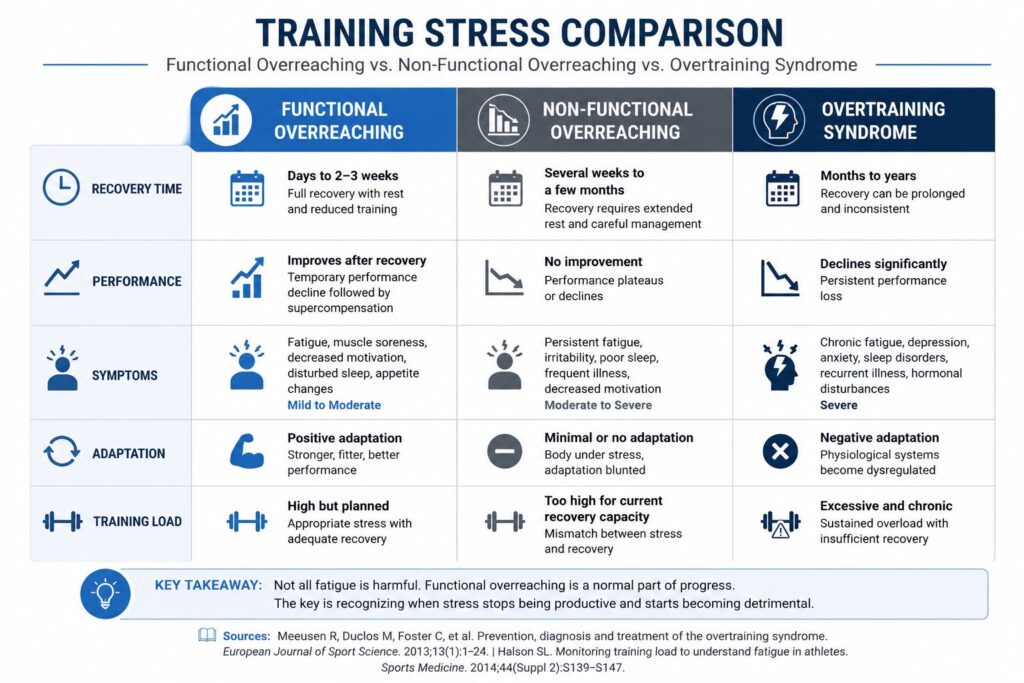
Comparison Table: Overtraining vs Overreaching
| Feature | Functional Overreaching | Non-Functional Overreaching | Overtraining Syndrome |
| Purpose | Often planned | Usually unplanned | Never intentional |
| Performance | Temporary decline followed by improvement | Declines without expected improvement | Persistent decline |
| Recovery Time | Days to about 2 weeks | Several weeks to months | Months or longer |
| Adaptation | Usually, positive | Limited or absent | Negative |
| Training Load | Temporarily exceeds recovery | Continues despite inadequate recovery | Long-term imbalance between training and recovery |
| Symptoms | Expected fatigue | Persistent fatigue and reduced motivation | Long-lasting physical and psychological symptoms |
| Medical Evaluation | Usually, unnecessary | Sometimes appropriate | Often recommended to exclude other conditions |
No single feature confirms where someone falls on this spectrum. Instead, the overall pattern, including training history, recovery, symptom duration, and performance trends, provides the most meaningful information.
Visual Decision Tree
Feeling fatigued?
↓
Improved after several days of recovery?
→ Likely normal fatigue or functional overreaching
↓ No
Performance declined for weeks?
→ Consider non-functional overreaching
↓
Symptoms persistent despite recovery?
→ Seek medical evaluation
The Training Stress Continuum
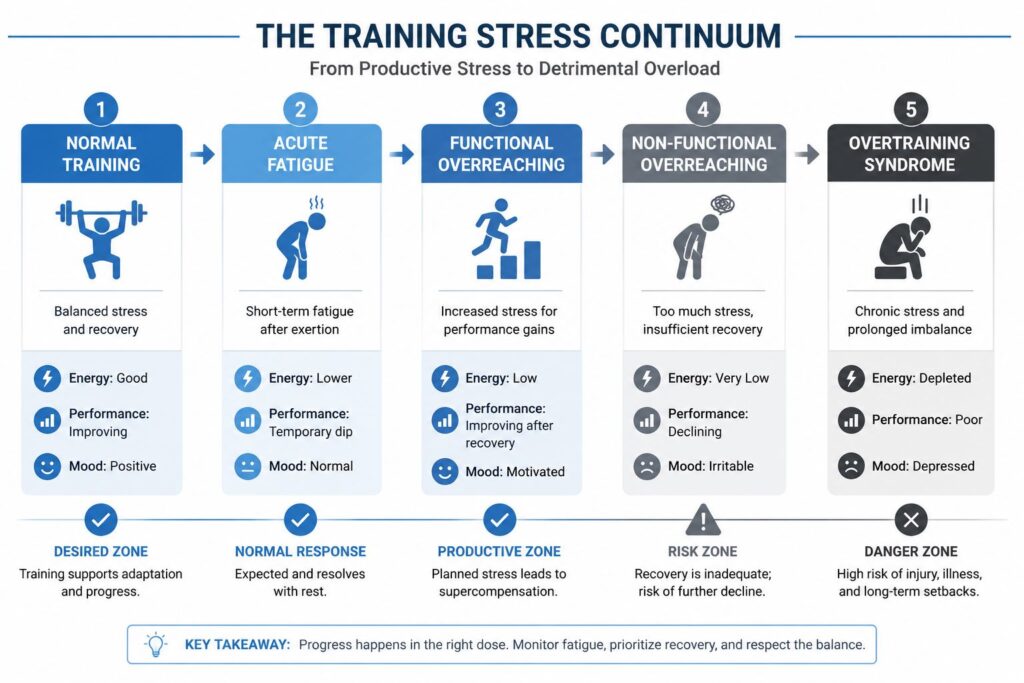
Training adaptation rarely shifts from healthy to harmful overnight. Instead, it usually progresses through a series of stages as training stress increases and recovery becomes less effective. Understanding this continuum helps explain why feeling tired after exercise is not automatically a cause for concern.
Normal Training
↓
Acute Training Fatigue
↓
Functional Overreaching
↓
Non-Functional Overreaching
↓
Overtraining Syndrome
Each stage reflects a different balance between stress and recovery.
Every training session creates a temporary disruption to the body’s normal state. Muscles experience microscopic damage, energy stores decline, and fatigue develops. With sufficient recovery, these changes stimulate adaptation, allowing the body to become stronger or more efficient over time. Temporary fatigue is therefore an expected part of effective training.
Acute Training Fatigue
As training volume or intensity increases, fatigue accumulates. During this stage, workouts may feel more difficult, but recovery between sessions remains adequate. Most active individuals spend time in this phase without experiencing negative long-term effects.
Functional Overreaching
When training stress increases further, fatigue temporarily exceeds recovery. Performance may decline for several days, but appropriate recovery allows the body to adapt and often results in improved performance. This stage is sometimes incorporated intentionally into periodized training programs under the guidance of experienced coaches.
Non-Functional Overreaching
If increased training continues without sufficient recovery, fatigue persists and performance no longer rebounds as expected. Recovery becomes slower, motivation may decline, and additional training often produces diminishing returns rather than continued adaptation.
Overtraining Syndrome
At the far end of the continuum lies overtraining syndrome, where prolonged imbalance between stress and recovery leads to sustained impairments that extend well beyond normal training fatigue. Recovery typically requires a comprehensive reduction in training and may involve assessment by healthcare professionals to rule out other contributing medical conditions.
Recovery Insight
Recovery determines whether training stress becomes adaptation or accumulated fatigue. Training itself does not make you stronger. Improvement occurs when your body has enough time and resources to repair, adapt, and prepare for future demands. Increasing training while neglecting sleep, nutrition, or recovery may shift you further along the continuum without providing additional benefits.
Signs and Symptoms of Overtraining vs Overreaching
Because many symptoms overlap, distinguishing overtraining vs overreaching requires looking at the overall pattern rather than focusing on a single warning sign. For example, muscle soreness after a demanding workout is common and usually resolves within a few days. Persistent fatigue, declining performance over several weeks, and failure to recover despite reduced training suggest a different situation.
Signs of Functional Overreaching
People experiencing functional overreaching may notice the following:
- Temporary reduction in performance
- Increased muscle fatigue
- Higher perceived effort during training
- Mild reduction in motivation
- Recovery within days after reducing training load
- Performance that rebounds or improves after recovery
These responses are generally considered part of a normal adaptation process when recovery is planned appropriately.
Overtraining vs Overreaching: How Symptoms Begin to Change
As recovery becomes increasingly inadequate, symptoms often become more persistent and less predictable. Features that may suggest non-functional overreaching include:
- Fatigue lasting beyond expected recovery
- Ongoing decline in training performance
- Difficulty completing usual workouts
- Reduced motivation to exercise
- Increased perception of effort
- Slower recovery between sessions
- Feeling physically or mentally drained despite lighter training
While these signs deserve attention, they do not necessarily indicate overtraining syndrome. They should instead prompt a reassessment of training load, sleep, nutrition, hydration, and other recovery factors.
Signs That May Suggest Overtraining Syndrome
Research suggests that overtraining syndrome is characterized more by persistent patterns than by any single symptom.
Possible features include:
- Performance decline lasting for weeks or months
- Persistent fatigue does not improve with normal rest
- Disturbed sleep
- Mood changes such as irritability, anxiety, or reduced enjoyment of training
- Frequent illnesses or recurrent infections
- Reduced ability to tolerate previous training loads
- Prolonged recovery despite substantial reductions in exercise
Because these symptoms overlap with many medical and psychological conditions, professional assessment is recommended when symptoms persist or continue to worsen despite appropriate recovery.
What Causes the Progression from Overreaching to Overtraining?
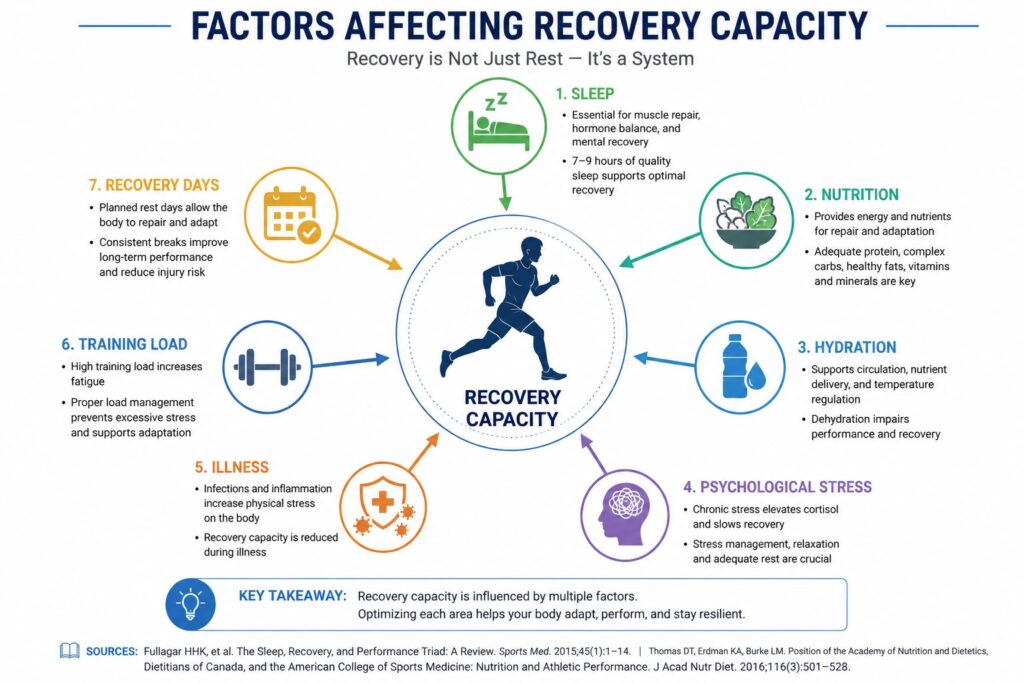
Training volume alone rarely explains why someone progresses from temporary fatigue to prolonged recovery problems. Instead, current evidence suggests that multiple stressors accumulate over time, reducing the body’s overall recovery capacity. Common contributing factors include:
- Rapid increases in training volume or intensity
- Inadequate recovery between workouts
- Insufficient sleep
- Low energy availability due to inadequate calorie intake
- Poor carbohydrate intake during periods of heavy training
- Dehydration
- Psychological stress from work, school, or family responsibilities
- Frequent travel or disrupted routines
- Returning to training too quickly after illness or injury
Rather than acting independently, these factors often interact. For example, an athlete who is sleeping poorly while increasing training volume and eating too little is likely to place a much greater recovery demand on the body than training alone would suggest. Understanding this broader picture shifts the focus away from blaming a single workout and toward managing overall recovery capacity, the factor that often determines whether training leads to adaptation or prolonged fatigue.
How Long Does Recovery Take?
One of the most useful ways to distinguish overtraining vs overreaching is by considering how long recovery takes. While symptoms often overlap, the time needed for performance and well-being to return to normal differs considerably.
Recovery is influenced by many factors, including training history, sleep quality, nutrition, psychological stress, illness, age, and overall health. The timeframes below should therefore be viewed as general expectations rather than fixed rules.
Comparison Table: Typical Recovery Time
| Condition | Typical Recovery Time* | Expected Outcome |
| Normal post-exercise fatigue | Hours to a few days | Full recovery with routine rest |
| Functional overreaching | Several days to approximately 2 weeks | Performance often improves after recovery |
| Non-functional overreaching | Several weeks to months | Recovery occurs, but improvement is delayed |
| Overtraining syndrome | Months or longer | Recovery may require prolonged reduction or cessation of training and medical evaluation |
Recovery time varies between individuals and depends on the underlying causes, training load, and recovery strategies.
Although these categories provide useful guidance, they are not diagnostic. A longer recovery period does not automatically mean someone has overtraining syndrome. Persistent symptoms should instead prompt a broader evaluation of recovery habits and, when appropriate, assessment by a qualified healthcare professional.
Evidence:
Researchers continue to investigate why recovery times vary so widely between individuals. Current evidence suggests that no single factor explains the development of overtraining syndrome. Instead, it appears to result from the combined effects of repeated training stress, insufficient recovery, and additional physical or psychological stressors over time.
This complexity is one reason why there is no single laboratory test that can confirm overtraining syndrome.
Can Overreaching Improve Performance?
At first glance, it may seem contradictory that a temporary decline in performance could eventually lead to better results. However, this principle forms the basis of many well-designed training programs. During periods of increased training, fatigue accumulates faster than the body can fully recover. As a result, performance may temporarily decline. If this overload is carefully planned and followed by sufficient recovery, the body adapts by becoming stronger, more efficient, or better able to tolerate future training demands.
This process is commonly referred to as supercompensation. Importantly, the improvement does not occur because of fatigue itself. It occurs because recovery allows the body to adapt to the training stimulus. Without adequate recovery, the same training that initially encouraged adaptation may instead contribute to prolonged fatigue and declining performance. For this reason, coaches often view recovery as an active component of training rather than time away from training.
Recovery Insight
Recovery is not the opposite of training; it is part of training.
Exercise provides the stimulus for adaptation, but sleep, nutrition, hydration, and appropriate rest provide the conditions that allow those adaptations to occur.
Common Misconceptions:
Myth: Every hard week of training is overtraining.
Myth: More rest always solves the problem.
Myth: Only elite athletes become overtrained.
Myth: Muscle soreness means you’re overtrained.
How to Reduce the Risk of Overtraining
Most people do not need to avoid challenging workouts. Instead, they benefit from balancing training stress with recovery. Research suggests that consistently supporting recovery is more effective than reacting only after fatigue has become overwhelming. Practical strategies include:
- Increase training volume and intensity gradually rather than making sudden large changes.
- Prioritize adequate sleep, as it plays a central role in physical and mental recovery.
- Consume enough energy and nutrients to support both daily activities and exercise demands.
- Stay well hydrated, particularly during periods of heavy training or hot weather.
- Include lighter training days and planned recovery periods within your exercise program.
- Pay attention to persistent declines in performance rather than judging recovery from a single workout.
- Monitor how you feel alongside objective measures such as training performance, rather than relying on either alone.
- Adjust training when recovering from illness, injury, or periods of unusually high life stress.
These strategies cannot eliminate every setback, but they help reduce the likelihood that temporary fatigue progresses into prolonged under-recovery.
Recovery Reminder
Feeling tired after a difficult workout is usually a normal response to training. What deserves attention is fatigue that becomes progressively worse, persists despite appropriate recovery, or is accompanied by sustained declines in performance or overall well-being. If recovery no longer restores your ability to train comfortably, your body may be signaling that your current balance between stress and recovery needs to be reassessed.
Self-Reflection
Before assuming you are overtrained, consider the following questions:
- Have I increased my training volume or intensity recently?
- Am I sleeping enough to support my current training load?
- Have I been eating enough to match my activity level?
- Have I been under unusual stress outside of exercise?
- Do I feel better after several days of recovery, or do symptoms continue unchanged?
- Is my performance declining consistently over several weeks rather than after one or two difficult workouts?
These questions cannot diagnose overtraining syndrome, but they can help you recognize patterns that may deserve closer attention.
Sometimes the most productive response is not to train harder or stop training completely. Instead, it is to step back, evaluate the broader picture, and identify whether recovery has kept pace with the demands you are placing on your body.
Conclusion
Understanding overtraining vs overreaching is less about labeling every period of fatigue and more about recognizing how your body responds to training over time.
Functional overreaching is a temporary increase in training stress that, when followed by sufficient recovery, may contribute to improved performance. Non-functional overreaching represents a longer period of inadequate recovery, while overtraining syndrome is a much more serious condition characterized by persistent declines in performance and prolonged recovery.
For most recreational exercisers, temporary fatigue, accumulated stress, or periods of under-recovery are far more common than true overtraining syndrome. This distinction matters because it encourages a balanced response rather than unnecessary concern or continued training despite persistent warning signs.
The goal is not to avoid fatigue altogether. Fatigue is a normal part of adaptation. The challenge is recognizing when recovery is keeping pace with training and when it is not. By paying attention to both your performance and your overall recovery, you can make more informed decisions that support long-term health, consistent progress, and sustainable training.
Frequently Asked Questions:
Is overtraining vs overreaching easy to tell apart?
Not always. Both can cause fatigue and reduce performance, especially during periods of heavy training. The main difference is how your body responds to recovery. Functional overreaching usually improves after several days to about two weeks of adequate recovery, whereas overtraining syndrome involves persistent symptoms and prolonged performance decline despite extended rest.
What is the difference between overtraining and overreaching?
Overreaching is a temporary increase in training stress that may be either planned (functional) or unplanned (non-functional). Functional overreaching can lead to improved performance after recovery. Overtraining syndrome is a more serious condition that develops when excessive training and insufficient recovery continue for an extended period, resulting in long-lasting declines in performance and well-being.
Can overreaching improve performance?
Yes. Research suggests that functional overreaching, when followed by sufficient recovery, can stimulate positive training adaptations and improved performance. However, recovery is essential. Without adequate recovery, continued training may contribute to non-functional overreaching or, in rare cases, overtraining syndrome.
How long does it take to recover from overtraining?
Recovery varies considerably. Functional overreaching often resolves within days to about two weeks. Non-functional overreaching may require several weeks or months. Recovery from overtraining syndrome can take many months and should be guided by qualified healthcare and sports medicine professionals.
Is overtraining syndrome common?
Current evidence suggests that true overtraining syndrome is relatively uncommon, particularly among recreational exercisers. Many people who believe they are overtrained are experiencing temporary fatigue, accumulated training stress, inadequate recovery, or non-functional overreaching.
Can beginners develop overtraining syndrome?
It is possible but uncommon. Beginners are generally more likely to experience delayed onset muscle soreness, temporary fatigue, or recovery challenges associated with rapid increases in training. Establishing gradual training, progression, and consistent recovery habits can help reduce these risks.
When should I seek medical advice?
You should consider consulting a qualified healthcare professional if you experience persistent fatigue, declining performance for several weeks, recurrent illness, unexplained weight loss, prolonged sleep disturbances, or symptoms that do not improve despite reducing your training load and prioritizing recovery. These symptoms may have causes unrelated to training that require medical evaluation.
Medical Disclaimer
This article is intended for educational purposes only and should not be considered medical advice, diagnosis, or treatment. The information provided reflects current scientific evidence but cannot account for individual health circumstances, medical conditions, medications, or training history.
Fatigue, declining performance, mood changes, and reduced exercise tolerance can result from many different causes, including illness, nutritional deficiencies, hormonal disorders, sleep disorders, mental health conditions, and other medical concerns. If symptoms are severe, persist despite appropriate recovery, or interfere with your daily activities, seek evaluation from a qualified healthcare professional or sports medicine specialist.
Never ignore persistent symptoms or delay appropriate medical care based solely on information presented in this article.
Evidence Strength: This article is based primarily on international consensus statements, systematic reviews, and peer-reviewed sports medicine research. Because overtraining syndrome is difficult to diagnose, some recommendations are based on expert consensus rather than definitive diagnostic tests.
References
- Meeusen R, Duclos M, Foster C, et al. Prevention, diagnosis, and treatment of the Overtraining Syndrome: Medicine
- Kreher JB, Schwartz JB. Overtraining Syndrome: A Practical Guide. Sports Health. 2012;4(2):128–138.
- Cadegiani FA, Kater CE. Novel insights of overtraining syndrome discovered from the EROS Study. BMC Sports Science, Medicine, and Rehabilitation. 2019; 11:37.
- Budgett R. Fatigue and Underperformance in Athletes: The Overtraining Syndrome. British Journal of Sports Medicine. 1998;32(2):107–110.
- Kellmann M, Bertollo M, Bosquet L, et al. Recovery and Performance in Sport: Consensus Statement. International Journal of Sports Physiology and Performance. 2018;13(2):240–245.
- Soligard T, Schwellnus M, Alonso JM, et al. How Much Is Too Much? (Part 1): International Olympic Committee Consensus Statement on Load in Sport and Risk of Injury. British Journal of Sports Medicine. 2016;50(17):1030–1041.
- Schwellnus M, Soligard T, Alonso JM, et al. How Much Is Too Much? (Part 2): International Olympic Committee Consensus Statement on Load in Sport and Risk of Illness. British Journal of Sports Medicine. 2016;50(17):1043–1052.

I’m Mr. Baig, founder of Recover Better Lab. I create evidence-based fitness recovery content to help beginners recover smarter and build sustainable healthy habits.
Mission: My mission is to provide trustworthy, research-backed recovery and fitness content that helps people optimize their health, performance, and overall well-being.