
Do massage guns help muscle recovery?
Massage guns may reduce muscle soreness, improve short-term flexibility, and help you feel better after exercise. However, current evidence suggests they do not directly speed muscle tissue repair. They work best as one part of a complete recovery plan that includes sleep, nutrition, hydration, and appropriate training.
Quick Answer
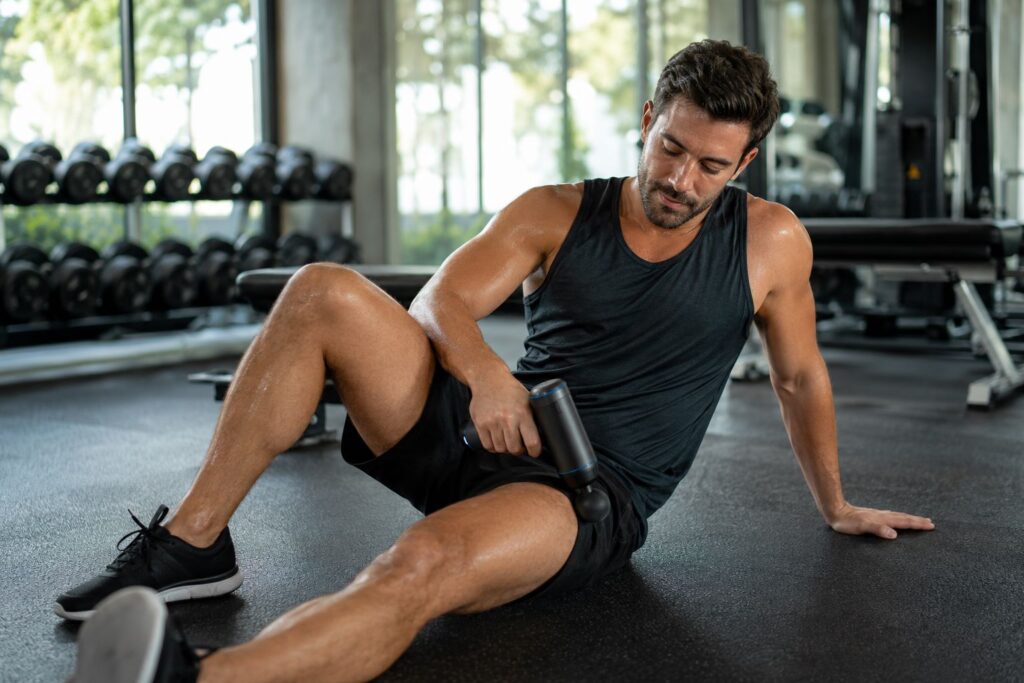
Do Massage Guns Help Muscle Recovery? Yes, but only to a point. Research suggests massage guns (also called percussion massage devices) can reduce muscle soreness, improve short-term flexibility, and help you feel more comfortable after exercise. However, they do not directly repair damaged muscle fibers or replace the core pillars of recovery, such as sleep, proper nutrition, hydration, and adequate rest. Used correctly, a massage gun can be a helpful recovery tool, but it should complement, not replace a well-rounded recovery routine.
Table of Contents
Evidence Summary
| Claim | Current Evidence |
| Reduces muscle soreness | ✅ Moderate evidence |
| Improves range of motion | ✅ Moderate evidence |
| Improves flexibility | ✅ Moderate evidence |
| Speeds muscle repair | ❌ No strong evidence |
| Build muscle faster | ❌ No evidence |
| Prevents injuries | ❌ Insufficient evidence |
Why Recovery Matters
Every workout creates a challenge for your muscles. Whether you lift weights, run, cycle, or play sports, your body responds by repairing stressed tissues and adapting to future demands. This process is what leads to improved strength, endurance, and performance. Many people focus on training harder yet overlook recovery. As a result, they may continue exercising while feeling stiff, sore, or fatigued, assuming discomfort is simply part of getting fitter.
Recovery is more than waiting for soreness to disappear. It is the period when your body restores energy stores, repairs microscopic muscle damage, and prepares you for your next workout. Massage guns help muscle recovery. This is where recovery tools like massage guns have become increasingly popular. But popularity alone doesn’t answer the important question: Do massage guns help muscle recovery, or do they simply make you feel better for a short time?
Understanding that difference can help you decide whether a massage gun deserves a place in your recovery routine.
Do Massage Guns Help Muscle Recovery?
Massage guns use rapid, repetitive pulses known as percussion therapy to apply pressure to muscles and soft tissues. These devices are designed to create brief mechanical stimulation that may temporarily improve circulation, reduce the sensation of muscle tightness, and increase range of motion.
Current research suggests massage guns may offer several short-term recovery benefits, including:
Reducing delayed onset muscle soreness (DOMS)
Improving flexibility after exercise
Decreasing the feeling of muscle stiffness
Promoting relaxation in tight muscles
Helping some people return to training feeling more comfortable
However, it’s important to understand what massage guns do not do.
There is currently no strong evidence showing that massage guns directly accelerate muscle tissue repair, rebuild damaged muscle fibers, or significantly shorten the biological recovery process. Instead, they primarily help manage symptoms associated with recovery rather than changing the underlying healing timeline.
In other words, feeling better does not always mean your muscles have fully recovered. That distinction matters because returning to intense exercise simply because soreness has decreased may increase the risk of overtraining or injury if your body has not yet completed its recovery.
How Massage Guns Work
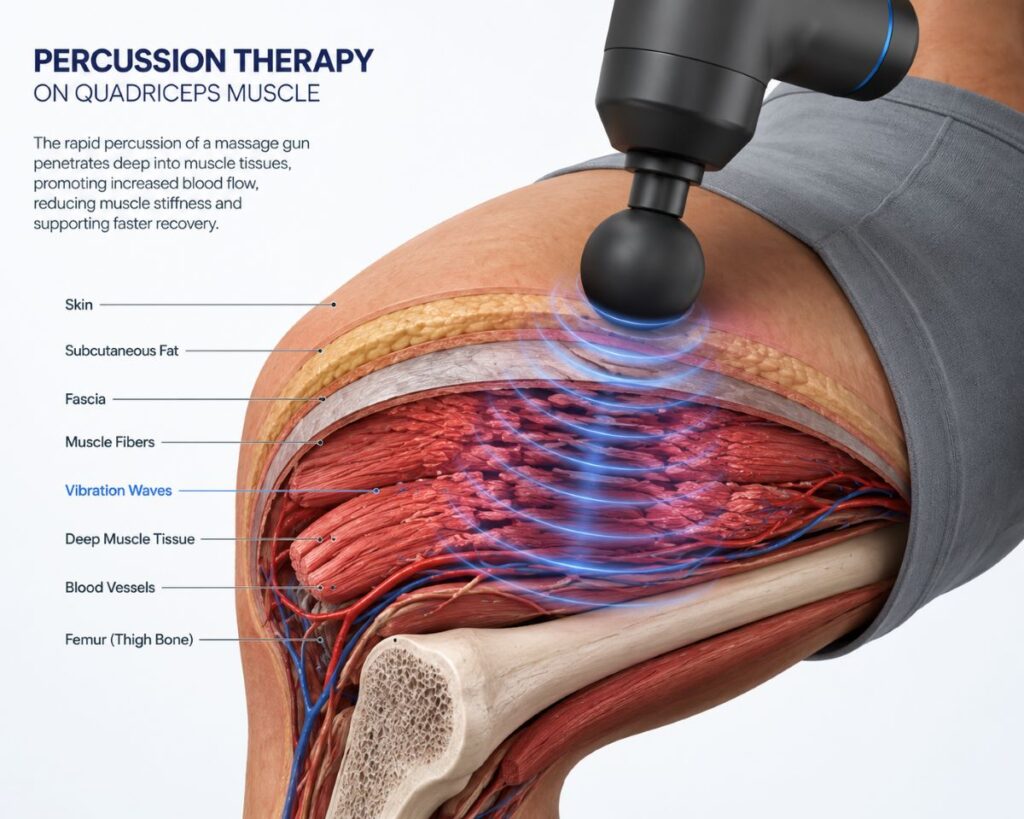
A massage gun delivers rapid bursts of pressure into muscles through a moving attachment head. Depending on the device, these pulses can occur thousands of times per minute. Researchers believe several mechanisms may explain their effects.
First, percussion therapy stimulates sensory receptors within muscles. This increased stimulation may temporarily reduce the brain’s perception of pain, making soreness feel less noticeable. Second, the repeated pressure may help muscles relax, decreasing the sensation of tightness and improving movement.
Third, massage guns may slightly increase local blood flow, although current evidence suggests these changes are generally modest and temporary. Rather than repairing tissue directly, massage guns appear to influence how your muscles feel and function during the recovery period.
For many active people, this improved comfort makes it easier to move, stretch, or perform light activity the day after a challenging workout.
What Research Shows
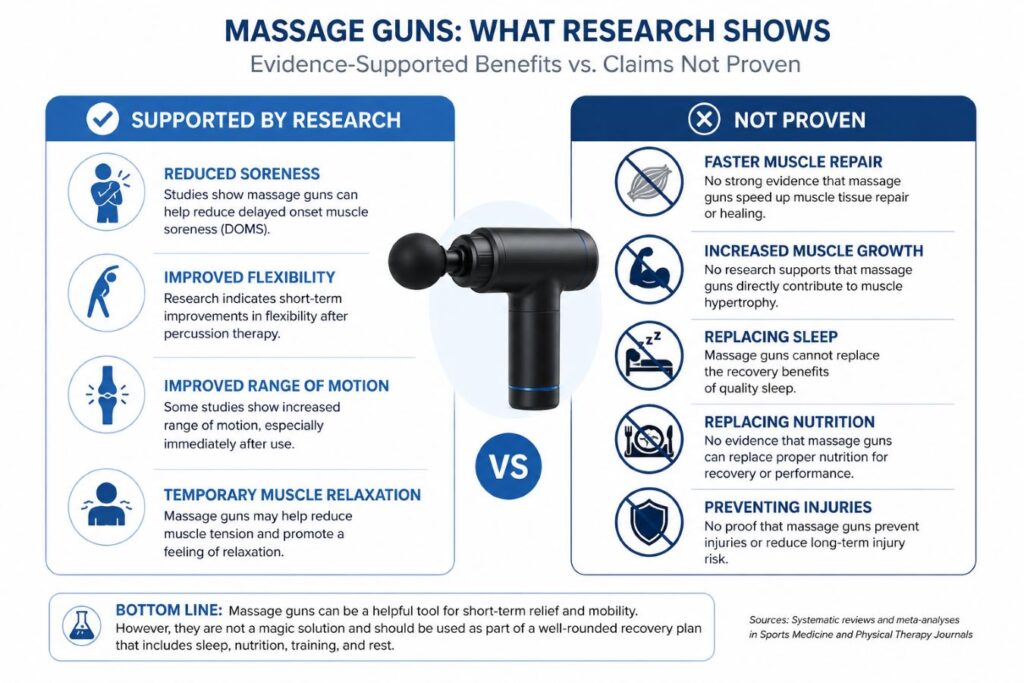
Scientific studies examining percussion therapy continue to grow, but the evidence remains mixed. The strongest findings suggest massage guns can:
Reduce perceived muscle soreness after exercise
Improve short-term joint range of motion
Increase flexibility before physical activity
Help athletes feel physically prepared for training
However, research is less convincing when it comes to:
Faster muscle repair
Increased muscle growth
Improved strength recovery
Better long-term athletic performance
Many studies involve relatively small groups of participants, different treatment durations, and different massage gun settings. Because of these variations, researchers cannot yet conclude that massage guns consistently accelerate physiological recovery. The current evidence supports using massage guns as a tool for improving comfort and mobility, not as a shortcut to healing.
Myth vs Fact
| Myth | Fact |
| Massage guns heal muscles faster. | They mainly reduce soreness and improve mobility. |
| More pressure works better. | Excessive pressure may increase discomfort. |
| You need one after every workout. | Many people recover well without one. |
| Massage guns replace stretching. | They serve different purposes. |
| Massage guns prevent injuries. | No strong evidence supports this. |
Benefits You May Notice
People often report positive experiences after using a massage gun, particularly following moderate or intense exercise.
Potential benefits include the following:
Less muscle soreness after workouts
Improved range of motion
Reduced feeling of muscle tightness
Easier movement during daily activities
Greater comfort during warm-ups
Temporary muscle relaxation
These benefits can make recovery feel more manageable, especially if soreness limits your ability to stay active. However, individual responses vary. Some people notice meaningful relief, while others experience only minor changes. A massage gun should be viewed as a supportive recovery tool rather than a guaranteed solution.
Who May Benefit Most from a Massage Gun?
Who May Benefit
Recreational exercisers with occasional muscle soreness.
Strength training enthusiasts.
Runners and endurance athletes.
People are looking to improve short-term mobility before or after exercise.
Individuals find massage or foam rolling difficult to perform.
Who May Benefit Less
People expect faster muscle growth or muscle repair.
Individuals who already recover well through adequate sleep, nutrition, and training management.
Those with medical conditions that make percussion therapy inappropriate without professional guidance.
Anyone looking for a replacement for evidence-based recovery habits.
Who Probably Doesn’t Need One?
If you:
Recover well naturally.
Sleep 7 to 9 hours.
Eat enough protein.
Rarely experience prolonged soreness,
You may not notice significant additional benefits from a massage gun.
What Massage Guns Cannot Do
Massage guns have become popular because they often provide quick relief from sore or tight muscles. However, it’s important to understand their limitations so your recovery expectations remain realistic.
A massage gun cannot:
Repair torn muscle fibers faster.
Replace quality sleep.
Restore depleted glycogen after intense exercise.
Build muscle on its own.
Prevent every injury.
Correct poor training habits.
Replace proper warm-ups or cool-downs.
Eliminate the need for rest days.
In other words, a massage gun can improve how you feel, but it cannot replace the biological processes your body needs to recover. Think of it as a tool that supports recovery, not the recovery itself.
When Should You Use a Massage Gun?
The best time to use a massage gun depends on your goal. The same device can serve different purposes before exercise, after training, or on recovery days. Rather than using it out of habit, match its use to what your body needs at that moment.
Before Exercise
Before a workout, the goal is not to “recover” but to prepare your muscles for movement. Using a massage gun for 30 to 60 seconds per muscle group may help
Increase short-term range of motion.
Reduce the feeling of stiffness.
Improve movement quality.
Prepare muscles for dynamic warm-ups.
A massage gun should not replace an active warm-up. Light cardio and dynamic mobility exercises remain the foundation of preparing your body for exercise.
After Exercise
After training, a massage gun may help reduce the perception of soreness and muscle tightness. Many people find it useful when applied within the first few hours after exercise or later in the day.
Focus on:
Large muscle groups used during your workout.
Low-to-moderate intensity settings.
Slow, controlled movements.
About 1 to 2 minutes per muscle group.
Applying excessive pressure or spending too long on one area is unlikely to improve results and may increase discomfort.
During Rest Days
Recovery doesn’t stop when you’re away from the gym. On rest days, a massage gun can help maintain comfortable movement by reducing feelings of tightness that sometimes develop after strenuous workouts.
It could be especially helpful before:
Walking
Gentle stretching
Yoga
Mobility exercises
Light recovery sessions
Remember that rest days are for allowing your body to recover, not for aggressively treating every sore muscle.
Recovery Timeline Graphic
Example:
Immediately After Workout
↓
Massage Gun (Optional)
↓
Protein + Water
↓
Normal Daily Movement
↓
Quality Sleep
↓
Muscle Recovery (24 to 72 hours)
This reinforces that recovery is a process, not a single intervention.
Massage Gun vs. Foam Roller
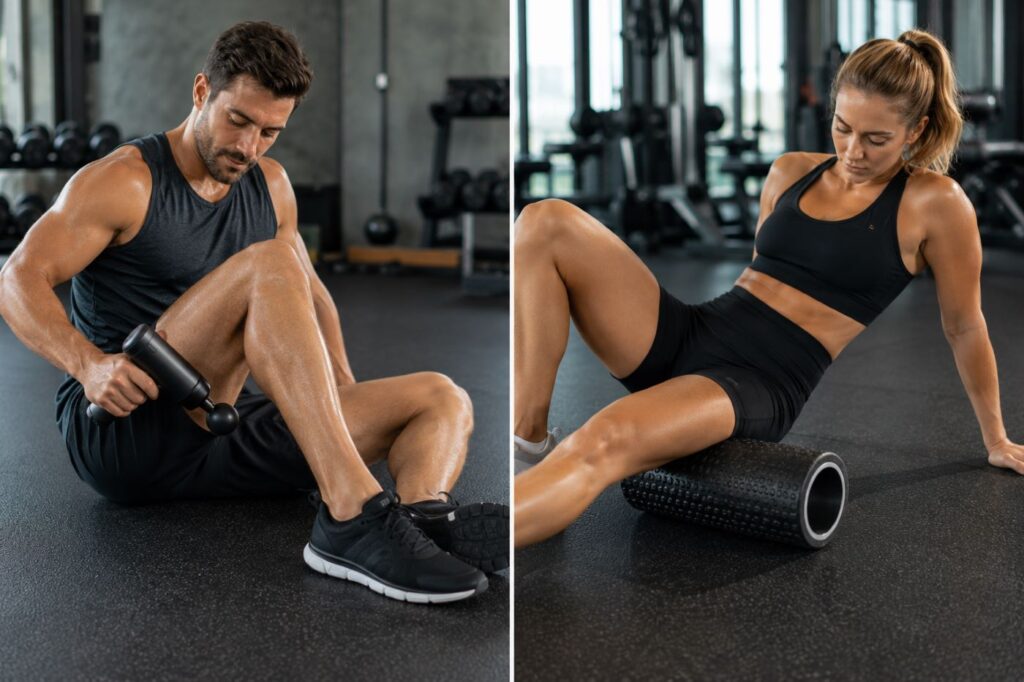
Both massage guns and foam rollers aim to reduce muscle tightness and improve mobility, but they work differently.
| Massage Gun | Foam Roller |
| Targets specific muscles | Covers larger muscle groups |
| Requires little body effort | Using body weight for pressure |
| Easier to reach difficult areas | Better for broad tissue work |
| Pressure can be adjusted | Pressure depends on body position |
| Often feel more comfortable | Can feel more intense |
Neither tool has been proven to dramatically accelerate muscle repair. Your choice often comes down to comfort, convenience, and personal preference. Many athletes use both as part of a broader recovery routine.
Massage Gun vs. Stretching
Massage guns and stretching are not competing methods; they serve different purposes. A massage gun may temporarily reduce muscle tightness and improve comfort. Stretching helps maintain or improve flexibility over time and supports healthy movement patterns. For many people, using a massage gun before gentle stretching may make stretching feel more comfortable. The combination can be more effective than relying on either method alone.
Who Should Avoid Massage Guns?
Massage guns are generally safe for healthy adults when used correctly. However, they are not appropriate for everyone. Avoid using a massage gun directly over:
Broken bones.
Open wounds.
Bruises.
Areas with significant swelling.
Active inflammation.
Blood clots or suspected deep vein thrombosis.
Recent surgical sites.
Sensitive nerves.
The front of the neck.
The spine unless specifically instructed by a healthcare professional.
You should also speak with a healthcare provider before using a massage gun if you have the following:
Bleeding disorders.
Severe osteoporosis.
Peripheral neuropathy.
Certain vascular conditions.
Pregnancy-related concerns.
Any medical condition affecting soft tissues or circulation.
If using the device causes sharp pain, numbness, dizziness, or worsening symptoms, stop using it and seek medical advice.
How to Use a Massage Gun Safely
Using a massage gun correctly is usually more effective than using it aggressively. Keep these guidelines in mind:
Start with the lowest speed setting.
Let the device glide slowly across the muscle.
Avoid pressing forcefully into the tissue.
Spend about 30 seconds to 2 minutes on each muscle group.
Keep the device moving rather than holding it in one spot.
Stay away from bones and joints.
Stop immediately if you experience sharp pain.
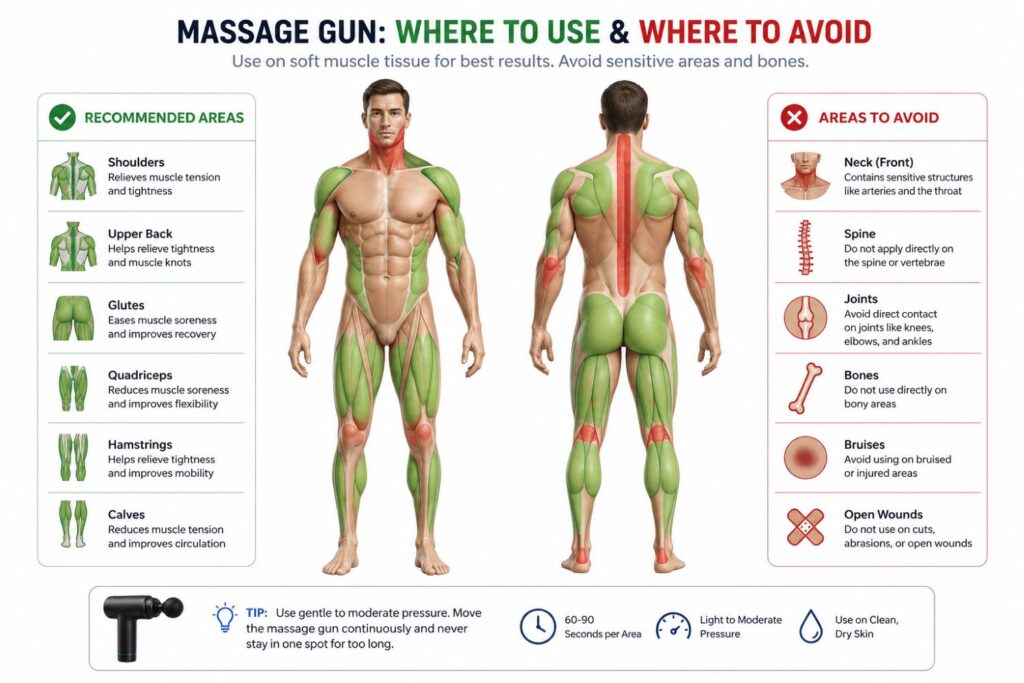
More pressure does not necessarily produce better recovery. Often, gentle and consistent use is enough to achieve the desired effect.
Common Mistakes
Massage guns are simple to use, but several common mistakes can reduce their effectiveness. These include:
Using maximum speed every time.
Applying excessive pressure.
Treating painful areas instead of the surrounding muscles.
Spending too long on one muscle.
Skipping proper sleep because the muscles “feel fine.”
Assuming less soreness means complete recovery.
Depending on the massage gun while neglecting nutrition or hydration.
Recovery works best when multiple healthy habits work together, not when one tool carries the entire workload.
One Practical Example
Imagine you’ve completed a demanding leg workout and woke up the next morning with sore quadriceps. Using a massage gun for one to two minutes per muscle group may make walking or climbing stairs feel more comfortable. However, if your muscles are still recovering, the reduced soreness doesn’t necessarily mean they’re ready for another intense leg session. Listening to your body’s overall recovery remains more important than relying on pain relief alone. This helps readers connect research to real life.
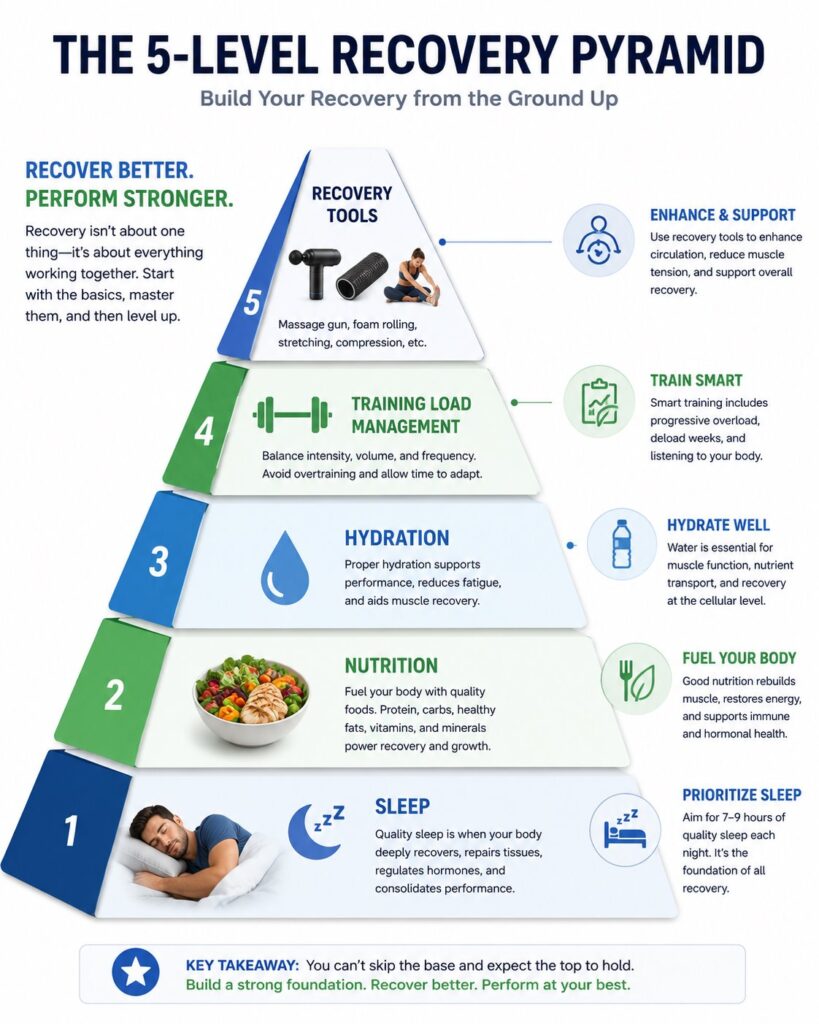
A massage gun can make recovery feel easier, but it cannot replace the fundamentals that allow your body to heal. If you’re relying on a massage gun while consistently sleeping too little, eating insufficient protein, staying dehydrated, or training hard without enough rest, you’re addressing the symptoms rather than the recovery process.
For most people, the greatest improvements in recovery come from consistently practicing the basics:
Getting enough quality sleep
Eating adequate protein and overall calories
Staying well hydrated
Including rest and active recovery days
Progressing training gradually instead of doing too much too soon
A massage gun is most effective when these habits are already in place. Think of it as a useful addition to your recovery routine, not the foundation of it.
Key Takeaways
Massage guns may reduce muscle soreness and feelings of tightness.
They can improve short-term flexibility and range of motion.
Current evidence does not show that massage guns directly speed muscle tissue repair.
They are best used alongside proven recovery habits such as sleep, nutrition, hydration, and appropriate training.
Correct technique and moderate use are more effective than excessive pressure or long sessions.
Recovery is influenced by your overall lifestyle, not by a single device.
Evidence Notes
Massage guns have moderate evidence for improving short-term range of motion, flexibility, and perceived soreness. Current evidence does not consistently demonstrate faster muscle tissue repair, greater muscle growth, or meaningful improvements in explosive performance. Sleep, nutrition, hydration, and appropriate training load remain the primary evidence-based drivers of recovery.
Frequently Asked Questions
Do massage guns speed up muscle recovery?
Current research suggests massage guns may reduce soreness and improve short-term mobility, but there is no strong evidence that they directly speed muscle tissue repair.
How long should you use a massage gun after a workout?
For most muscle groups, 30 seconds to 2 minutes is generally sufficient. Longer sessions have not been shown to provide additional recovery benefits.
Is it okay to use a massage gun every day?
For healthy individuals, gentle daily use is generally considered safe when used correctly. Avoid treating the same area excessively and stop if you experience pain or worsening symptoms.
Should you use a massage gun before or after exercise?
Both can be appropriate. Before exercise, it may help improve mobility as part of a warm-up. After exercise, it may reduce the feeling of soreness and muscle tightness.
Can massage guns replace stretching?
No. Massage guns and stretching serve different purposes. Massage guns may temporarily reduce muscle tightness, while stretching helps maintain flexibility and healthy movement over time.
Are massage guns better than foam rollers?
Neither has been shown to be universally superior. Massage guns are useful for targeting specific muscles, while foam rollers are effective for larger muscle groups. Many people benefit from using both based on their recovery needs.
Medical Disclaimer
The information in this article is intended for educational purposes only and should not be considered medical advice. While massage guns may help reduce muscle soreness and improve short-term mobility, individual responses vary depending on overall health, medical conditions, exercise intensity, and recovery habits.
This content does not replace an evaluation, diagnosis, or treatment plan from a qualified healthcare professional. Always use recovery devices according to the manufacturer’s instructions and avoid using them in ways that cause pain or worsen symptoms. If you have an underlying medical condition or are unsure whether a massage gun is appropriate for you, seek guidance from a healthcare provider before use.
When to Consult a Healthcare Professional
Muscle soreness after exercise is common and usually improves within a few days. However, you should consult a qualified healthcare professional if you experience:
- Severe or worsening muscle pain that does not improve with rest.
- Swelling, redness, or warmth around a muscle or joint.
- Sudden sharp pain during exercise.
- Significant bruising without a clear cause.
- Persistent weakness or difficulty moving a limb.
- Numbness, tingling, or loss of sensation.
- Symptoms last longer than one week despite appropriate recovery.
- Suspected muscle tears, tendon injuries, or fractures.
- Fever or signs of infection accompanying muscle pain.
- Pain that interferes with daily activities or sleep.
You should also seek medical advice before using a massage gun if you have:
- A bleeding disorder or blood-thinning medications.
- Osteoporosis or fragile bones.
- Peripheral neuropathy or reduced sensation.
- Deep vein thrombosis (DVT) or a history of blood clots.
- Recent surgery or a significant musculoskeletal injury.
- Pregnancy, especially if you are unsure which areas are safe to treat.
- Any chronic medical condition affecting muscles, joints, nerves, or circulation.
Prompt medical evaluation can help identify injuries or conditions that require treatment beyond self-care.
Conclusion
Do Massage Guns Help Muscle Recovery? The evidence suggests they can, but primarily by improving comfort rather than accelerating the body’s natural healing process. Percussion therapy may reduce delayed onset muscle soreness (DOMS), temporarily improve flexibility, and help muscles feel less stiff after exercise. These benefits can make it easier to move and return to training with greater comfort.
However, muscle recovery depends on far more than one recovery tool. Sleep, balanced nutrition, hydration, progressive training, and sufficient rest remain the factors with the strongest scientific support. If you choose to use a massage gun, use it with realistic expectations. It can help manage soreness and improve mobility, but it should support a complete recovery strategy rather than replace the habits that truly help your body recover.
References
Ferreira RM, et al. (2023). The Effects of Massage Guns on Performance and Recovery: A Systematic Review.
Sams L, et al. (2023). The Effect of Percussive Therapy on Musculoskeletal Performance and Experiences of Pain: A Systematic Literature Review.
International Society of Sports Nutrition. Position Stand: Nutrient Timing.
American College of Sports Medicine (ACSM). Recovery That Keeps You in the Game.
American College of Sports Medicine. Ten Things You Need to Know About Sports Nutrition.

I’m Mr. Baig, founder of Recover Better Lab. I create evidence-based fitness recovery content to help beginners recover smarter and build sustainable healthy habits.
Mission: My mission is to provide trustworthy, research-backed recovery and fitness content that helps people optimize their health, performance, and overall well-being.