
After a tough workout, one of the first things many people reach for is a bottle of water. But does water help muscle recovery, or is it simply a way to quench your thirst? The answer is yes. Does water help muscle recovery? It does, but not in the way many people think. Water doesn’t directly repair damaged muscle fibers. Instead, it supports the essential processes your body relies on to recover, including replacing fluids lost through sweat, transporting nutrients and oxygen to muscles, regulating body temperature, and maintaining normal muscle function. Without proper hydration, these recovery processes become less efficient, which can leave you feeling more fatigued and ready for your next workout later than expected.
Whether you’re lifting weights, running, cycling, or simply trying to stay active, understanding the role of hydration can help you recover more effectively and perform better over time. In this guide, you’ll learn how water supports muscle recovery, how much you should drink after exercise, when electrolytes may be necessary, and practical hydration strategies you can use every day.
Quick Answer
Does water help muscle recovery?
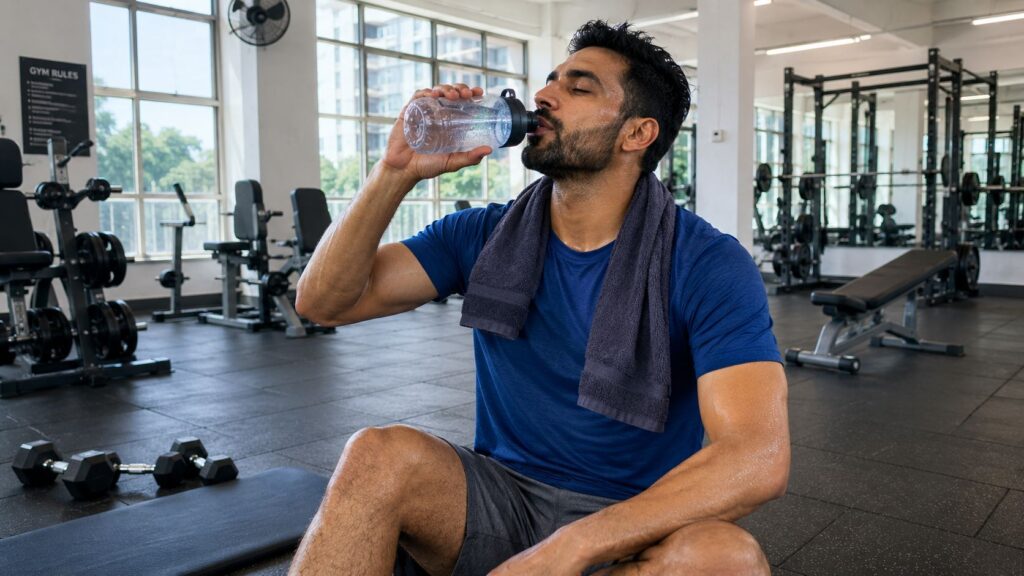
Yes. Water helps muscle recovery by replacing fluids lost through sweat, supporting nutrient and oxygen delivery, regulating body temperature, and maintaining normal muscle function. Although water does not directly repair muscle fibers, staying hydrated helps your body recover more efficiently after exercise and prepares your body for future workouts.
Does Water Help Muscle Recovery?
Yes, water plays an important role in muscle recovery, but it’s important to understand what it does.
Exercise places stress on your muscles, creating tiny, microscopic tears in muscle fibers. Your body then begins repairing this damage through a complex recovery process that involves inflammation, protein synthesis, hormone activity, nutrient delivery, and adequate rest. Water is not the material that rebuilds muscle tissue; that role belongs primarily to dietary protein and amino acids, but it creates the internal environment these repair processes depend on.
Think of water as the transportation system of your body. Without enough fluids, blood circulation becomes less efficient, nutrients reach recovering muscles more slowly, body temperature becomes harder to regulate, and overall recovery may be delayed. Proper hydration also helps maintain blood volume, allowing oxygen and essential nutrients to reach damaged muscle tissue more effectively.
This is why hydration should be viewed as one of the four pillars of recovery, alongside proper nutrition, quality sleep, and appropriate rest between workouts.
Why Your Body Needs Water After Exercise
During exercise, your body loses water primarily through sweat. Sweating helps regulate body temperature, preventing overheating during physical activity. However, this cooling system also reduces your body’s total fluid levels.
Even relatively small fluid losses can affect physical performance. As dehydration develops, blood volume decreases, making your heart work harder to circulate oxygen and nutrients throughout the body. This additional strain can contribute to fatigue and reduce your ability to recover efficiently.
Water also supports many essential functions that continue long after your workout ends. These include transporting nutrients to recover muscle tissue, removing metabolic waste products, maintaining healthy circulation, lubricating joints, and supporting countless chemical reactions involved in recovery.
Replacing these lost fluids after exercise helps restore normal body function and provides the conditions needed for an effective recovery process.
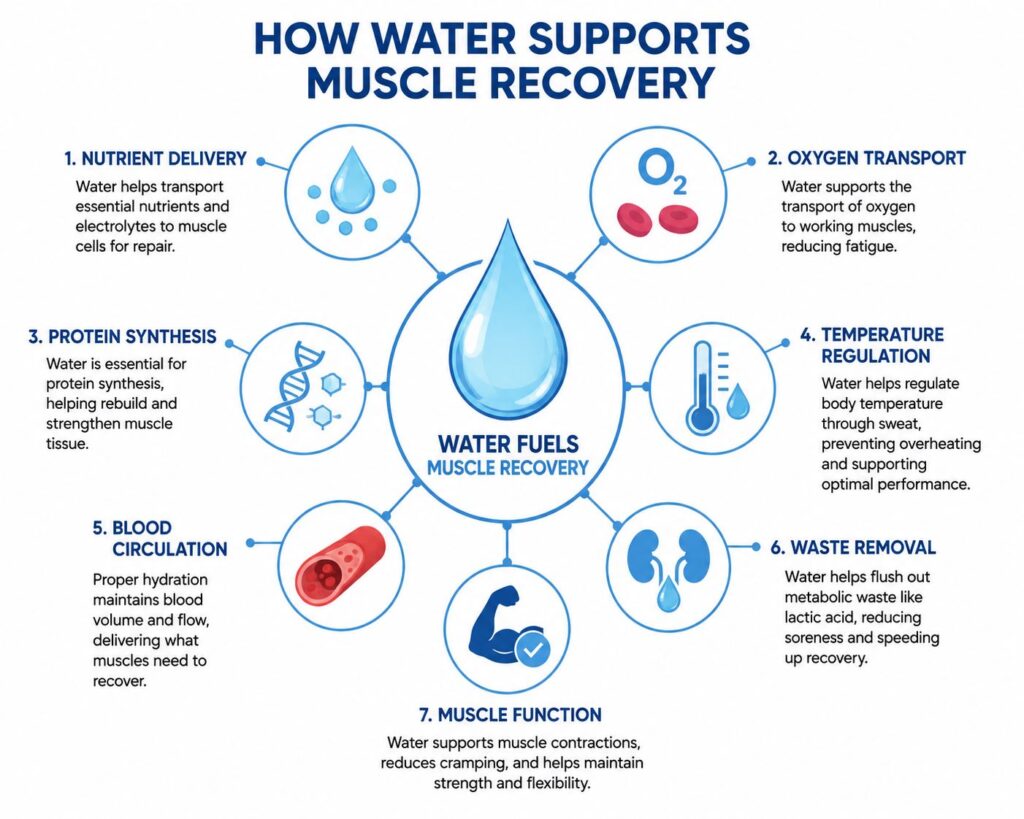
How Water Supports Muscle Recovery
Does Water Help Muscle Recovery at the Cellular Level?
Yes. Does water help muscle recovery even at the cellular level? Absolutely. Muscle cells are composed largely of water, and nearly every stage of recovery depends on adequate hydration.
Water allows nutrients such as amino acids and glucose to enter muscle cells, where they are used to repair damaged tissue and replenish energy stores. It also supports enzyme activity involved in protein synthesis, helping your body rebuild stronger muscle fibers after exercise.
When you’re dehydrated, these normal cellular functions become less efficient. While hydration alone cannot build muscle, maintaining adequate fluid levels creates an environment that allows recovery processes to work as intended.
Supports Nutrient Delivery
After exercise, your muscles require nutrients to begin repairing damaged tissue and restoring energy reserves.
Water makes up a large portion of blood plasma, allowing nutrients including amino acids, glucose, vitamins, and minerals to travel throughout your body. Good hydration supports healthy circulation, helping deliver these nutrients where they’re needed most.
Without sufficient water, circulation can become less efficient, potentially slowing the delivery of recovery-supporting nutrients.
Helps Transport Oxygen
Oxygen plays an essential role in energy production and tissue recovery.
Adequate hydration helps maintain healthy blood volume, allowing oxygen-rich blood to circulate effectively throughout the body. This supports normal muscle function during recovery and prepares your muscles for future physical activity.
Although hydration doesn’t increase oxygen levels directly, it helps maintain the circulatory system responsible for oxygen transport.
Maintains Blood Volume
Blood volume naturally decreases as you lose fluids through sweat.
Maintaining proper hydration helps restore blood volume after exercise, reducing cardiovascular strain and supporting the efficient movement of oxygen, nutrients, and hormones throughout the body.
Healthy blood circulation is one of the foundations of effective recovery because every repair process depends on an adequate supply of nutrients reaching damaged tissues.
Supports Protein Synthesis
Protein synthesis is the process your body uses to repair and build muscle proteins after exercise.
While water does not replace dietary protein, it supports the normal physiological environment required for protein synthesis to occur efficiently. Hydration contributes to healthy cellular function, nutrient transport, and metabolic processes that work together during muscle recovery.
For the best results, combine adequate hydration with sufficient daily protein intake.
Removes Metabolic Waste
Exercise produces metabolic by-products that your body gradually clears during recovery.
Water supports kidney function and healthy circulation, helping transport waste products through the body’s normal elimination systems. Maintaining hydration also helps replace fluids lost during exercise, supporting overall recovery and normal physiological function.
Regulates Body Temperature
Your body continues producing heat even after your workout has finished.
Water helps regulate body temperature through sweating and normal circulation, preventing excessive heat from interfering with recovery. Maintaining a stable internal temperature allows your body’s recovery processes to continue efficiently.
Supports Normal Muscle Function
Muscle contraction and relaxation depend on proper fluid and electrolyte balance.
Even mild dehydration can contribute to reduced muscle performance, earlier fatigue, and an increased likelihood of muscle cramps in some individuals. Staying hydrated supports normal muscle function and helps prepare your body for your next workout.
How Water Supports Muscle Recovery
| Recovery Process | How Water Helps | Why It Matters |
| Nutrient Delivery | Carries nutrients to muscles | Supports recovery |
| Oxygen Transport | Maintains healthy blood flow | Helps working muscles |
| Protein Synthesis | Creating an optimal environment | Supports muscle repair |
| Temperature Control | Prevents overheating | Reduces exercise stress |
| Waste Removal | Helps remove metabolic by-products | Improves recovery |
| Muscle Function | Supports muscle contraction and relaxation | Reduces performance decline |
Hydration Alone Isn’t Enough
Water is one of the four pillars of muscle recovery. For the best recovery results, combine:
- Proper hydration
- Adequate protein
- Quality sleep
- Sufficient rest between workouts
Removing one pillar weakens the entire recovery process.
Can Drinking Water Reduce Muscle Soreness?
Muscle soreness is one of the most common reasons people search for hydration advice after exercise. If you’ve ever finished a challenging workout and wondered whether drinking more water will ease your aching muscles, the answer is a little more complex than a simple yes or no.
Delayed onset muscle soreness (DOMS) typically develops 12 to 24 hours after unfamiliar or intense exercise and usually peaks between 24 and 72 hours. It occurs because exercise, especially resistance training, and movements that emphasize the lowering (eccentric) phase create microscopic damage to muscle fibers. Your body responds with a normal inflammatory process that eventually leads to repair and adaptation.
Water doesn’t prevent this process or eliminate soreness. However, staying hydrated may help your body recover more efficiently by supporting circulation, maintaining blood volume, transporting nutrients, and regulating body temperature. In contrast, dehydration can increase fatigue, make you feel worse overall, and contribute to reduced exercise performance during your next workout.
In other words, hydration supports recovery, but it isn’t a cure for DOMS. If you’re experiencing muscle soreness, the best recovery strategy combines several habits:
Drink enough water throughout the day.
Eat adequate protein.
Consume balanced meals containing carbohydrates.
Get sufficient sleep.
Stay lightly active with gentle movement when appropriate.
Allow enough recovery time before training the same muscles again.
Myth vs Fact
| Myth | Fact |
| Water repairs muscles. | Water supports the recovery process but doesn’t directly repair muscle fibers. |
| More water always means faster recovery. | Excessive water intake can be harmful. |
| Sports drinks are always better. | Water is sufficient for most workouts under 60 minutes. |
| Thirst is the best hydration indicator. | Waiting until you’re thirsty may mean you’re already mildly dehydrated. |
| Coffee always causes dehydration. | Moderate coffee intake generally contributes to daily fluid intake. |
What Happens If You’re Dehydrated After Exercise?
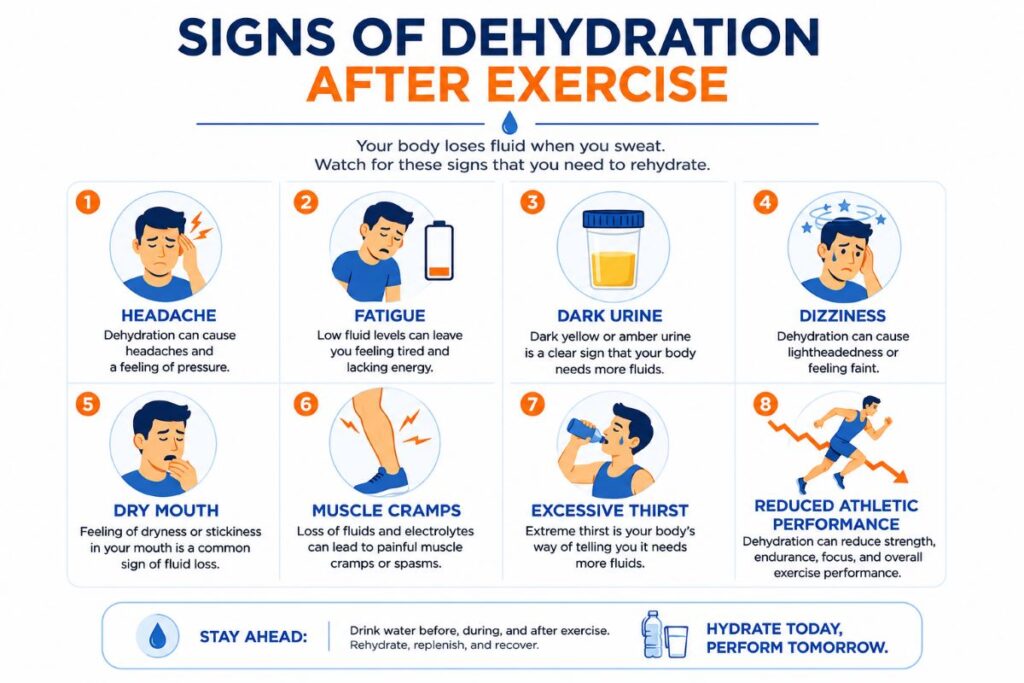
Even mild dehydration can have a noticeable impact on how you feel after a workout.
As your body loses fluids through sweat, blood volume decreases. This means your heart must work harder to circulate oxygen and nutrients throughout the body. As a result, you may experience fatigue sooner and recover more slowly than if you had replaced those lost fluids.
Dehydration may contribute to:
- Increased fatigue
- Reduced exercise performance
- Slower recovery between workouts
- Headaches
- Dizziness
- Dry mouth
- Muscle cramps in some individuals
- Difficulty regulating body temperature
- Elevated heart rate during physical activity
Signs of Dehydration
| Mild | Moderate | Severe |
| Thirst | Dark urine | Confusion |
| Dry mouth | Headache | Rapid heartbeat |
| Fatigue | Muscle cramps | Dizziness |
| Dry lips | Reduced performance | Seek medical care if severe |
The more intense your workout, the hotter your environment, or the longer you exercise, the more important replacing lost fluids becomes. Athletes, outdoor workers, endurance runners, and anyone exercising in warm or humid conditions should pay particular attention to hydration because sweat losses can be substantial.
How Much Water Should You Drink After a Workout?
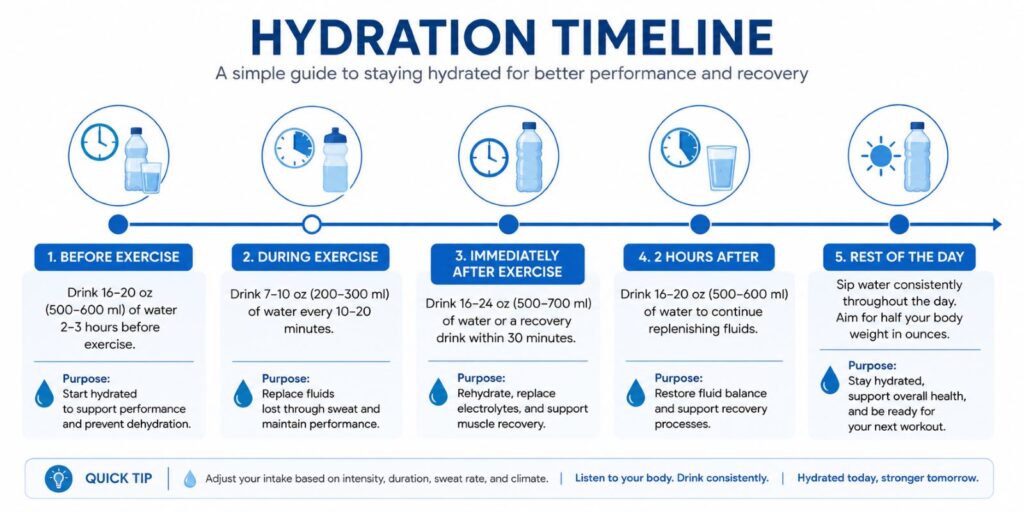
There isn’t one perfect amount that works for everyone. Your hydration needs depend on several factors, including:
- Body size
- Workout intensity
- Exercise duration
- Weather conditions
- Humidity
- Individual sweat rate
- Clothing and equipment
- Overall daily fluid intake
For most people, drinking water regularly throughout the day and replacing fluids lost during exercise is sufficient.
A practical approach includes:
- Drink water before starting your workout.
- Sip water during longer exercise sessions.
- Continue drinking water after exercise until thirst is satisfied and normal hydration is restored.
If you’ve completed a long workout or lost a large amount of sweat, weighing yourself before and after exercise can provide a rough estimate of your fluid loss. Many sports nutrition experts recommend replacing approximately 125 to 150% of the fluid lost over the next several hours because not all consumed fluids are retained.
Rather than drinking a large amount all at once, spread your fluid intake throughout the recovery period. Your urine color can also serve as a simple guide. Pale yellow urine generally indicates adequate hydration, while darker urine often suggests you need more fluids.
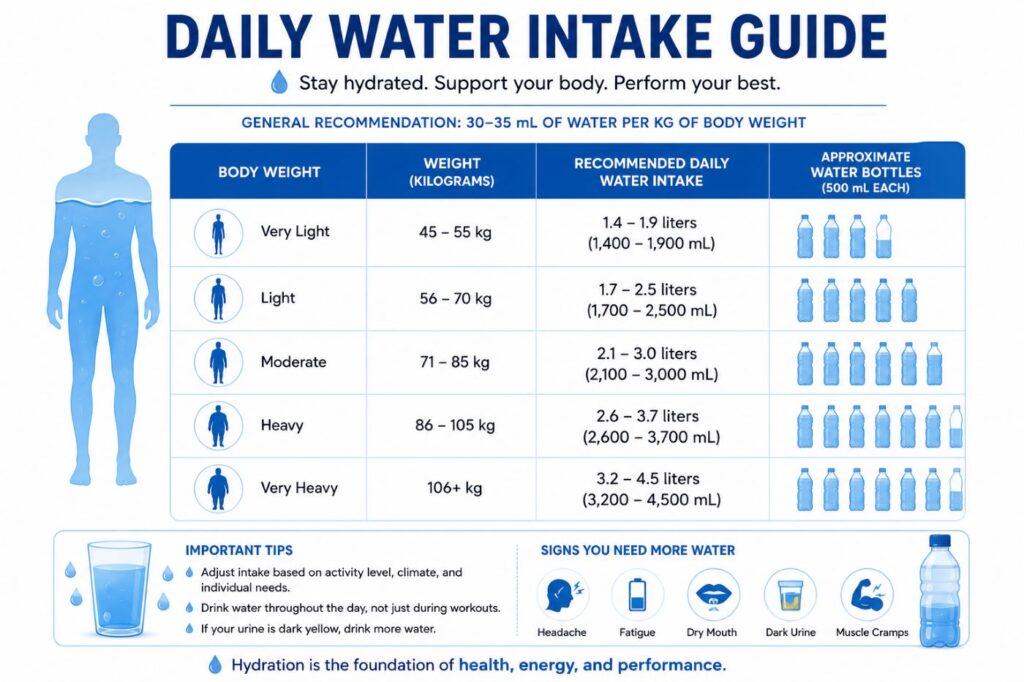
Daily Water Intake Guide
| Body Weight | Approximate Daily Water Intake* |
| 120 lb. (54 kg) | 2.0–2.5 L |
| 150 lb. (68 kg) | 2.5–3.0 L |
| 180 lb. (82 kg) | 3.0–3.5 L |
| 210 lb. (95 kg) | 3.5–4.0 L |
General guideline: Individual needs vary with climate, activity level, and health status.
Recovery Timeline
| Time After Exercise | What’s Happening | What You Should Do |
| Immediately (0 to 30 min) | Fluid loss begins to be replaced | Drink water and begin rehydrating |
| 30 to 60 Minutes | Nutrient delivery increases | Eat a balanced meal with protein and carbohydrates |
| 2 to 4 Hours | Muscle protein synthesis continues | Keep drinking water throughout the recovery period |
| 24 Hours | Muscle repair is actively occurring | Prioritize hydration, nutrition, and quality sleep |
| 24 to 72 Hours | Recovery and adaptation continue | Stay hydrated and avoid overtraining sore muscles |
Water vs. Sports Drinks: Which Is Better for Recovery?
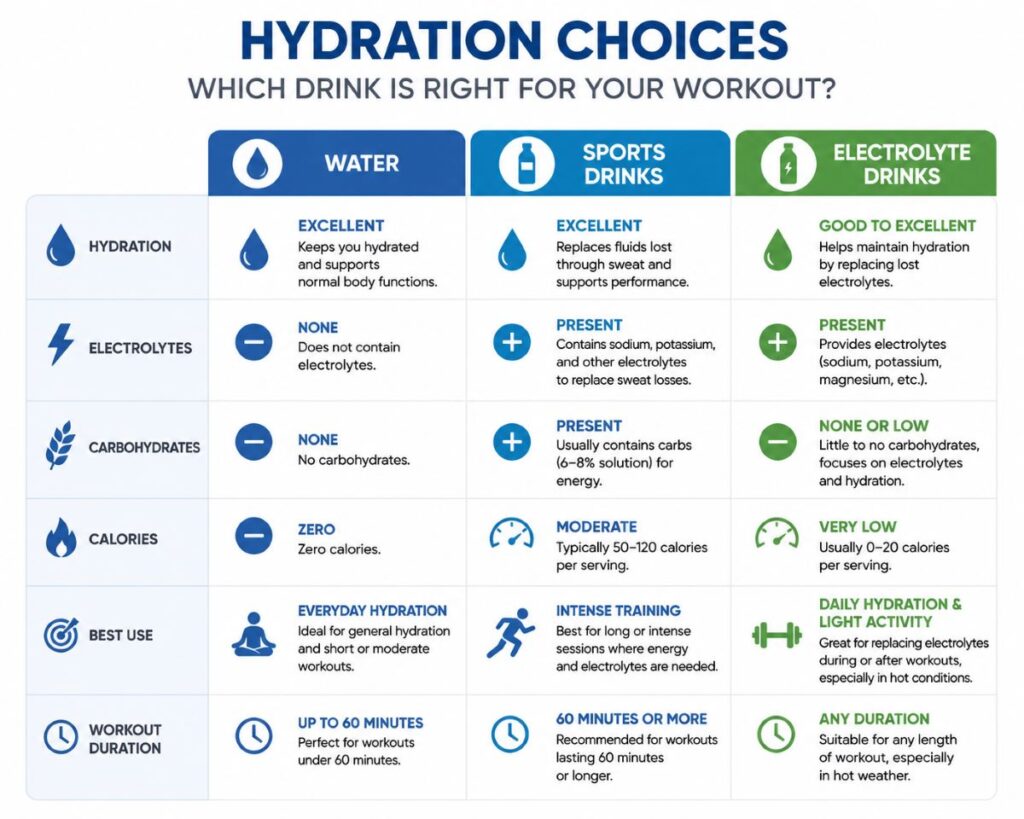
Water vs Sports Drinks vs Electrolytes:
| Option | Best For | Advantages | Limitations |
| Water | Most workouts are under 60 minutes | Hydrates without added sugar | Doesn’t replace significant electrolyte losses |
| Electrolyte Drink | Heavy sweating | Replaces sodium and other electrolytes | Not always necessary |
| Sports Drink | Long, intense endurance sessions | Replace fluids and carbohydrates | Often contains added sugar |
| Protein Shake | Strength training recovery | Supports muscle protein synthesis | Doesn’t replace hydration needs |
One of the biggest misconceptions in fitness is that everyone needs sports drinks after exercising. For most recreational exercisers, plain water is enough. If your workout lasts less than 60 minutes and involves moderate intensity, water usually replaces lost fluids effectively without the added sugars found in many sports drinks.
Sports drinks become more useful when:
- Exercise lasts longer than about 60 to 90 minutes.
- You’re exercising in hot or humid conditions.
- Sweat losses are heavy.
- You’re participating in endurance events.
- Multiple training sessions occur on the same day.
These beverages contain carbohydrates and electrolytes, particularly sodium, which help replace what’s lost through prolonged sweating. Electrolyte drinks without added sugar may also benefit individuals who experience heavy sweat losses but don’t require additional carbohydrates.
Completed, protein shakes serve a different purpose altogether. They help supply amino acids needed for muscle repair but should not replace water as your primary source of hydration. The best choice depends on the type of workout you’ve completed, not on marketing claims.
Simple Hydration Tips for Better Muscle Recovery
Good hydration isn’t just about what you drink after exercise. It’s a habit that starts before your workout and continues throughout the day.
Beginner Tips
- Carry a reusable water bottle.
- Drink consistently throughout the day.
- Increase fluid intake during hot weather.
- Check urine color as a general hydration indicator.
Pair hydration with protein and rest.
Simple strategies include:
- Start your workout well hydrated.
- Carry a reusable water bottle.
- Drink regularly instead of waiting until you’re extremely thirsty.
- Increase fluid intake during hot weather.
- Replace fluids gradually after exercise.
- Include water-rich foods such as fruits and vegetables in your diet.
- Monitor urine color as a general hydration guide.
- Pair hydration with adequate protein, balanced nutrition, and quality sleep.
These habits support recovery not only after individual workouts but also over weeks and months of consistent training.
Recovery Checklist
✅ Drink water before exercise.
✅ Rehydrate after sweating.
✅ Eat enough protein.
✅ Replace electrolytes after prolonged or heavy sweating.
✅ Eat balanced meals.
✅ Sleep 7 to 9 hours.
✅ Allow muscles adequate recovery time.
Common Hydration Mistakes That Slow Recovery
Common Mistakes:
- Waiting until you’re very thirsty.
- Drinking a large amount of water all at once.
- Ignoring electrolyte losses after long workouts.
- Assuming sports drinks are necessary after every workout.
- Forgetting to hydrate before exercise.
Many people unknowingly make hydration mistakes that can affect recovery.
Waiting Until You’re Thirsty
Thirst is a useful signal, but it may not appear until you’ve already lost some body water. Drinking fluids consistently throughout the day helps maintain hydration more effectively.
Drinking Too Much Water Too Quickly
More isn’t always better.
Consuming excessive amounts of water within a short period can dilute sodium levels in the blood, a rare but potentially serious condition known as exercise-associated hyponatremia. Gradual rehydration is generally the safer approach.
Ignoring Electrolyte Losses
Water replaces fluids, but prolonged heavy sweating also removes sodium and other electrolytes. Long endurance sessions may require replacing both fluids and electrolytes.
Assuming Sports Drinks Are Always Necessary
Many people consume sports drinks after short workouts when water provides all the hydration they need.
Forgetting to Hydrate Before Exercise
Recovery begins before your workout starts. Beginning exercise already dehydrated increases the likelihood of fatigue and greater fluid loss during training.
Key Statistics
- The human body is approximately 50 to 70% water, depending on factors such as age, sex, and body composition.
- Even mild dehydration can reduce physical performance.
- Most recreational workouts under 60 minutes generally require only water for rehydration.
- Recovery depends on hydration, nutrition, sleep, and adequate rest, not hydration alone.
Frequently Asked Questions
Does water repair muscles?
No. Water does not directly repair damaged muscle fibers. Muscle repair primarily depends on dietary protein, amino acids, and your body’s natural recovery processes. However, water supports these processes by maintaining hydration, transporting nutrients and oxygen, regulating body temperature, and helping muscles function normally. Think of water as creating the conditions your body needs for effective recovery rather than acting as the repair material itself.
Does drinking more water make muscles recover faster?
Drinking enough water supports normal muscle recovery, but drinking excessive amounts won’t speed up the recovery process. Once you’re adequately hydrated, additional water doesn’t provide extra recovery benefits. For the best results, combine proper hydration with balanced nutrition, sufficient protein, quality sleep, and appropriate rest between workouts.
Can dehydration slow muscle recovery?
Yes. Dehydration may slow muscle recovery by reducing blood volume, making it harder to deliver oxygen and nutrients to recover muscles. It can also increase fatigue, reduce exercise performance, and make it more difficult for your body to regulate temperature during and after physical activity.
Is water enough after every workout?
For most workouts lasting less than 60 minutes, plain water is usually enough to replace lost fluids. However, if you’ve completed a prolonged endurance session, exercised in hot or humid conditions, or experienced heavy sweating, you may also need to replace electrolytes. Strength-training workouts also require adequate protein intake to support muscle repair, since water alone cannot rebuild muscle tissue.
Should I drink water immediately after exercising?
Yes. Replacing fluids soon after exercise helps restore hydration and supports your body’s recovery processes. Rather than drinking a large amount all at once, it’s generally better to rehydrate gradually over the next several hours while continuing to drink water throughout the day.
Is cold water better than room-temperature water after exercise?
Both cold and room-temperature water hydrates your body effectively. Many people simply find cold water more refreshing after exercise, which may encourage them to drink enough fluids. The best choice is whichever temperature helps you stay consistently hydrated.
Can drinking too much water be harmful?
Yes. Although uncommon, drinking excessive amounts of water in a short period can dilute sodium levels in the blood and lead to a condition called exercise-associated hyponatremia. This is most often seen during prolonged endurance events when participants consume large volumes of plain water without replacing electrolytes. Drinking according to your needs and replacing electrolytes after prolonged heavy sweating helps reduce this risk.
Key Takeaways
- Water does not directly repair muscles, but it plays an essential role in the recovery process.
- Staying hydrated supports nutrient delivery, oxygen transport, circulation, temperature regulation, and normal muscle function.
- Even mild dehydration can reduce exercise performance and make recovery less efficient.
- Most people only need plain water after workouts lasting less than an hour.
- Longer, hotter, or more intense workouts may also require electrolyte replacement.
- Protein, balanced nutrition, sleep, and rest remain just as important as hydration for complete muscle recovery.
Expert Summary
Hydration doesn’t directly repair muscle fibers, but it supports nearly every system involved in recovery. Maintaining adequate fluid intake helps preserve blood volume, transport nutrients and oxygen, regulate body temperature, and support normal muscle function. Combined with proper nutrition, sleep, and rest, good hydration is an essential part of recovering well after exercise.
Conclusion
So, does water help muscle recovery? The answer is yes, but it’s important to understand why. Water doesn’t rebuild damaged muscle fibers or eliminate soreness overnight. Instead, it supports nearly every process your body relies on to recover effectively. From maintaining blood volume and transporting nutrients to regulating body temperature and supporting normal muscle function, hydration creates the environment your muscles need to repair and adapt after exercise.
For most people, the best recovery strategy isn’t simply drinking more water; it’s combining consistent hydration with adequate protein, balanced nutrition, quality sleep, and enough recovery time between workouts. These habits work together to help your body recover, perform better, and prepare for your next training session.
If you’re aiming to improve your recovery, don’t think of water as a miracle solution. Think of it as one of the essential building blocks of a healthy recovery routine.
Medical Disclaimer
This article is for educational purposes only and should not be considered medical advice. Individual hydration needs vary based on age, health status, medications, activity level, and environmental conditions. If you have a medical condition affecting fluid balance, experience severe dehydration symptoms, or have concerns about hydration or exercise recovery, consult a qualified healthcare professional before making significant changes to your hydration or training routine.
Related Recovery Articles:
- How Much Protein Do You Need After a Workout?
- Does Stretching Help Muscle Recovery?
- 7 Signs You Need a Recovery Day
- How Long Should Beginners Rest Between Workouts?
- How Many Rest Days Should Beginners Take?
Reference
| Organization | Resource |
| American College of Sports Medicine – Exercise and Fluid Replacement Position Stand | Hydration recommendations before, during, and after exercise. (PubMed) |
| National Athletic Trainers’ Association – Fluid Replacement for the Physically Active (PDF) | Evidence-based recommendations on hydration, sweat loss, electrolyte replacement, and exercise-associated hyponatremia. (nata.org) |
| National Athletic Trainers’ Association – Fluid Replacement for Athletes (Position Statement) | Practical guidance on hydration protocols before, during, and after athletic participation. (nata.org) |
| PubMed – Exercise and Fluid Replacement Position Stand | Peer-reviewed publication indexed by the U.S. National Library of Medicine. (PubMed) |

I’m Mr. Baig, founder of Recover Better Lab. I create evidence-based fitness recovery content to help beginners recover smarter and build sustainable healthy habits.
Mission: My mission is to provide trustworthy, research-backed recovery and fitness content that helps people optimize their health, performance, and overall well-being.