

After a workout, many beginners ask the same question: how much protein do you need after a workout to support muscle recovery? With so much advice about protein shakes, recovery drinks, and post-workout meals, it can be difficult to know what matters. Fitness advice online often makes it sound as though recovery depends on consuming the perfect amount of protein at exactly the right time.
The reality is a little less dramatic.
Protein does play an important role in muscle recovery, but recovery is not determined by a single shake or meal. What matters is consistently giving your body the nutrients it needs to repair and adapt after exercise. So, how much protein do you need after exercise? The answer depends on factors such as your body size, activity level, and overall nutrition habits. Understanding these factors can help you support recovery without overcomplicating the process.
Quick Answer
Most people need 20 to 40 grams of protein after a workout to support muscle recovery. The ideal amount depends on factors such as body weight, age, and activity level. Protein can come from whole foods or supplements, and meeting your daily protein needs is generally more important than consuming protein immediately after exercise.
Why Protein Matters for Muscle Recovery
Exercise places stress on your muscles.
Whether you are lifting weights, doing bodyweight exercises, cycling, running, or participating in sports, your muscles experience small amounts of wear and tears during physical activity. This is a normal part of the training process. Recovery is the period when your body begins repairing this damage and adapting to the demands placed on it. Over time, this process helps muscles become stronger and more resilient.
Protein supports this recovery process because it provides amino acids, which are the building blocks your body uses to repair and maintain muscle tissue. Without enough protein, your body may struggle to recover as efficiently as it could. This does not mean every workout requires a large protein shake, but it does mean that protein is an important part of a recovery-focused nutrition plan.
It is also important to remember that protein supports more than muscle growth. Adequate protein intake helps maintain existing muscle tissue, supports physical function, and contributes to overall recovery after exercise.
Table of Contents
How Much Protein Do You Need After a Workout?
For most healthy adults, consuming approximately 20 to 40 grams of protein after a workout is generally considered sufficient to support muscle recovery. This recommendation covers a wide range of individuals, from beginners exercising a few times per week to more active adults participating in regular strength training.
The exact amount you need can vary based on several factors:
- Body weight
- Age
- Training intensity
- Type of exercise
- Overall daily protein intake
A smaller individual may recover well with around 20 grams of protein after exercise, while a larger individual or someone performing more demanding training sessions may benefit from a higher amount.
Rather than focusing on an exact number after every workout, it is often more helpful to think about protein intake throughout the entire day. A balanced approach to daily protein consumption generally contributes more to recovery than obsessing over a single meal.
How Much Protein Do You Need After a Workout Based on Body Weight?
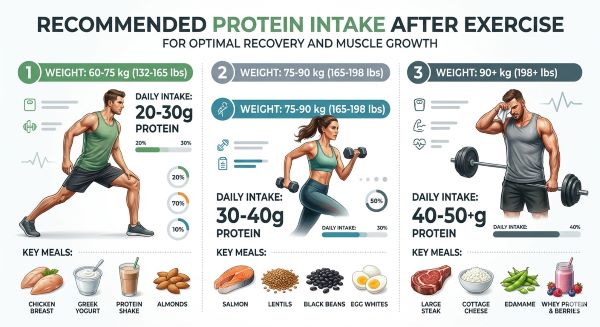
| Body Weight | Recommended Protein After Workout |
| 120 lb. (54 kg) | 20–25 g |
| 150 lb. (68 kg) | 25–30 g |
| 180 lb. (82 kg) | 30–35 g |
| 220 lb. (100 kg) | 35–40 g |
These are general estimates, and individual needs may vary.
Does Protein Timing Really Matter?
Many people have heard about the so-called “anabolic window,” the idea that you must consume protein immediately after exercise or risk losing recovery benefits. While eating protein after a workout can certainly be helpful, research over the years has shown that recovery is not usually dependent on consuming protein within a very narrow timeframe.
If you eat a meal containing protein within a few hours before or after exercise, you are likely providing your body with the amino acids it needs to support recovery. This can be reassuring for beginners who may not have access to a protein shake immediately after every workout.
Protein timing can matter in some situations, particularly for athletes training multiple times per day or individuals following highly structured performance programs. However, for most people, total daily protein intake remains more important than rushing to consume protein the moment a workout ends.
A practical approach is to include a protein-rich meal or snack within a reasonable period after exercise and focus on meeting your overall protein needs consistently.
What Happens If You Don’t Eat Enough Protein?
Protein deficiency is not something most people notice overnight. Instead, insufficient protein intake often affects recovery gradually. When your body consistently receives less protein than it needs, several issues may begin to appear over time.
You may notice that muscle soreness seems to last longer than expected. Recovery between workouts may feel slower. Maintaining or building muscle can become more difficult, particularly if you are participating in strength training. Some people may also feel that their progress has stalled despite maintaining a regular exercise routine.
Of course, protein is not always the reason recovery feels slow. Sleep quality, hydration, training volume, stress levels, and overall nutrition also influence how well your body recovers. This is why recovery should be viewed as a complete system rather than a single nutrient problem.
Best Protein Sources for Recovery

One common misconception is that recovery requires expensive supplements. Many everyday foods can provide the protein needed to support muscle recovery.
| Food | Approximate Protein Per Serving |
| Food | Approximate Protein Per Serving |
| Chicken Breast (3 oz) | 26 g |
| Greek Yogurt (1 cup) | 25 g |
| Eggs (2 large) | 12 g |
| Tuna (3 oz) | 22 g |
| Milk (1 cup) | 8 g |
| Lentils (1 cup cooked) | 18 g |
| Tofu (½ block) | 20 g |
Animal-based protein sources include:
- Chicken breast
- Turkey
- Eggs
- Greek yogurt
- Cottage cheese
- Fish
- Milk
- Lean beef
Plant-based protein sources include the following:
- Lentils
- Beans
- Chickpeas
- Tofu
- Tempeh
- Soy products
- Quinoa
The best protein source is often the one that fits your preferences, dietary needs, and lifestyle. A balanced meal that combines protein with carbohydrates can be particularly useful after exercise because carbohydrates help replenish energy stores while protein supports tissue repair.
For example, a meal containing grilled chicken, rice, and vegetables may provide both protein and carbohydrates to support recovery. Similarly, Greek yogurt with fruit or a smoothie made with milk and protein-rich ingredients can serve as a convenient recovery option.
Do You Need a Protein Shake After a Workout?
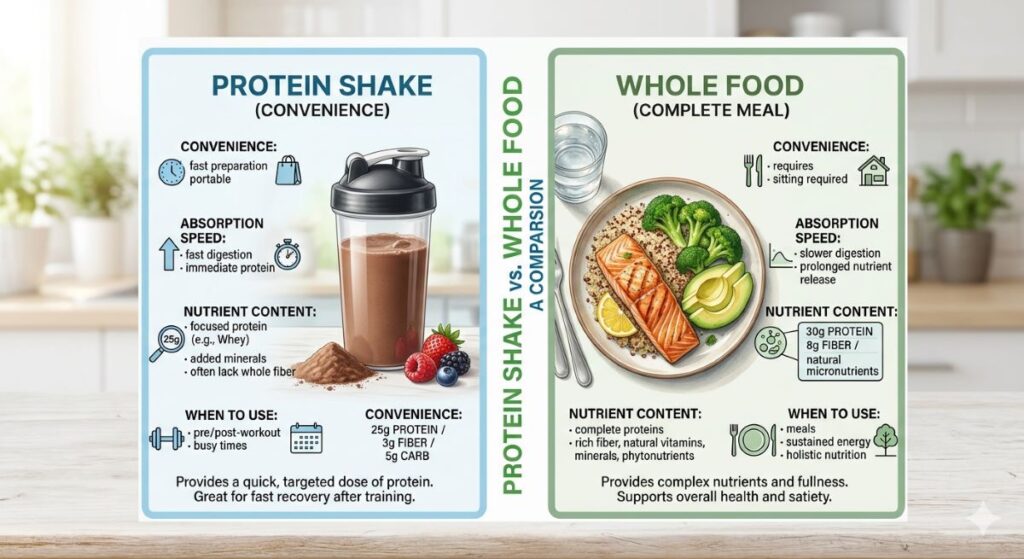
| Convenience | Excellent | Moderate |
| Preparation Time | Very Low | Higher |
| Nutrient Variety | Limited | Higher |
| Satiety | Moderate | Higher |
| Portability | Excellent | Varies |
Protein shakes are popular because they are convenient. They are easy to prepare, portable, and can help people increase protein intake when regular meals are not practical. However, protein shakes are not required for effective recovery.
Many people meet their protein needs entirely through whole food. If you can consume a balanced meal after exercise, there is often no special advantage to choosing a protein shake instead. The main benefit of a shake is convenience rather than superiority.
For example, someone leaving the gym and heading directly to work may find a protein shake easier than preparing a meal. In that situation, the shake can be a practical solution. On the other hand, someone exercising at home may have easy access to eggs, yogurt, milk, chicken, or other protein-rich foods.
Both approaches can support recovery when they help you meet your overall protein needs.
Common Protein Mistakes That Can Slow Recovery
When people think about recovery nutrition, they often focus entirely on protein. While protein is important, several common mistakes can limit recovery progress.
One mistake is assuming that more protein is always better. Consuming extremely large amounts of protein after a workout does not necessarily lead to faster recovery. Your body can only use so much protein at a time for muscle-building processes.
Another common mistake is relying entirely on supplements while neglecting overall diet quality. Protein powders can be useful, but they should not replace a balanced diet that includes whole foods, fruits, vegetables, healthy fats, and carbohydrates.
Some people also underestimate the importance of hydration. Water plays a critical role in numerous recovery processes, and dehydration can negatively affect performance and recovery.
Perhaps the most overlooked mistake is ignoring sleep. Even a perfectly planned nutrition strategy cannot fully compensate for inadequate sleep. During sleep, many important recovery and repair processes take place.
When recovery is slower than expected, the solution is often broader than simply increasing protein intake.
Protein Is Only One Part of Recovery
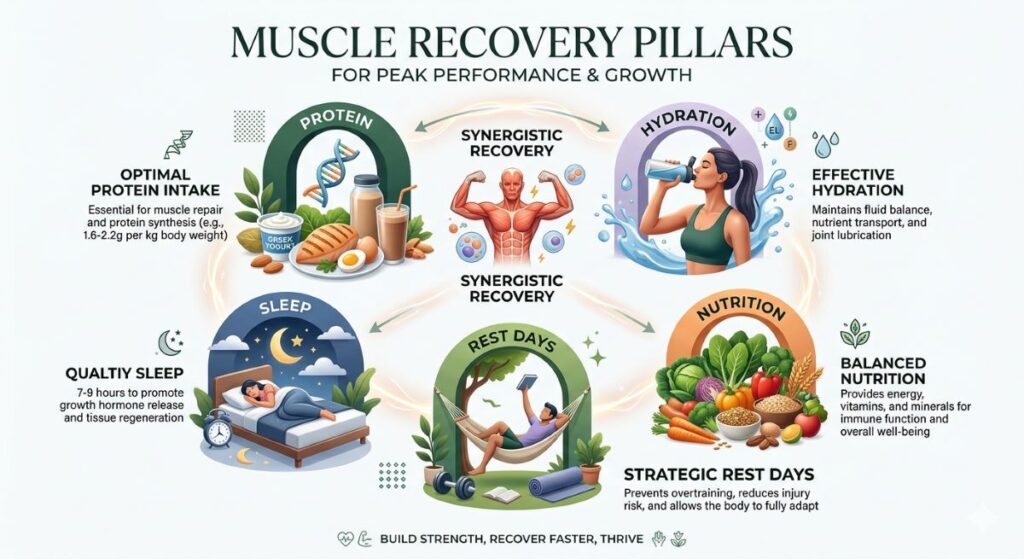
Protein has earned a lot of attention in fitness discussions, and for good reasons. It supports muscle repair and helps your body recover from physical activity.
However, protein alone does not create recovery.
| Recovery Factor | Why It Matters |
| Protein | Supports muscle repair and maintenance |
| Sleep | Supports recovery hormones and tissue repair |
| Hydration | Helps transport nutrients throughout the body |
| Rest Days | Allow muscles and connective tissues to recover |
| Balanced Nutrition | Provides energy and essential nutrients |
Think of recovery as a combination of several factors working together.
Protein provides the building blocks for repair.
Sleep supports hormonal and physical recovery processes.
Hydration helps transport nutrients and maintain normal bodily functions.
Rest days allow tissues to recover from repeated stress.
A balanced diet supplies the vitamins, minerals, carbohydrates, and healthy fats that contribute to overall health and recovery.
When one of these factors is missing, recovery may not be as effective as it could be. This is why focusing exclusively on protein often misses the bigger picture. People who recover well typically pay attention to their overall recovery habits rather than relying on a single nutrient to do all the work.
Can You Eat Too Much Protein After a Workout?
Many people worry about not getting enough protein after exercise, but some also wonder whether more protein automatically leads to better recovery.
There is a point where consuming additional protein after a workout provides diminishing returns. While your body can digest and use protein throughout the day, consuming extremely large amounts in a single meal does not necessarily result in faster muscle recovery.
For most people, a post-workout protein intake of approximately 20 to 40 grams is sufficient to support recovery. Larger individuals and highly active athletes may benefit from higher amounts, but doubling or tripling that amount immediately after exercise is unlikely to produce significantly greater recovery benefits.
Instead of focusing on one very high-protein meal, it is often more effective to spread protein intake throughout the day. This approach helps your body with a consistent supply of amino acids to support muscle repair and maintenance. The goal is not to consume as much protein as possible after exercise. The goal is to consume enough protein consistently while also supporting recovery through sleep, hydration, rest, and overall nutrition.
Frequently Asked Questions
Is 20 grams of protein enough after a workout?
For many people, 20 grams is enough to stimulate muscle recovery, particularly after moderate exercise. Larger individuals or those performing intense training may benefit from higher amounts.
Is 50 grams of protein too much after a workout?
Most people do not need 50 grams immediately after exercise. While the body can still digest it, recovery benefits may not be significantly greater compared to moderate amounts.
Can I recover without a protein shake?
Yes. Protein shakes are convenient, but whole foods such as eggs, yogurt, chicken, fish, beans, lentils, and tofu can also support recovery.
How much protein do women need after a workout?
Women generally follow similar protein recommendations as men. Individual needs depend more on body size, activity level, and overall nutrition than gender alone.
Should beginners use protein powder?
Protein powder can be helpful when meeting protein needs through food is difficult. However, it is not required for effective recovery.
Recovery Reminder
Protein can support muscle recovery, but it works best alongside quality sleep, proper hydration, balanced nutrition, and adequate rest days.
Conclusion
So, how much post-workout protein do you need for muscle recovery?
For most people, consuming approximately 20 to 40 grams of protein after exercise is enough to support recovery. The exact amount depends on factors such as body weight, activity level, and overall nutrition habits. While eating protein after a workout can be beneficial, perfect timing is usually less important than consistently meeting your protein needs throughout the day.
Whether your protein comes from whole foods or a convenient shake, the goal is the same: providing your body with the resources it needs to recover and adapt. Most importantly, remember that protein is only one piece of the recovery puzzle. Sleep, hydration, rest, and balanced nutrition all play essential roles in helping your body recover after exercise.
KEY TAKEAWAYS
- Most people need 20 to 40 grams of protein after a workout to support muscle recovery.
- The ideal amount depends on body weight, activity level, and overall daily protein intake.
- Whole foods and protein shakes can both help you meet your protein needs.
- Total daily protein intake is generally more important than perfect timing.
- Consuming more protein than necessary after a workout does not automatically improve recovery.
- Sleep, hydration, balanced nutrition, and rest days are all essential parts of the recovery process.
BEGINNER RECOVERY GUIDE
If you want to recover better after exercise, focus on these five fundamentals:
1. Eat Enough Protein
Aim to include a quality protein source after workouts and throughout the day.
2. Stay Hydrated
Replace fluids lost during exercise and drink water consistently.
Most adults need adequate sleep to support physical recovery and muscle repair.
4. Take Recovery Days
Your body needs time to adapt between training sessions.
5. Maintain Balanced Nutrition
Protein is important, but carbohydrates, healthy fats, vitamins, and minerals also support recovery.
MEDICAL DISCLAIMER
This article is for educational and informational purposes only and should not be considered medical advice. Nutritional needs can vary based on age, body composition, medical conditions, medications, and activity level. Always consult a qualified healthcare professional or registered dietitian before making significant changes to your diet, exercise program, or supplement routine.
REFERENCES
- International Society of Sports Nutrition (ISSN)
Position Stand: Protein and Exercise - Academy of Nutrition and Dietetics
Protein and Athletic Performance - National Institutes of Health (NIH)
Protein Fact Sheet - Harvard T.H. Chan School of Public Health
Protein Overview - Cleveland Clinic
How Much Protein Do You Need? - Mayo Clinic
Nutrition and Fitness Guidance

I’m Mr. Baig, founder of Recover Better Lab. I create evidence-based fitness recovery content to help beginners recover smarter and build sustainable healthy habits.
Mission: My mission is to provide trustworthy, research-backed recovery and fitness content that helps people optimize their health, performance, and overall well-being.