
Introduction
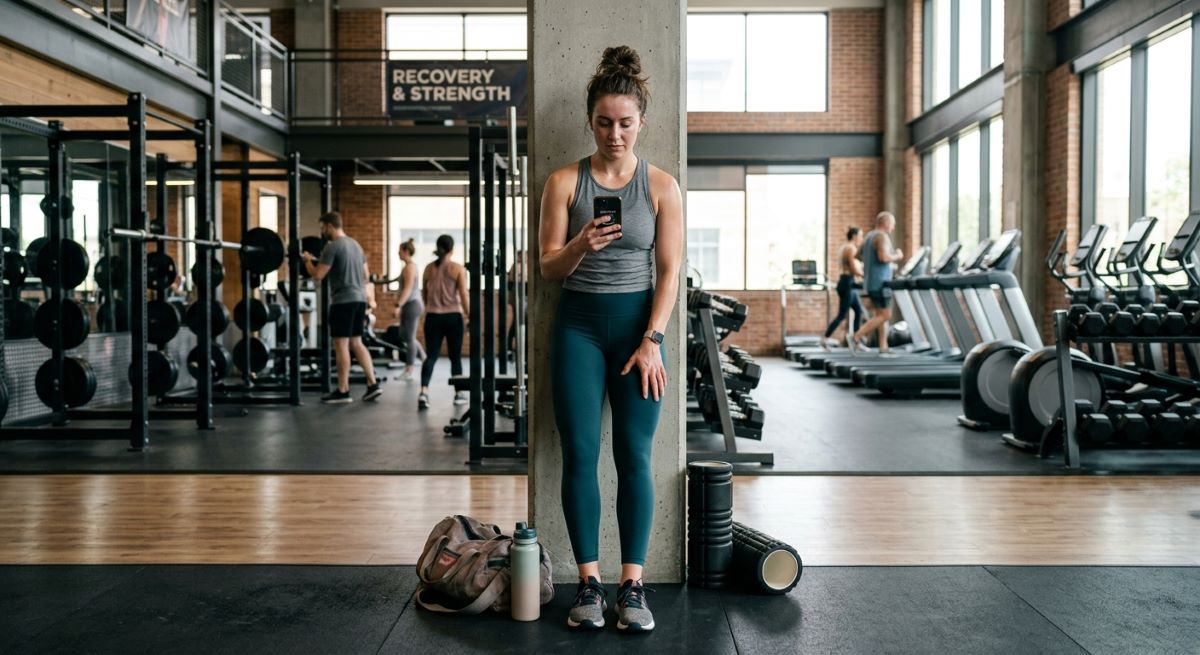
After your first few workouts, muscle soreness can feel like a sign that something is wrong. Walking downstairs becomes uncomfortable, sitting down feels harder than usual, and even simple movements remind you that your muscles work harder than they’re used to. At this point, many beginners ask the same question: Can you work out while sore, or should you wait until the soreness goes away?
The answer isn’t always black and white. Mild soreness is often a normal part of the recovery process, while severe soreness can be a signal that your body needs more time to rest and repair. Understanding the difference can help you stay consistent with your workouts without increasing your risk of excessive fatigue, poor performance, or injury.
In this guide, you’ll learn when it’s usually safe to exercise with sore muscles, when a rest day makes more sense, and how to make recovery decisions with confidence.
Not sure whether your soreness is normal?
New to workout recovery? Explore our beginner-friendly recovery guides covering muscle soreness, sleep, nutrition, and rest days.
Quick Answer
Yes, you can often work out while sore if the soreness is mild and caused by normal delayed-onset muscle soreness (DOMS). However, severe soreness, limited movement, joint pain, or signs of injury may indicate that your body needs more recovery time. The key is understanding the difference between normal muscle soreness and symptoms that suggest rest is the better choice.
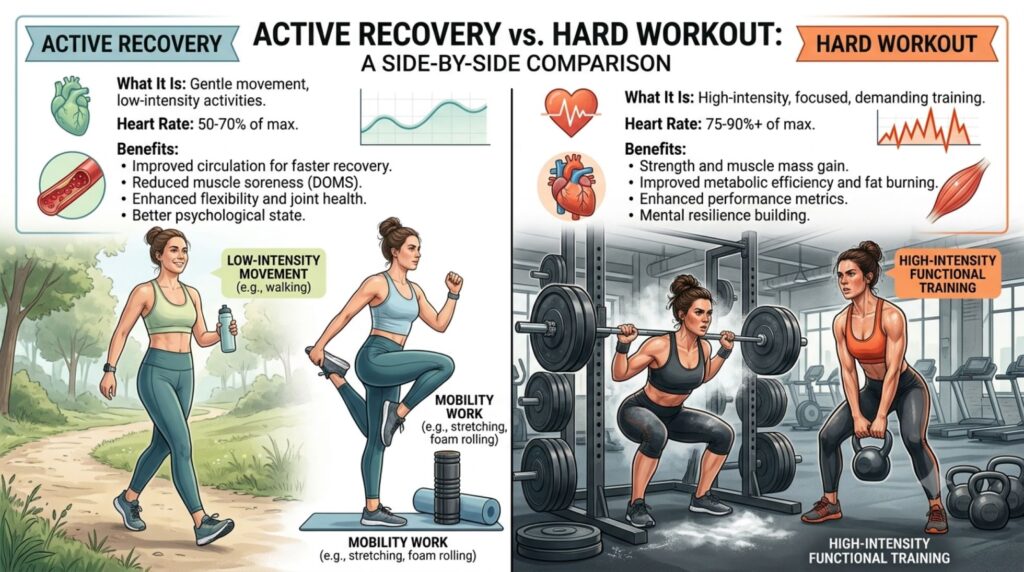
Recovery Timeline Table
| Recovery Stage | What You May Feel | Typical Recommendation |
| 0 to 24 Hours After Workout | Mild fatigue or stiffness | Light movement and hydration |
| 24 to 48 Hours After Workout | Peak muscle soreness (DOMS) | Evaluate soreness before training. |
| 48 to 72 Hours After Workout | Soreness gradually improves. | Light- to moderate-exercise may be appropriate. |
| 3 to 5 Days After Workout | Most soreness decreases. | Return to normal training if recovered. |
| Beyond 5 Days | Persistent soreness or pain | Assess recovery habits or consider professional advice. |
Table of Contents
Can You Work Out While Sore?
In many cases, yes.
Mild muscle soreness after exercise is a normal part of the body’s adaptation process. When you challenge muscles with a new workout or increase intensity, tiny amounts of stress occur within the muscle tissue. During recovery, your body repairs this tissue and prepares it to handle similar challenges more effectively in the future.
This means soreness does not automatically mean you should stop exercising.
However, the decision depends on three factors:
- How severe the soreness feels
- Whether movement is restricted
- Whether the discomfort is muscle soreness or possible injury-related pain
For many beginners, a light workout, walk, or active recovery session may feel better than complete inactivity. “Feeling sore does not always mean you need complete rest. Often, it means your body is adapting to a new challenge.”
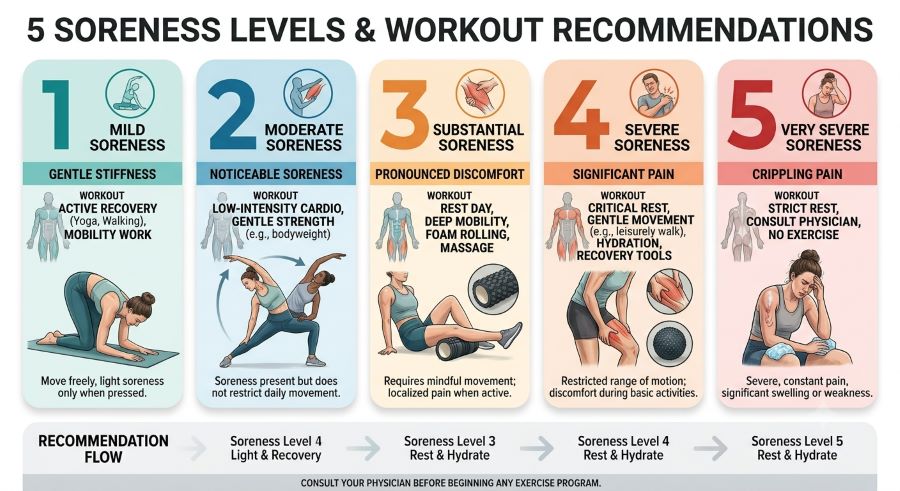
Should You Work Out While Sore? Quick Decision Guide
| Situation | Recommendation |
| Mild soreness | Usually safe to train |
| Moderate soreness | Consider lighter activity. |
| Severe soreness | Rest day recommended. |
| Joint pain | Avoid training until assessed. |
| Sharp or unusual pain | Stop exercise and evaluate symptoms. |
What Causes Muscle Soreness After Exercise?
The soreness many beginners experience is commonly called “delayed onset muscle soreness” (DOMS). DOMS usually develops several hours after exercise and often peaks between 24 and 48 hours later.
What Is DOMS?
DOMS is a temporary response to unfamiliar or challenging exercise. It commonly occurs after:
- Starting a new workout program
- Increasing workout intensity
- Performing more repetitions than usual
- Returning to exercise after a long break
Unlike injury, DOMS typically improves gradually over several days.
Why Am I So Sore After My First Workout?
Why Beginners Feel More Sore
Beginners often experience more soreness because their muscles are still adapting to exercise demands. For example, someone who completes their first bodyweight squat workout may experience significantly more soreness than a person who has been training consistently for months. As your body adapts, soreness usually becomes less intense and less frequent.
Expert Tip
If you’re new to exercise, focus on consistency rather than intensity. A slightly easier workout performed regularly often produces better long-term results than occasional hard sessions that leave you extremely sore.
When It Is Usually Safe to Work Out While Sore
Not all soreness requires a rest day. In many situations, continuing to move can help you feel better.
Mild Muscle Soreness
If muscles feel slightly tender but you can move normally, perform daily activities comfortably, and maintain good exercise form, training is often reasonable.
Examples include:
- Mild leg soreness after walking long distances
- Slight arm soreness after strength training
- General stiffness after a new workout
Training Different Muscle Groups
You may not need to train the same muscles that are sore.
For example:
- Sore legs? Consider an upper-body workout.
- Sore chest and shoulders? Focus on lower-body exercises.
This approach allows recovery while maintaining workout consistency.
Using Active Recovery
Active recovery involves low-intensity movement that encourages blood flow without creating significant additional stress.
Examples include:
- Walking
- Easy cycling
- Gentle stretching
- Mobility exercises
Many people find that light movement temporarily reduces stiffness and improves comfort.
Common Beginner Mistake
Many beginners assume they must choose between a hard workout and complete rest. Active recovery often provides useful middle ground that supports recovery while keeping you physically active.
When You Should Take a Rest Day Instead
While mild soreness is often manageable, there are times when rest is the smarter choice. Pushing through significant soreness may reduce workout quality, delay recovery, and increase the risk of poor movement patterns.
Severe Muscle Soreness
If soreness makes everyday activities difficult, your body may benefit from additional recovery time.
Examples include:
- Struggling to walk normally after leg training
- Difficulty lifting your arms overhead
- Significant discomfort when sitting or standing
In these situations, another hard workout may not be productive.
Reduced Range of Motion
Healthy muscles should allow you to move through a normal range of motion. If soreness prevents you from:
- Squatting comfortably
- Reaching overhead
- Walking normally
- Maintaining proper exercise form
A recovery day is often the better option.
Pain That Feels Different from Normal Soreness
Muscle soreness usually feels
- Dull
- Achy
- Tender
Potential injury-related pain may be caused by the following:
- Sharp
- Suddenly
- Localized around a joint
- Accompanied by swelling
If pain feels unusual or severe, avoid treating it as normal soreness.
7 Signs You Need a Recovery Day
Common Beginner Mistake
Many beginners believe that soreness equals progress. While some soreness can occur after challenging workouts, extreme soreness is not a requirement for fitness improvement. You do not need to feel exhausted or unable to move to make progress.
Expert Tip
Ask yourself:
“Can I perform today’s workout with good technique?” If soreness prevents proper form, recovery should take priority over training volume.
Active Recovery vs. Another Hard Workout
When you’re sore, the decision is not always “work out” or “do nothing.” A third option often exists:
Active recovery.
Active recovery keeps you moving while allowing your body to recover from previous training stress.
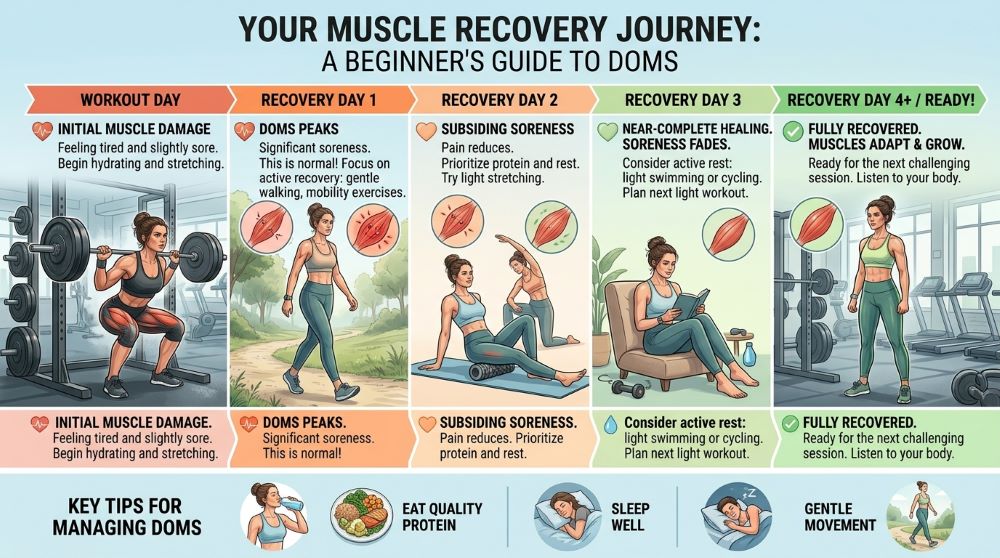
Active Recovery vs. Hard Workout
| Active Recovery | Another Hard Workout |
| Low intensity | High intensity |
| Encourages blood flow | Creates additional training stress |
| Supports recovery | May increase fatigue |
| Lower recovery demands | Higher recovery demands |
| Useful during mild soreness | Not always appropriate during soreness |
For many beginners, active recovery provides the best balance between movement and recovery.
Examples include:
- Walking
- Easy cycling
- Swimming at a comfortable pace
- Gentle mobility work
“The goal of active recovery is not to improve fitness dramatically. The goal is to support recovery while staying active.”
Myth vs. Fact
Myth
“If I’m sore, I should never exercise.”
Fact
Mild soreness is often compatible with exercise. The decision depends on the severity of soreness, movement quality, and overall recovery status.
Myth
“More soreness means a better workout.”
Fact
Workout quality is not measured by how sore you feel afterward. Consistent training, proper recovery, and gradual progression are more important indicators of long-term success.
Myth
“Rest days mean losing progress.”
Fact
Recovery is part of the training process. Strategic rest helps muscles repair and adapt to exercise.
How to Tell If Your Muscles Have Recovered
Many beginners focus only on soreness. However, recovery involves more than muscle discomfort. A better approach is evaluating several signs together.
Signs Your Muscles May Be Recovered
Normal Movement Has Returned
You can move comfortably without significant stiffness or restriction.
Soreness Is Improving
Even if mild soreness remains, it should generally be decreasing rather than worsening.
Energy Levels Are Returning
You feel physically and mentally ready to exercise again.
Strength Is Returning
Exercises feel more normal, and your performance is close to previous workouts.
Motivation Has Improved
Recovery often restores both physical readiness and mental enthusiasm for training.
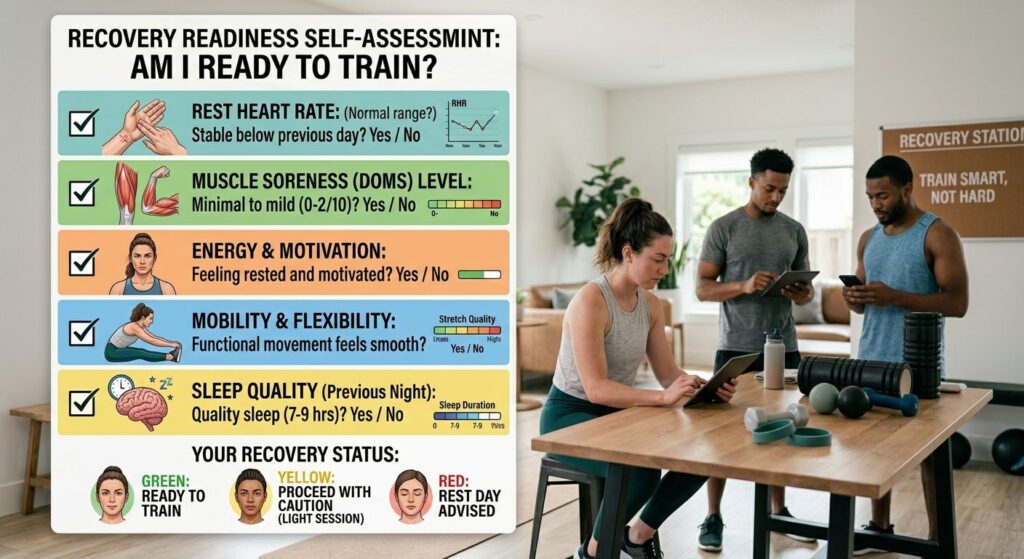
Recovery Checklist
Use this quick self-assessment before your next workout.
Recovery Readiness Checklist
✅ Soreness is mild or improving.
✅ Normal movement is possible.
✅ Energy levels feel good.
✅ Sleep quality has been reasonable.
✅ Motivation to train has returned.
✅ No sharp pain or injury symptoms
If you checked most of these boxes, you may be ready for your next workout.
If several boxes remain unchecked, additional recovery time may be beneficial.
How to Recover Faster Between Workouts
Recovery is not controlled by a single habit. Instead, it is influenced by several factors working together.
Prioritize Sleep
Sleep is one of the most important recovery tools available. During sleep, your body performs many of the repair processes that support muscle recovery and overall performance.
How Much Sleep Do You Need for Muscle Recovery?
Eat Recovery-Supportive Foods
Protein, carbohydrates, hydration, and overall nutrition play important roles in helping muscles recover after exercise.
Best Foods for Muscle Recovery at Home
Stay Consistent with Recovery Habits
Many beginners focus heavily on workouts while neglecting recovery. Consistent habits often matter more than searching for a quick fix.
Focus on:
- Regular sleep
- Balanced nutrition
- Hydration
- Recovery days when needed
- Gradual workout progression
Want a complete recovery strategy?
Explore Recover Better Lab’s beginner-friendly guides covering muscle recovery, nutrition, sleep, and training balance so you can recover smarter between workouts. Recovery is not time away from progress. Recovery is part of progress. The best workout plan is the one your body can consistently recover from. A rest day is not a setback. It is an investment in your next workout.
Frequently Asked Questions
Can I lift weights when my muscles are sore?
Yes, in many cases you can lift weights when soreness is mild and does not affect your movement or exercise form.
Is it bad to work out sore muscles every day?
Not necessarily. The key is managing training intensity and allowing adequate recovery.
Should beginners take a rest day when they are sore?
Beginners often benefit from taking a rest day when soreness is significant.
Does walking help sore muscles recover?
Walking is a common form of active recovery. Light movement can encourage blood flow and may temporarily reduce stiffness associated with muscle soreness.
How sore is it too sore to exercise?
If soreness limits normal movement, affects exercise technique, or is accompanied by sharp pain, swelling, or joint discomfort, it may be too severe for another workout.
Key Takeaways
- Mild soreness does not automatically mean you should skip exercise.
- Normal DOMS is a common response to challenging or unfamiliar workouts.
- Active recovery can be a useful alternative to another hard workout.
- Severe soreness, restricted movement, or unusual pain may indicate the need for additional recovery.
- Recovery involves sleep, nutrition, hydration, and appropriate rest.
- Consistency matters more than pushing through excessive soreness.
- Learning when to train and when to recover is an important fitness skill.
Beginner Action Plan
If you’re currently sore and unsure what to do, follow these steps:
Step 1
Rate your soreness.
- Mild
- Moderate
- Severe
Step 2
Check your movement.
Can you walk, squat, reach, and exercise comfortably?
Step 3
Choose the appropriate option.
- Mild soreness → Train normally or perform active recovery.
- Moderate soreness → Reduce workout intensity.
- Severe soreness → Prioritize recovery.
Step 4
Support recovery.
Focus on:
- Sleep
- Hydration
- Recovery nutrition
- Light movement
Step 5
Reassess tomorrow.
Recovery decisions should be based on how your body feels today, not what happened several days ago.
Conclusion
Can you work out while sore?
In many situations, yes.
Mild soreness is often a normal part of adapting to exercise and does not necessarily require complete rest. However, severe soreness, limited mobility, and unusual pain may indicate that your body would benefit from additional recovery time.
Rather than viewing recovery as time away from progress, think of it as part of the process that allows progress to happen. Learning when to exercise and when to rest can help you train more consistently, recover more effectively, and build sustainable fitness habits over the long term.
Related Reading
Muscle Recovery
- Why Am I So Sore After My First Workout?
- How Long Does Muscle Soreness Last After a Workout?
- How to Recover Faster After a Workout for Beginners
Nutrition Recovery
- Best Foods for Muscle Recovery at Home
- What to Eat After a Workout at Home
- How Much Protein Do You Need After a Workout for Muscle Recovery?
Sleep Recovery
Training Balance
Medical Disclaimer
This article is for educational purposes only and should not be considered medical advice. Recovery needs vary between individuals based on health status, fitness level, training history, and other factors. Always consult a qualified healthcare professional for personalized medical guidance.
When to Consult a Healthcare Professional
Seek professional medical advice if you experience:
- Sharp or severe pain
- Significant swelling
- Persistent pain lasts longer than expected
- Loss of strength or function
- Symptoms that worsen instead of improving
- Suspected muscle, tendon, or joint injuries
Normal muscle soreness typically improves with time. Symptoms that continue to worsen should not be ignored.
References
- American College of Sports Medicine (ACSM)
Exercise Recovery and Training Guidance
- National Academy of Sports Medicine (NASM)
Recovery and Muscle Soreness Resources
- National Institutes of Health (NIH)
Exercise Recovery and Physical Activity Research
- PubMed
Research on Delayed Onset Muscle Soreness (DOMS)
- Mayo Clinic
Exercise and Muscle Recovery Information
- Cleveland Clinic

I’m Mr. Baig, founder of Recover Better Lab. I create evidence-based fitness recovery content to help beginners recover smarter and build sustainable healthy habits.
Mission: My mission is to provide trustworthy, research-backed recovery and fitness content that helps people optimize their health, performance, and overall well-being.