
Estimated Reading Time: 10–12 minutes
Last Reviewed: July 2026
Quick Answer
Chocolate milk for recovery can be an effective post-workout option because it provides carbohydrates to replenish muscle glycogen, high-quality protein to support muscle repair, and fluids that contribute to rehydration. Research suggests it performs similarly to many commercial recovery drinks when they provide comparable nutrients. However, it is not the best choice for everyone, and its value depends on your exercise, nutrition goals, and overall diet. Reference: Kerksick CM, Arent S, Schoenfeld BJ, et al. International Society of Sports Nutrition Position Stand: Nutrient Timing. Journal of the International Society of Sports Nutrition. 2017; 14:33.
Key Takeaways
- Chocolate milk is an evidence-based recovery option, not a magic recovery drink.
- Its benefits come from its combination of carbohydrates, protein, and fluids.
- Research supports its use most strongly after prolonged or demanding endurance exercise.
- Similar recovery benefits can often be achieved with other foods or drinks that provide comparable nutrition.
- Your overall daily nutrition and recovery habits matter more than any single post-workout beverage.
Introduction
Walk into almost any gym after a hard workout, and you’ll hear someone recommend chocolate milk for recovery. Coaches suggest it to athletes, runners keep it in their refrigerators, and countless articles describe it as one of the best post-workout drinks available. Over time, that recommendation has become so common that many people no longer question it; they simply assume chocolate milk must offer something that other recovery drinks do not.
That assumption is understandable. Chocolate milk contains carbohydrates, protein, and fluids in one convenient drink, all of which play important roles in post-exercise recovery. Early research, particularly in endurance athletes, also helped establish its reputation as an affordable alternative to commercial recovery beverages.
But popularity and scientific evidence are not always the same thing.
Much of the discussion around chocolate milk focuses on a single question: Does it work? A more useful question is whether it works better than other recovery options and, if so, for whom. The answer is more nuanced than many headlines suggest. Recovery is influenced by your training session, your daily nutrition, your recovery goals, and even how soon you plan to exercise again. A drink that makes sense after a two-hour cycling session may offer little additional benefit after a short strength workout followed by a balanced meal.
This article examines what current research says about chocolate milk for recovery, where the evidence is strong, where it is limited, and how it compares with protein shakes, sports drinks, and whole-food recovery meals. Rather than asking whether everyone should drink chocolate milk after exercise, the goal is to help you decide whether it fits your recovery needs.

Why Chocolate Milk Became So Popular
Chocolate milk did not become a popular recovery drink because it contains a unique ingredient. Its reputation grew from a combination of promising early research, practical convenience, and widespread adoption in the sports community.
In the early 2000s, several studies found that chocolate milk supported recovery after endurance exercise as well as, and sometimes better than, certain carbohydrate-only sports drinks. Because chocolate milk naturally contains carbohydrates and high-quality dairy protein, it attracted attention as an affordable alternative to commercial recovery beverages.
As these findings spread beyond academic journals, the message became progressively simplified. “Chocolate milk can be an effective recovery drink in some situations” gradually evolved into “Chocolate milk is the best recovery drink. Those statements are not equivalent.
Most athletes do not recover because they drink chocolate milk. They recover because they consistently meet their nutritional needs, replace the energy they have used, consume enough protein throughout the day, stay hydrated, sleep adequately, and manage their training load. Chocolate milk can contribute to that process, but it does not replace it.
Recovery Insight
The popularity of chocolate milk reflects an important pattern in sports nutrition. A practical, evidence-supported strategy can become a universal recommendation as it spreads through media, social platforms, and fitness culture. Understanding where the evidence applies is more valuable than assuming it applies to everyone.
What Makes Chocolate Milk a Recovery Drink?
Chocolate milk supports recovery because it delivers several nutrients that the body commonly needs after prolonged or demanding exercise. None of these nutrients is unique to chocolate milk, but together they create a convenient combination that aligns with established sports nutrition principles.
Carbohydrates Restore Muscle Glycogen
During moderate to vigorous exercise, especially sessions lasting longer than about an hour, muscles rely heavily on glycogen as their primary fuel source. After exercise, replenishing those glycogen stores helps prepare the body for subsequent training sessions. Chocolate milk provides carbohydrates that contribute to this process. The amount varies by brand, but a typical serving supplies enough carbohydrates to complement a balanced recovery meal or snack.
Protein Supports Muscle Repair
Exercise creates microscopic damage within muscle fibers. Recovery depends on repairing and adapting to that damage rather than simply eliminating it. Chocolate milk contains complete dairy protein, including both whey and casein. Whey is digested relatively quickly and stimulates muscle protein synthesis, while casein is digested more slowly, providing a more sustained release of amino acids. Together, they make dairy protein a high-quality option for supporting post-exercise muscle repair.
Fluids Help Replace Sweat Losses
Exercise increases fluid loss through sweating. Even mild dehydration can affect subsequent performance if it is not corrected. Because chocolate milk is primarily water, it contributes to post-exercise rehydration. It also contains naturally occurring electrolytes, particularly potassium, although its sodium content is generally lower than that of many sports drinks designed for prolonged endurance events.
Calories Support Recovery
Recovery requires energy. After demanding exercise, consuming too few calories may slow recovery by limiting the body’s ability to restore glycogen and repair muscle tissue. Chocolate milk provides both nutrients and energy, making it particularly useful when a full meal is not immediately available. However, those same calories may be unnecessary after light exercise or for individuals deliberately restricting energy intake.
Typical Nutrition in Chocolate Milk (Approximate per 240 mL / 8 oz)
| Nutrient | Typical Amount* | Why It Matters |
| Calories | 150–190 kcal | Help replace energy used during exercise. |
| Protein | 8 g | Supports muscle repair and adaptation. |
| Carbohydrates | 24–30 g | Helps replenish muscle glycogen. |
| Fat | 2–8 g | Contributes energy; varies by milk type. |
| Calcium | ~300 mg | Supports normal muscle and bone function. |
| Potassium | ~350–450 mg | Helps replace some electrolytes lost through sweat. |
| Sodium | ~120–180 mg | Contributes to fluid balance, though usually less than sports drinks. |
Values vary by brand, recipe, and fat content.
Practical Perspective
Chocolate milk works because it supplies nutrients that recovery physiology requires—not because chocolate itself has special recovery properties. A recovery meal containing similar amounts of carbohydrate, protein, and fluids can often provide comparable benefits.
What Does the Research Actually Say?
Chocolate milk has been studied for more than two decades as a post-exercise recovery beverage. While many articles present the evidence as overwhelmingly positive, the research tells a more balanced story.
Overall, the evidence supports chocolate milk for recovery as an effective option after exercise, particularly when compared with carbohydrate-only drinks. However, when researchers compare chocolate milk with recovery beverages that provide similar amounts of carbohydrates and protein, the differences are often small or statistically insignificant.
The practical takeaway is straightforward: chocolate milk works because it delivers the nutrients your body needs after certain types of exercise, not because it possesses unique recovery properties.
What Systematic Reviews Show
The highest-quality evidence comes from systematic reviews and meta-analyses, which evaluate the results of multiple studies rather than relying on a single trial. Collectively, these reviews suggest that chocolate milk can:
- Support post-exercise recovery.
- Help replenish muscle glycogen after prolonged exercise.
- Promote muscle protein synthesis by providing high-quality dairy protein.
- Perform similarly to many commercial recovery drinks when nutrients are comparable.
Importantly, these reviews do not conclude that chocolate milk is universally superior to protein shakes, sports drinks, or balanced recovery meals.
What Randomized Controlled Trials Show
Randomized controlled trials generally report the greatest benefits after prolonged endurance exercise, such as running, cycling, or team sports involving repeated high-intensity efforts. Some studies have observed improvements in subsequent exercise performance, while others report little or no meaningful difference compared with other well-formulated recovery beverages. This variation is expected because recovery outcomes depend on several factors, including:
Exercise duration.
Exercise intensity.
Daily protein intake.
Carbohydrate intake.
Time between training sessions.
Overall energy intake.
A recovery drink cannot compensate for deficiencies in these areas.
Why Study Results Sometimes Differ
Conflicting headlines often create the impression that scientists disagree about whether chocolate milk works. Many studies ask different questions.
For example:
Comparing chocolate milk with water will usually favor chocolate milk because it provides nutrients that water does not. Comparing chocolate milk with a carbohydrate-only drink often shows an advantage because chocolate milk also contains protein. Comparing chocolate milk with a protein-and-carbohydrate recovery drink frequently shows little difference because both provide similar nutritional support.
Understanding the comparison is often more important than focusing on the headline result.
Evidence Strength
| Outcome | Strength of Evidence | Practical Interpretation |
| Glycogen replenishment | Strong | Supported when adequate carbohydrates are consumed after prolonged exercise. |
| Muscle protein synthesis | Strong | Supported through high-quality dairy protein. |
| Recovery after endurance exercise | Moderate to Strong | Most consistent findings are in endurance athletes. |
| Recovery after resistance training | Moderate | Benefits appear similar to other protein-containing recovery options. |
| Reduced muscle soreness | Limited | Findings are inconsistent across studies. |
| Improved next-day performance | Limited to Moderate | Some studies report benefits, while others find no meaningful difference. |
| Superior to protein shakes | Limited | Evidence does not consistently support superiority. |
| Superior to sports drinks | Limited | Depends on the nutrients provided by the comparison drink. |
Research Limitations
Although the evidence is encouraging, it has important limitations.
Many studies:
Include relatively small numbers of participants.
Focus on trained endurance athletes rather than the general population.
Evaluate short-term recovery instead of long-term training adaptations.
Use different exercise protocols, recovery drinks, and outcome measures, making direct comparisons difficult.
These limitations do not invalidate the findings, but they do mean that recommendations should be applied thoughtfully rather than universally.
Recovery Insight
One of the strongest conclusions from the research is also the simplest: nutrient composition matters more than the name of the drink. Whether those nutrients come from chocolate milk, a protein shake, or a balanced recovery meal is often less important than ensuring your body receives enough protein, carbohydrates, fluids, and total energy to recover from the exercise you performed.
Chocolate Milk vs. Protein Shakes
Chocolate milk and protein shakes are often presented as competing recovery drinks, but they are designed to meet slightly different nutritional needs. One is not automatically better than the other. The more important question is which option best matches the demands of your workout and your overall nutrition plan.
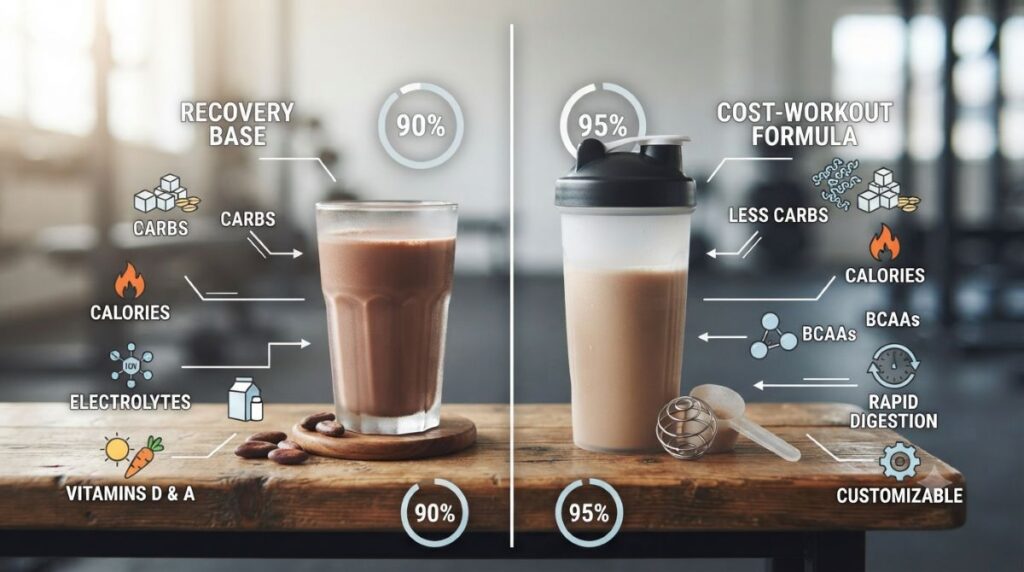
Chocolate milk naturally combines carbohydrates and high-quality dairy protein, making it particularly useful when both energy replacement and muscle repair are priorities. Most protein shakes, in contrast, are formulated to deliver larger amounts of protein while containing fewer carbohydrates and, depending on the product, fewer calories. This distinction matters because recovery of nutrition should reflect the type of exercise you have completed.
For example, after a long-distance run or a demanding cycling session, depleted glycogen stores make carbohydrate intake an important part of recovery. In that situation, chocolate milk may provide a more balanced recovery profile than a protein-only shake. After a resistance-training workout, however, glycogen depletion is usually lower than after prolonged endurance exercise. If your daily carbohydrate intake is already sufficient, a protein shake may help you increase total protein intake without adding unnecessary calories or sugar.
Neither option replaces a balanced meal. If you can eat a nutritious meal within a reasonable time after exercise, the differences between chocolate milk and a protein shake often become less important.
Chocolate Milk vs. Protein Shake
| Feature | Chocolate Milk | Protein Shake |
| Primary Purpose | Recovery with carbohydrates and protein | Increase protein intake |
| Protein Quality | Complete dairy protein (whey + casein) | Usually complete protein (varies by source) |
| Carbohydrates | Naturally higher | Usually low unless added |
| Calories | Moderate | Varies widely by formulation |
| Convenience | Ready to drink and widely available | Requires powder or prepared beverage |
| Cost | Generally inexpensive | Can range from affordable to expensive |
| Best After | Prolonged endurance or repeated training sessions | Resistance training or when higher protein intake is needed |
| Suitable for Lactose Intolerance | Usually no (unless lactose-free) | Some lactose-free and plant-based options available |
Practical Decision
Choose chocolate milk if your recovery requires both carbohydrates and protein, especially after longer or more demanding exercise. Choose a protein shake if your main priority is increasing protein intake, limiting carbohydrate intake, or meeting specific dietary preferences. The decision should be guided by your recovery needs, not by the assumption that one product consistently outperforms the other.
Chocolate Milk vs. Sports Drinks
Chocolate milk and sports drinks are sometimes compared because both are consumed after exercise, but they are formulated for different purposes. Sports drinks are primarily designed to replace fluids, electrolytes, and carbohydrates lost during prolonged exercise. They are particularly useful during endurance events or situations involving heavy sweating, where maintaining hydration and electrolyte balance is the immediate priority.
Chocolate milk, on the other hand, is designed less by formulation than by composition. In addition to carbohydrates and fluids, it provides high-quality protein that supports muscle repair and adaptation. This makes it more suitable as a recovery beverage than as a hydration beverage during exercise. For athletes completing long training sessions, the choice depends on timing. A sports drink may be appropriate during exercise, while chocolate milk may be a practical option afterward if additional protein and carbohydrates are needed.
Chocolate Milk vs. Sports Drink
| Feature | Chocolate Milk | Sports Drink |
| Main Purpose | Recovery nutrition | Hydration and energy replacement |
| Protein | Yes | No or negligible |
| Carbohydrates | Moderate | Moderate (varied by product) |
| Electrolytes | Naturally contains potassium and some sodium | Formulated with sodium and other electrolytes |
| Best Used | After exercise | During or immediately after prolonged exercise |
| Muscle Repair | Supports through protein | Minimal direct support |
| Rehydration | Contributes to fluid replacement | Optimized for hydration during endurance activity |
| Best For | Recovery after demanding exercise | Maintaining hydration during long-duration exercise |
Recovery Insight
These beverages are not direct substitutes for one another. Sports drinks are designed to support performance during prolonged exercise, whereas chocolate milk is intended to support recovery after exercise. In many situations, they serve complementary rather than competing roles.
Who Benefits Most from Chocolate Milk?
Chocolate milk is not equally beneficial for every person after every workout. The strongest evidence supports its use in situations where both carbohydrate replacement and muscle repair are priorities. For others, its advantages may be smaller or unnecessary.
The key is to match your recovery nutrition to the demands of your exercise rather than following the same routine after every session.
Endurance Athletes
Long-distance runners, cyclists, swimmers, rowers, and triathletes typically deplete substantial amounts of muscle glycogen during training and competition. Because chocolate milk provides both carbohydrates and high-quality protein, it can be a practical recovery choice, particularly when another training session is scheduled within the next 24 hours.
Team Sport Athletes
Sports such as soccer, basketball, hockey, and rugby often involve repeated high-intensity efforts that tax both energy stores and muscle tissue. Chocolate milk may help support recovery between matches or intensive training sessions when rapid refueling is important.
Recreational Exercisers
Most people exercising for general health perform workouts that are shorter and less demanding than those used in many chocolate milk studies. If you exercise for 30 to 45 minutes and eat a balanced meal soon afterward, chocolate milk is unlikely to provide a unique recovery advantage.
That does not mean it is a poor choice; it simply means it is not essential.
Strength Athletes
Resistance training increases the body’s need for protein to support muscle repair and adaptation. Chocolate milk can contribute to this goal, but individuals aiming to maximize protein intake may prefer foods or protein shakes that provide more protein without additional sugar or calories.
Older Adults
Older adults often require higher-quality protein to help maintain muscle mass. Chocolate milk may contribute to daily protein intake, but it should be considered one option within a broader dietary pattern rather than a standalone strategy.
Who Is Most Likely to Benefit?
| Situation | Chocolate Milk Recommendation | Why |
| Long-distance running or cycling | ✓ Good choice | Replaces carbohydrates, protein, and fluids after glycogen-depleting exercise. |
| Team sports with multiple sessions | ✓ Good choice | Supports refueling between demanding sessions. |
| High-volume endurance training | ✓ Good choice | Convenient when rapid recovery nutrition is needed. |
| Resistance training | ✓ Can be appropriate | Protein supports recovery, but other options may better match protein goals. |
| Short recreational workouts | ◐ Optional | A balanced meal may provide similar recovery benefits. |
| Weight-loss diets | ◐ Depends | Additional calories should fit the overall nutrition plan. |
| Lactose intolerance | ✗ Usually not recommended | Consider lactose-free or non-dairy alternatives. |
| Milk allergy | ✗ Not appropriate | Avoid dairy-based products. |
| Vegan diets | ✗ Not appropriate | Plant-based recovery options are more suitable. |
When Chocolate Milk May Not Be the Best Choice
Although chocolate milk can support recovery in many situations, there are circumstances where another option may be more appropriate.
You Have Lactose Intolerance or a Milk Allergy
Traditional chocolate milk is unsuitable for people with a milk allergy and may cause digestive symptoms in those with lactose intolerance. Lactose-free dairy products or fortified plant-based alternatives may provide similar nutrients while avoiding these issues.
Your Workout Was Short or Low Intensity
Not every workout creates a substantial need for rapid carbohydrate replacement. After light or moderate exercise lasting less than an hour, normal meals and snacks are often sufficient to support recovery.
You are managing calorie intake.
Chocolate milk provides energy as well as nutrients. For individuals trying to lose body fat or carefully manage calorie intake, those additional calories should be considered within the context of the entire day’s diet rather than viewed as automatically beneficial.
You Have Specific Medical or Dietary Needs
People with diabetes, kidney disease, or other medical conditions may require individualized nutrition advice. Likewise, those following vegan or dairy-free eating patterns have many alternative recovery options that can provide comparable amounts of protein and carbohydrates.
Recovery Is Already Covered by Your Next Meal
If you finish exercising shortly before eating a balanced meal containing adequate protein, carbohydrates, and fluids, there may be little practical advantage to drinking chocolate milk beforehand.
Advantages and Limitations
| Advantages | Limitations |
| Provides carbohydrates and high-quality protein in one drink. | Not suitable for people with a milk allergy. |
| Convenient and widely available. | May cause symptoms in people with lactose intolerance. |
| Generally, it is less expensive than many commercial recovery drinks. | Contains added sugars and calories that may not suit every goal. |
| Supported by research after prolonged endurance exercise. | Evidence is less consistent for short workouts and some resistance-training scenarios. |
| Contributes to fluid intake after exercise. | Not superior to other recovery options with comparable nutrients. |
Recovery Insight
The best recovery drink is not the one that performs well in a study; it is the one that consistently helps you meet your nutritional needs, fits your health status, and supports the type of training you perform.
Common Myths About Chocolate Milk for Recovery
Chocolate milk has earned a strong reputation in sports nutrition, but popularity has also led to several misconceptions. Separating evidence from marketing and oversimplified advice can help you make a more informed recovery decision.
| Myth | What the Evidence Shows |
| Chocolate milk is the best recovery drink. | Current evidence does not support one universally “best” recovery drink. Chocolate milk is one effective option among several that provide adequate carbohydrates and protein. |
| Everyone should drink chocolate milk after every workout. | Recovery needs vary with exercise duration, intensity, overall diet, and individual goals. Many people recover well with a balanced meal alone. |
| Chocolate milk builds muscle faster than protein shakes. | There is no consistent evidence that chocolate milk produces greater muscle growth than protein sources providing similar amounts of high-quality protein. |
| Chocolate milk eliminates muscle soreness. | Research on delayed onset muscle soreness (DOMS) is mixed. Any reduction in soreness is generally modest and inconsistent. |
| Chocolate milk is only for endurance athletes. | Endurance athletes are the most studied population, but chocolate milk can also be a practical recovery option for some team-sport athletes and recreational exercisers when it fits their nutritional needs. |
| The chocolate itself provides special recovery benefits. | The primary recovery benefits come from the drink’s carbohydrates, protein, and fluids—not from chocolate itself. |
Is Chocolate Milk Right for Your Recovery?
Instead of asking whether chocolate milk is good or bad, ask whether it matches the demands of your workout and your overall nutrition. Use the following framework as a practical guide.
| Question | If yes | If No |
| Was your workout prolonged or physically demanding? | Chocolate milk may be a practical recovery option. | A normal meal or snack may be sufficient. |
| Do you need both carbohydrates and protein after exercise? | Chocolate milk can help provide both nutrients conveniently. | A higher-protein or lower-carbohydrate option may better suit your goals. |
| Will you train again within the next 24 hours? | Replenishing energy stores becomes more important. | Immediate recovery nutrition is usually less critical if normal meals follow. |
| Can you comfortably consume dairy? | Chocolate milk remains a suitable option. | Consider lactose-free or plant-based alternatives. |
| Does chocolate milk fit your daily calories and nutrition goals? | It can be included as part of your recovery plan. | Choose another recovery food or beverage that better aligns with your needs. |
The purpose of this framework is not to tell every reader to choose chocolate milk. It is to encourage decisions based on training demands rather than trends.
Practical Recommendations
If you decide to include chocolate milk in your recovery plan, consider the context of your exercise rather than making it an automatic habit.
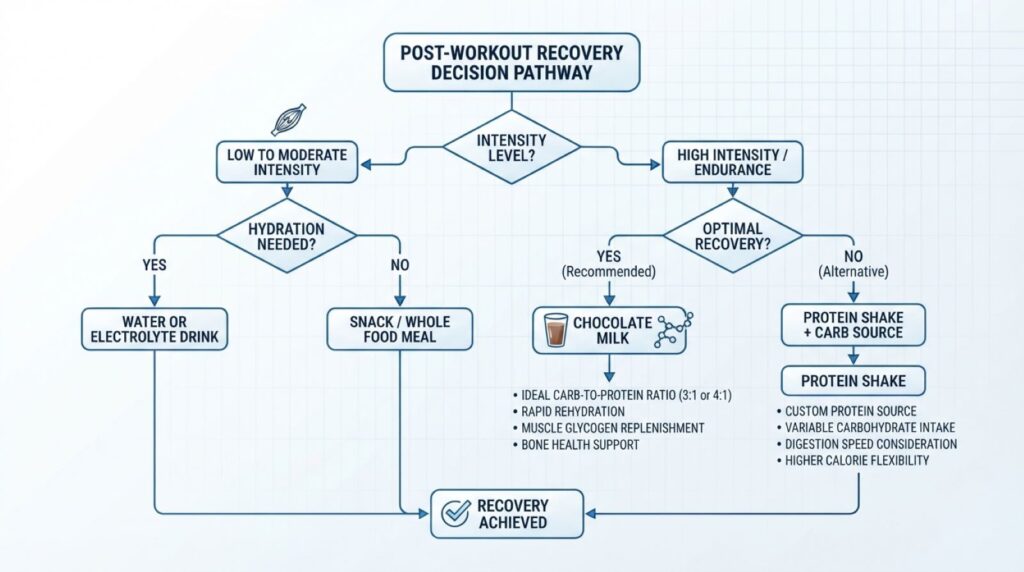
After Endurance Exercise
Chocolate milk is most likely to be beneficial after activities such as long-distance running, cycling, swimming, or other prolonged sessions that significantly reduce muscle glycogen. In these situations, both carbohydrates and protein contribute to recovery.
After Resistance Training
For strength-focused workouts, protein intake is usually the primary nutritional priority. Chocolate milk can contribute, but if your carbohydrate needs are already met, other protein-rich foods or beverages may be equally appropriate.
During Busy Schedules
When preparing a balanced meal immediately after exercise is difficult, chocolate milk offers a convenient combination of nutrients that can help bridge the gap until your next meal.
During Weight Management
Chocolate milk contains calories that should be considered within your total daily intake. If maintaining a calorie deficit is an important goal, another recovery option with a different nutrient profile may be more appropriate.
For Recreational Exercise
Many people exercising for general fitness do not require specialized recovery drinks after every workout. Consistently eating a balanced diet, staying hydrated, and obtaining sufficient sleep usually have a greater impact on long-term recovery than choosing one beverage.
Common Recovery Mistakes
- Believing chocolate milk is required after every workout.
- Ignoring total daily protein intake.
- Drinking recovery calories after light exercise without considering overall energy needs.
- Neglecting hydration and sleep.
Final Decision:
Should You Choose Chocolate Milk?
Choose it if:
- You’ve completed prolonged or demanding exercise.
- You need both carbohydrates and protein.
- Dairy fits your dietary pattern.
Consider another option if:
- You’re lactose intolerant.
- You’re limiting calories or sugar.
- You’ll eat a balanced recovery meal shortly after exercise.
The Bottom Line
Chocolate milk for recovery is supported by scientific evidence as an effective post-workout recovery option, particularly after prolonged or demanding exercise. Its combination of carbohydrates, high-quality protein, and fluids aligns well with established principles of sports nutrition.
However, the evidence does not support treating chocolate milk as a universally superior recovery drink. When other foods or beverages provide comparable amounts of carbohydrates and protein, recovery outcomes are often similar. The nutrients matter more than the specific product.
For endurance athletes or individuals who need a convenient recovery beverage, chocolate milk can be a practical and affordable choice. For others, a balanced meal, a protein shake, or another nutrient-rich recovery option may work just as well. The most effective recovery strategy is built on consistent nutrition, appropriate training, hydration, and adequate sleep, not on any single drink. Chocolate milk earns its place as one useful tool within that broader strategy, not as the strategy itself.
Recovery Reminder
Chocolate milk can support recovery, but it cannot compensate for insufficient sleep, inadequate daily protein intake, poor hydration, or an unbalanced diet. Your overall recovery habits have a greater impact than any single post-workout drink.
Evidence Strength: Moderate to Strong
- Strong evidence: Chocolate milk provides carbohydrates and high-quality protein that support post-exercise recovery.
- Moderate evidence: It can be an effective recovery drink after prolonged endurance exercise.
- Limited evidence: It is superior to protein shakes or other recovery drinks with similar nutrient content.
- Mixed evidence: Its effects on muscle soreness and next-day performance.
Recover Better Lab Summary
Chocolate milk for recovery is an evidence-based recovery option because it provides carbohydrates, high-quality protein, and fluids that support post-exercise recovery. Current research suggests it performs similarly to many commercial recovery drinks when they provide comparable nutrition. It is particularly useful after prolonged or demanding exercise but is not necessary after every workout. The best recovery strategy remains one that consistently meets your overall nutrition, hydration, sleep, and training needs.
When to Consult a Healthcare Professional
Consider seeking advice from a qualified healthcare professional or registered sports dietitian if:
- You have diabetes or another condition affecting blood sugar management.
- You have kidney disease or require a medically prescribed diet.
- You have a milk allergy or severe lactose intolerance.
- You experience persistent fatigue or poor recovery despite appropriate nutrition.
- You are an elite or competitive athlete who requires individualized recovery nutrition.
- You are pregnant, breastfeeding, or planning nutrition for a young athlete.
Medical Disclaimer
This article is intended for educational purposes only and should not be considered medical advice. It is not a substitute for professional diagnosis, treatment, or individualized nutrition guidance. Always consult a qualified healthcare professional before making significant changes to your diet or recovery plan, especially if you have an underlying medical condition or take prescription medications.
Frequently Asked Questions
Is chocolate milk good after a workout?
Yes. Chocolate milk can support post-workout recovery by providing carbohydrates, high-quality protein, and fluids. It is most beneficial after prolonged or demanding exercise when both energy replacement and muscle repair are priorities.
Is chocolate milk better than a protein shake?
Not necessarily. Chocolate milk generally provides more carbohydrates, while many protein shakes provide more protein. The better choice depends on your workout, nutrition goals, and overall diet.
Does chocolate milk help muscle recovery?
It can contribute to muscle recovery by supplying complete dairy protein and carbohydrates, but recovery also depends on total daily nutrition, sleep, hydration, and training load.
Is chocolate milk better than a sports drink?
They serve different purposes. Sports drinks are primarily designed for hydration and electrolyte replacement during prolonged exercise, whereas chocolate milk is better suited for post-exercise recovery.
When should you drink chocolate milk after exercise?
If you choose chocolate milk, it is generally most useful after moderate to vigorous exercise, particularly when your next balanced meal is delayed.
Who should avoid chocolate milk for recovery?
People with a milk allergy, those who cannot tolerate dairy, individuals following a vegan diet, or anyone whose medical condition requires dietary restrictions should consider alternative recovery options.
Explore more of our recovery guide:
- How to Recover Faster After a Workout for Beginners
- Why Am I So Sore After My First Workout? Beginner’s Guide
- Is the Anabolic Window Real? Understanding Post-Workout Nutrition Timing
- 7 Signs You Need a Recovery Day (Ignoring Them Can Slow Your Progress)
- How Much Sleep Do You Need for Muscle Recovery?
- Why Can’t I Sleep After a Workout?
External Authoritative Sources to Cite
- American College of Sports Medicine — Exercise nutrition and recovery recommendations.
- International Society of Sports Nutrition — Position stand on nutrient timing and post-exercise nutrition.
- National Strength and Conditioning Association — Recovery nutrition guidance.
Position Statements
- Jäger R, Kerksick CM, Campbell BI, et al. International Society of Sports Nutrition Position Stand: Protein and Exercise. Journal of the International Society of Sports Nutrition. 2017; 14:20.
- Thomas DT, Erdman KA, Burke LM. Position of the Academy of Nutrition and Dietetics, Dietitians of Canada, and the American College of Sports Medicine: Nutrition and Athletic Performance. Journal of the Academy of Nutrition and Dietetics. 2016;116(3):501–528.
- National Strength and Conditioning Association (NSCA). Essentials of Strength Training and Conditioning. 4th ed. Human Kinetics; 2021.

I’m Mr. Baig, founder of Recover Better Lab. I create evidence-based fitness recovery content to help beginners recover smarter and build sustainable healthy habits.
Mission: My mission is to provide trustworthy, research-backed recovery and fitness content that helps people optimize their health, performance, and overall well-being.